

Nombre de resultats 15
per a Trips
03/12/2010 - Covert Strike of Spanish Air Controllers: Spanish Air Space Closed
A massive medical leave of air controllers in the air spaces of Madrid, Balearic Islands and Canary Islands has caused almost all Spanish airports to cancel all of their flights. Today me and Laia were supposed to go to Switzerland to enjoy snow, -11ºC and some cheese and chocolate. In Spain we had Monday and Wednesday as National holidays, and most businesses had Tuesday as optional holiday: 5 days straight off.
The massive medical leave, named covert strike by the government has been really well timed to catch all airports filled with people wanting to enjoy 5 days away from crises and work. Latest news suggest that military air controllers may exceptionally work in the civil affected air spaces.
The strike, caused by not getting enough money and privatisation of the airport industry is assumed to last until 6th of December, unless the government drops their pants. A friend of mine says that he would love to work as an air controller for 3 years and then retire. Think about how much money they are already making.
Yours truly was lucky to have free stay in Switzerland at my brother-in-law's place, but not all passengers were that happy. Imagine having a cancelled flight to Argentina, with hotel.
When we left the airport by taxi (as the train was probably collapsed by then) some riots were in the verge of starting in Terminal 2-C, and I guess that Terminal 1 should be really fun to watch from the outside.
More information (in Spanish) is available from El País (online newspaper) and probably all other Spanish and international newspapers as well.
The "Related posts" method I use involves Javascript, thus it doesn't work in the RSS feed. To view related posts, please refer to the original article. Thanks!
09/10/2010 - Sleeping Where the Sun Never Sets and Other Oddities
As you may remember, Laia and me spent three weeks in Iceland for holidays two months ago. This is the sixth (and last) post in the series Things you should read before travelling to Iceland. If you came here directly don't forget to read the previous post in this series
As you may remember, Laia and me spent three weeks in Iceland for holidays two months ago. This is the sixth (and last) post in the series Things you should read before travelling to Iceland. If you came here directly don't forget to read the previous post in this series
Sleeping
In summer, daylight lasts all day. Full 24 hours of light, more or less. And Icelanders don't love window blinds. It has something to do with the fact that in winter they get no sun... When there is, they enjoy it like madmen. If you can't sleep with light, bring a sleep mask (Amazon affiliate link, they are cheap) with you. Better yet, wear it a few nights before going to Iceland to get used to it. I love using it when I want to oversleep here in Spain.
(Amazon affiliate link, they are cheap) with you. Better yet, wear it a few nights before going to Iceland to get used to it. I love using it when I want to oversleep here in Spain.Another interesting sleepy point is that, from what we have seen, Iceland's beds are incredibly comfortable! Enjoy them while you are there, you will definitely miss them back home. I already do. I have to go there again!
Oddities
Iceland feels somewhat... freak. Freak in the good sense, as Laia and myself consider us real freaks. Icelanders do lots and lots of handcrafts, Laia realised there she loves felting and bought several books on it, in Icelandic. We also bought an Icelandic breads book, also in Icelandic. I can't really say why, but if you consider yourself a geek or freak... you'll be happy spending your holidays in Iceland. Of course, no offence intended, it is supposed to be a compliment!
Icelanders are also very trusting. As an example, in Mývatn we had as usual a guesthouse already arranged. We arrived around 17:00, and there was no-one around. The door was open, nobody in the office. We went back, because we saw a paper taped to the door... It said Mr Berenguel, your room is Nr 3 and you have your keys in the doorknob.
I hope you enjoyed this glimpse of Iceland, because what comes next is even more Icelandic (and longer). I'll write what we did, with pictures! Seventeen days, with the interesting places and things we did back there. I still don't have a clear schedule (one post per week for 4 months or write them and then post all the same day). But stay tuned, Iceland lovers! Subscribe if you have not done it yet!
Related Posts:
The "Related posts" method I use involves Javascript, thus it doesn't work in the RSS feed. To view related posts, please refer to the original article. Thanks!
26/09/2010 - Shopping in Iceland
As you may remember, Laia and me spent three weeks in Iceland for holidays two months ago. This is the fourth post in the series Things you should read before travelling to Iceland. If you came here directly don't forget to read the previous post in this series
Iceland's currency is the Icelandic króna (plural krónur), with international code ISK. Iceland has a very strong economy, and we thought the prices would be extremely high compared to the Euro zone.
We were gladly surprised, prices are not that high compared to European prices, once we got the change right. Luckily for us, the Icelandic króna was around 160 ISK for an Euro, which is the same the Peseta (Spanish currency before Euro) was when the Euro was introduced, which made thinking about prices a charm.
Iceland was not as expensive as we expected. We packed a lot of food (instant soups, mostly) to avoid spending a lot of money on eating, but in the end, those same instant soups were available there for just a little more. If I were to go again to Iceland, I would buy instant food right there.
The best place to buy souvenirs is probably Reykjavík, just don't buy in the first place you come upon and look a little around, almost all shops carry the same items. Anyway, prices are pretty much even across the city, but we saw Hnefatafl, the viking board game (wait for an upcoming blog post about it) priced from 6000ISK (~40€) to 9000ISK (~55€) all around Iceland. Look around, but not too much, time is also money.
There are also souvenir shops all around Iceland, offering different stuff than in the capital. We found a very nice shop in Egilsstaðir where we bought several wonderful items (fish scale diadems and scrunchies, two small leather satchels) for just around 40€, and another one in Husavík where we bought 9 rhubarb jam jars as a gift for friends for just around 25€ total (not counting the overweight we had to pay coming back to Spain...).
If you enjoy reading, you will find several book stores in Reykjavík and all over Iceland, the biggest one being the Eymundsson franchise, which extends all over Iceland (we found it in Reykjavík, Akureyri and Isafjördur). There is no problem in finding English books, but they are more expensive than they would be in Spain or where you live. And Icelandic books on Icelandic are quite expensive: I bought Egil's Saga, Litli Prinsinn (The Little Prince) and an Islensk-Ensk orðabok (Icelandic-English dictionary) for the equivalent to 20€, 20€ and 60€ respectively. If you like languages and consider learning Icelandic, buy there, it will be cheaper than buying overseas.
Iceland will probably surprise you for the quality of the 'souvenirs' you can buy there: wool is very common, and they produce a lot of different things, all very high quality. Also they are very keen of felt, and make wonderful stuff with it. Just walk around Reykjavík and enjoy your shopping, you will be probably surprised. And then enjoy the rest of the Iceland with its distinctive town shops.
Before I forget, the Icelandic sign for a souvenir shop with hand-made stuff looks like a snowflake (and is very similar to the sign for the Landsbankinn, the Icelandic national bank.
The "Related posts" method I use involves Javascript, thus it doesn't work in the RSS feed. To view related posts, please refer to the original article. Thanks!
18/09/2010 - Iceland's Water: the Best Water in the World
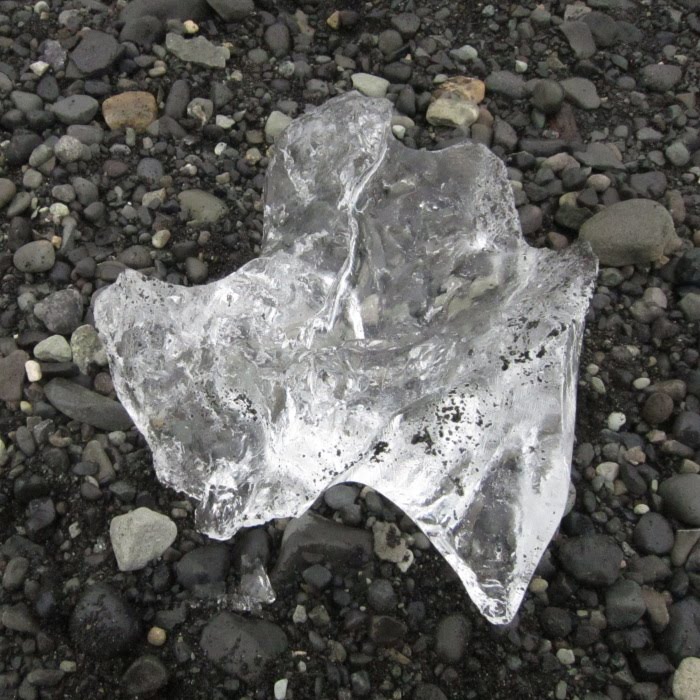
As you may remember, Laia and me spent three weeks in Iceland for holidays two months ago. This is the fourth post in the series Things you should read before travelling to Iceland. If you came here directly don't forget to read the previous post in this series
 Eating in Iceland (if you are not an Icelander)
If I had to gamble before going to Iceland, I would have thought tap water would be horrible. With so much volcanic activity, I was pretty sure tap water would have a sulphurous taste. And so, the first day I tasted it a little worried. It turned out I had no need to worry...
Iceland's (cold) tap water is considered to be the best and purest in the world, and when you come there you will realise it. We drank only tap water all over Iceland, except for two bottles we bought in the airport when coming back. We still miss Iceland's water.
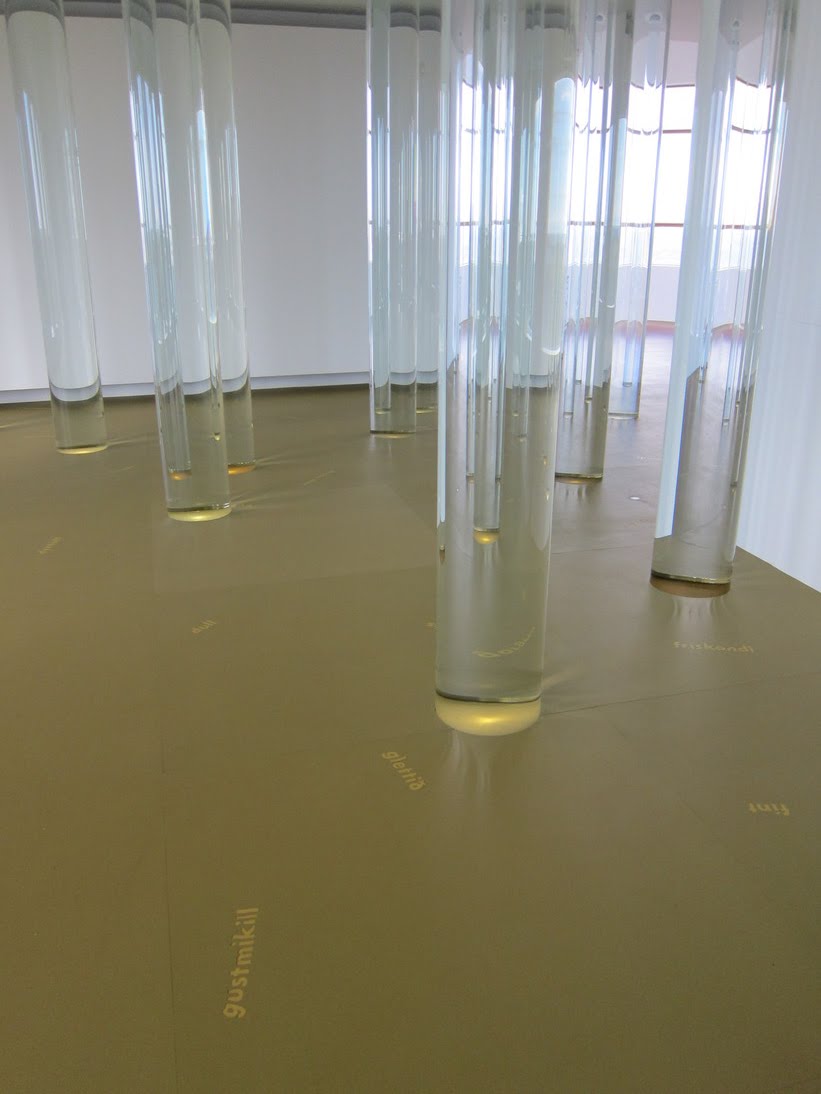
Vatnasafn
Our host in Stykkishólmur told us Iceland's best water was right there in that town... Indeed, it tasted fresher and colder. If you come there, drink a cup for us :) Stykkishólmur also holds Iceland's Vatnasafn: museum of water. It is over a cliff hanging over the city, with fantastic views. Consists of 4 meter columns of water, coming from Iceland's glaciers.
Hot tap water smells odd all over Iceland, but you get used to it pretty quickly. Just don't think about drinking hot tap water or using it for cooking.
Also, Iceland's running waters are safe to drink almost everywhere (i.e. don't drink in "hot" places where there is a lot of geothermal activity). I drank a little in the beautiful Svartifoss waterfall. It tasted rocks, but was good and cold.
Finally (not directly related to drinking water), Iceland is full of hot pools, either natural or man-made with natural waters. The ones we enjoyed the most were in Hoffell, they belonged to our guest-house owner and they are fantastic.
Related Posts:
The "Related posts" method I use involves Javascript, thus it doesn't work in the RSS feed. To view related posts, please refer to the original article. Thanks!
11/09/2010 - How Is Iceland's Weather?

The sun street
As you may remember, Laia and me spent three weeks in Iceland for holidays two months ago. This is the third post in the series Things you should read before travelling to Iceland. If you came here directly don't forget to read the previous post in this series
Eating in Iceland (if you are not an Icelander)Weather is not as bad as you may expect. As the saying goes, Iceland is green and Greenland is ice. Iceland's weather in summer is mildly warm, ranging from around 2ºC to 15ºC (or more). The cold weather comes from the wind, which blows almost constantly and can reach easily gusts of 120km/h which in the Beaufort wind scale corresponds to hurricane strength. And 2 degrees with strong wind can feel really cold.
Moreover, a lot of Iceland's sights are either near the coast or are waterfalls, thus the wind blowing gets you wet and helps in getting you colder still. As an ultimate addition, it rains quite often. Rain means just a little water from the side, not huge precipitation levels, but just a little every few hours. As locals say, if you don't like Iceland's weather, wait 5 minutes. You can go from sun to rain to wind to calm in 30 minutes. A funny quote from our travel guide says It's not like Iceland has bad weather, it is just that it has weather, and lots of it.
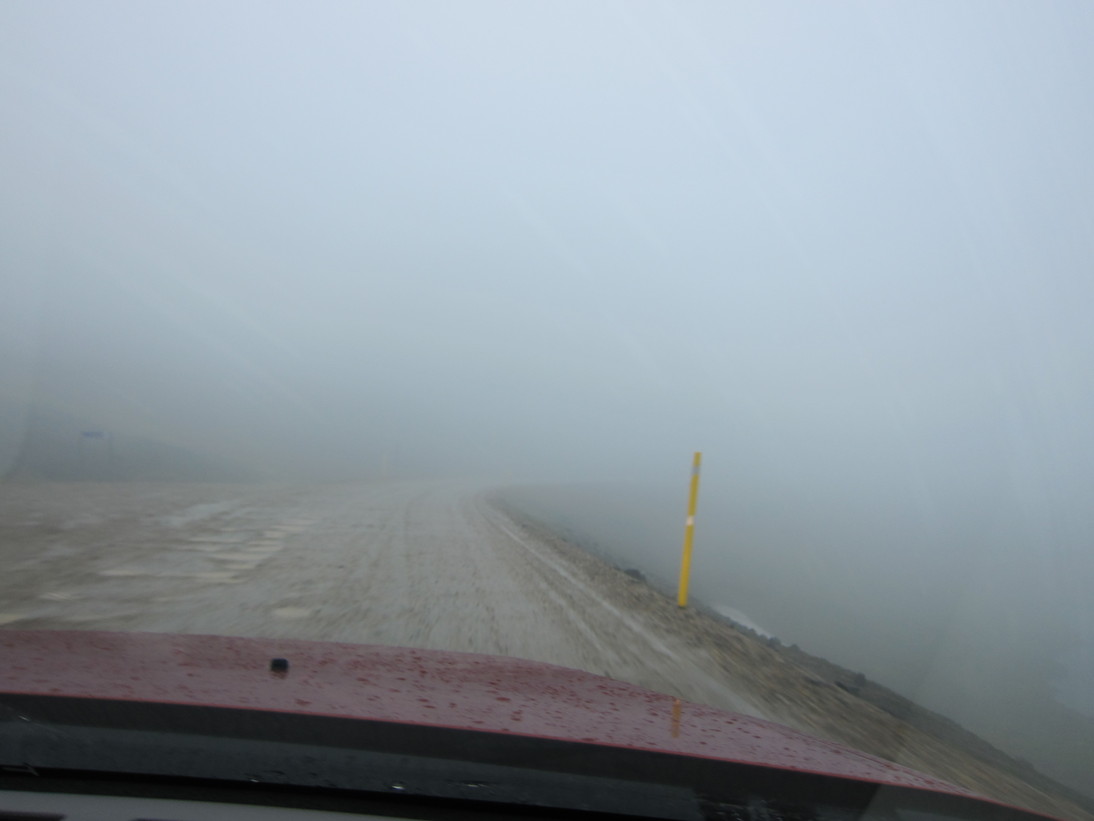
Driving in the middle of
a cloud: When foggy,
weather is cold
Be prepared for cold with wind. At least 3 cloth layers and a wind-shield jacket. I wasn't as prepared, and bought a wind-shield and a jacket from North 66 (Amazon affiliate link: 66 North). They are pricey, but I found them up to it. Beware: my jacket is an European XL and my wind-shield an European M... keep an eye with the sizes.
). They are pricey, but I found them up to it. Beware: my jacket is an European XL and my wind-shield an European M... keep an eye with the sizes.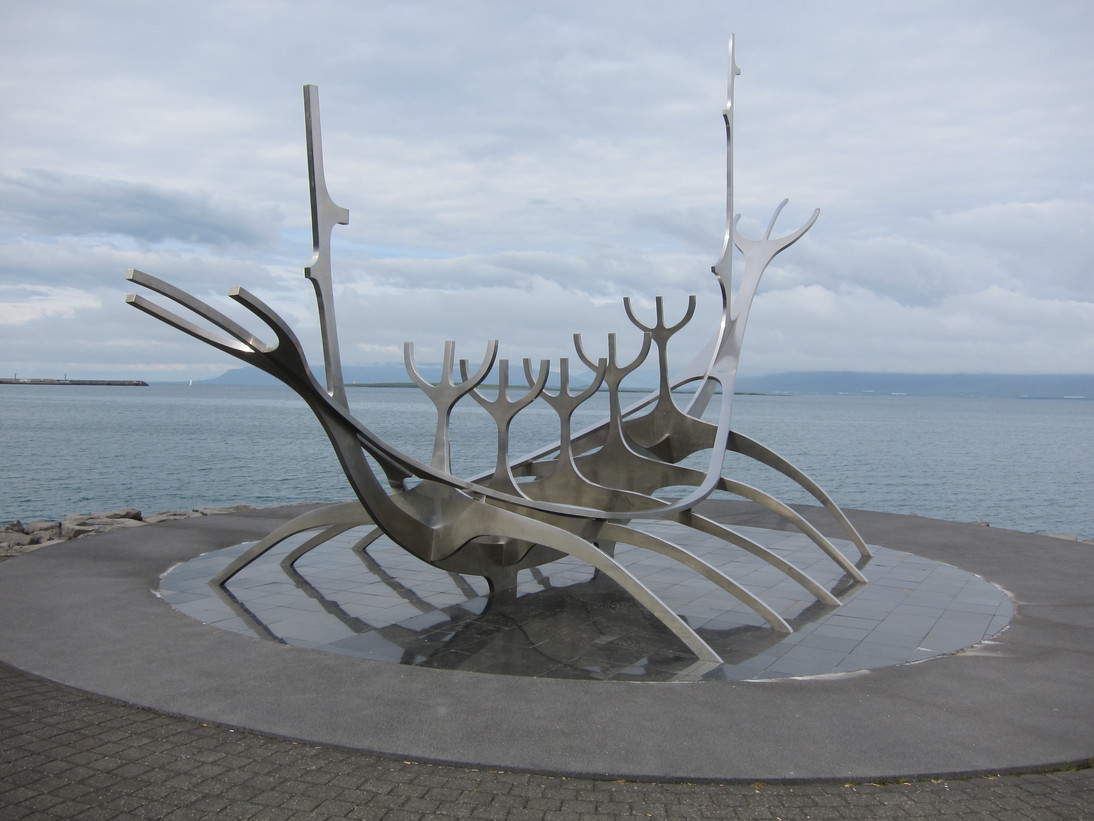
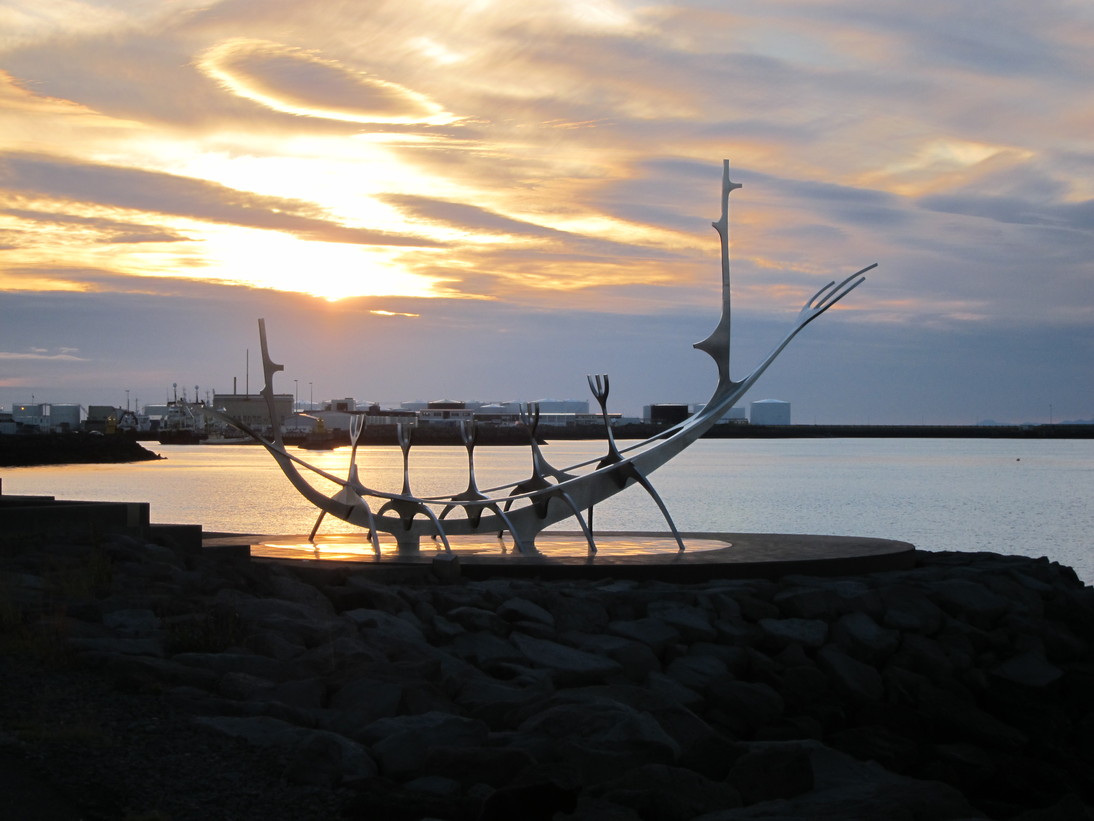
The same picture... Different weather
But you should be also prepared for warm and sunny days, and don't be disappointed if you don't see them. But when they come, they are a big surprise: the sun really heats, even at 15ºC.
Related Posts:
The "Related posts" method I use involves Javascript, thus it doesn't work in the RSS feed. To view related posts, please refer to the original article. Thanks!
06/09/2010 - Road trip through Iceland
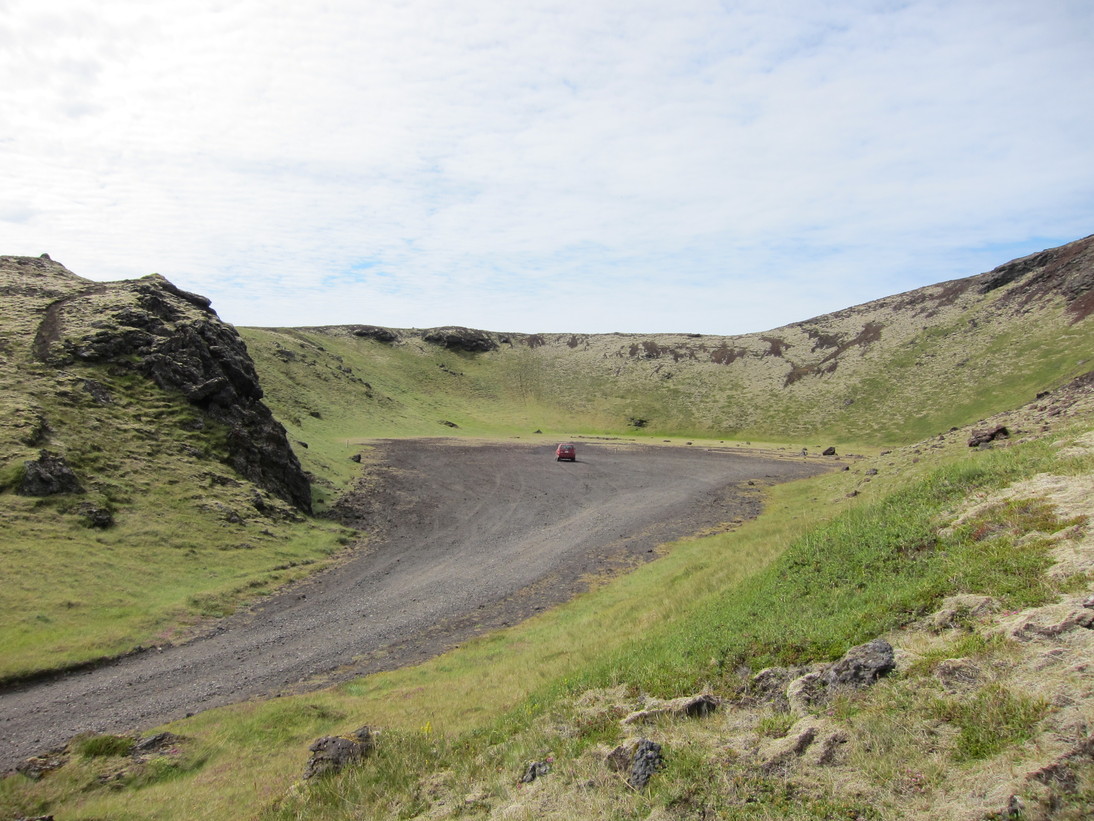
volcano
As you may remember, Laia and me spent three weeks in Iceland for holidays two months ago. This is the second post in the series Things you should read before travelling to Iceland. If you came here directly don't forget to read the previous post in this series
Eating in Iceland (if you are not an Icelander)We rented a car. Maybe it is not obvious if you don't know anything about Iceland, but public transportation is scarce, and the best way to get around is either with a full tourist bus or self-drive. And self-drive is more fun, as you spend the time you want where you want. The drawback... driving in Iceland can get in your nerves. And I was the co-pilot...
The main road in Iceland (Ring Road, or Road Number 1) circles the island around the coast. And is the biggest and most cared one. To give you a glimpse... a lot of places are just one-way in this main road. You see it?
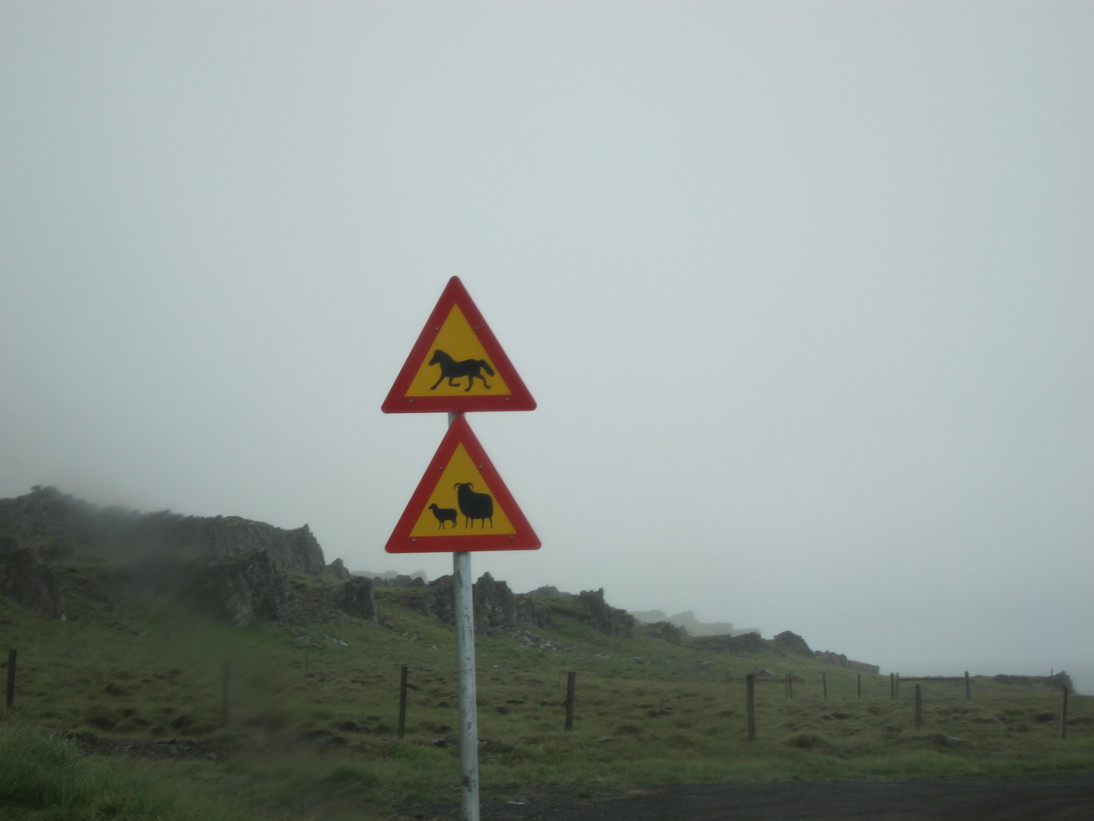
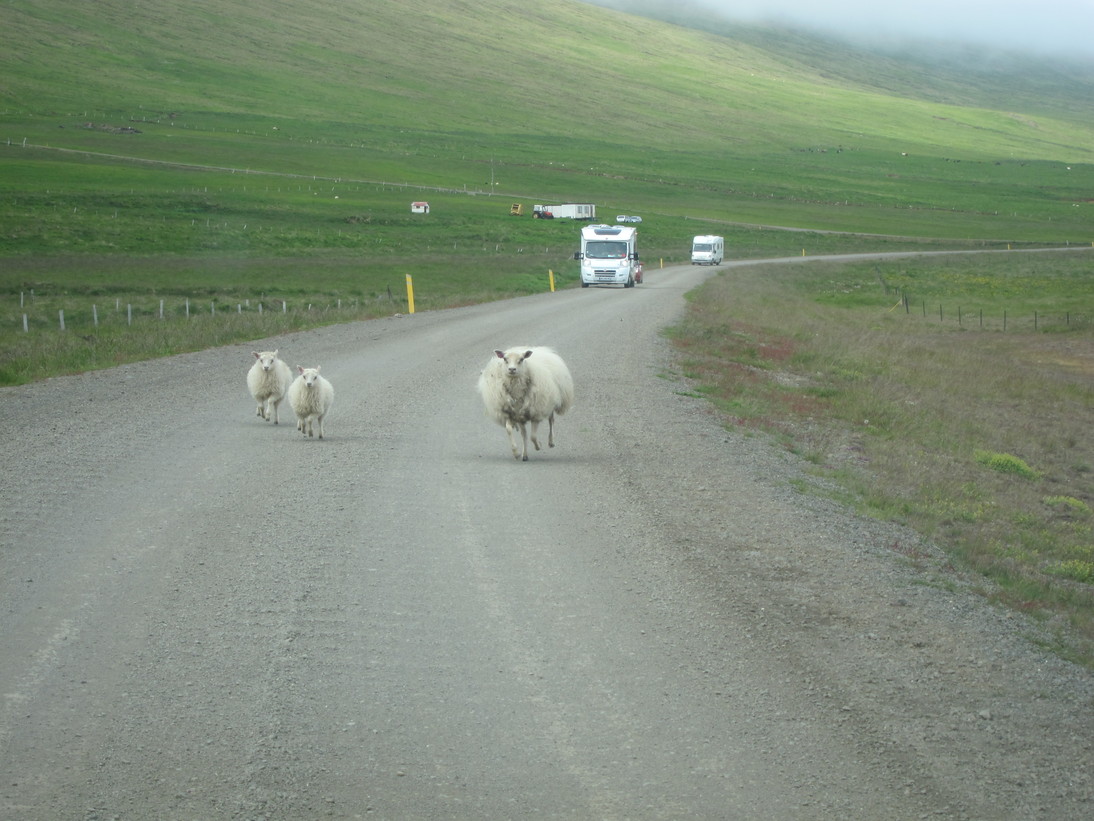
Most secondary roads are bumpy gravel roads. And sheep in Iceland are everywhere, and more than a few are non-fenced. You are driving happily and a sheep with his/her two lambs can appear just in the middle of the road. Driving tip #1: Don't brake when running over a sheep. Most Icelandic roads have mountain on one side and cliff in the other. If you brake strongly and turn to avoid a sheep, you can easily slide over the gravel and fall off the cliff. It is far safer to run over the sheep and then find the owner and settle the price with him.
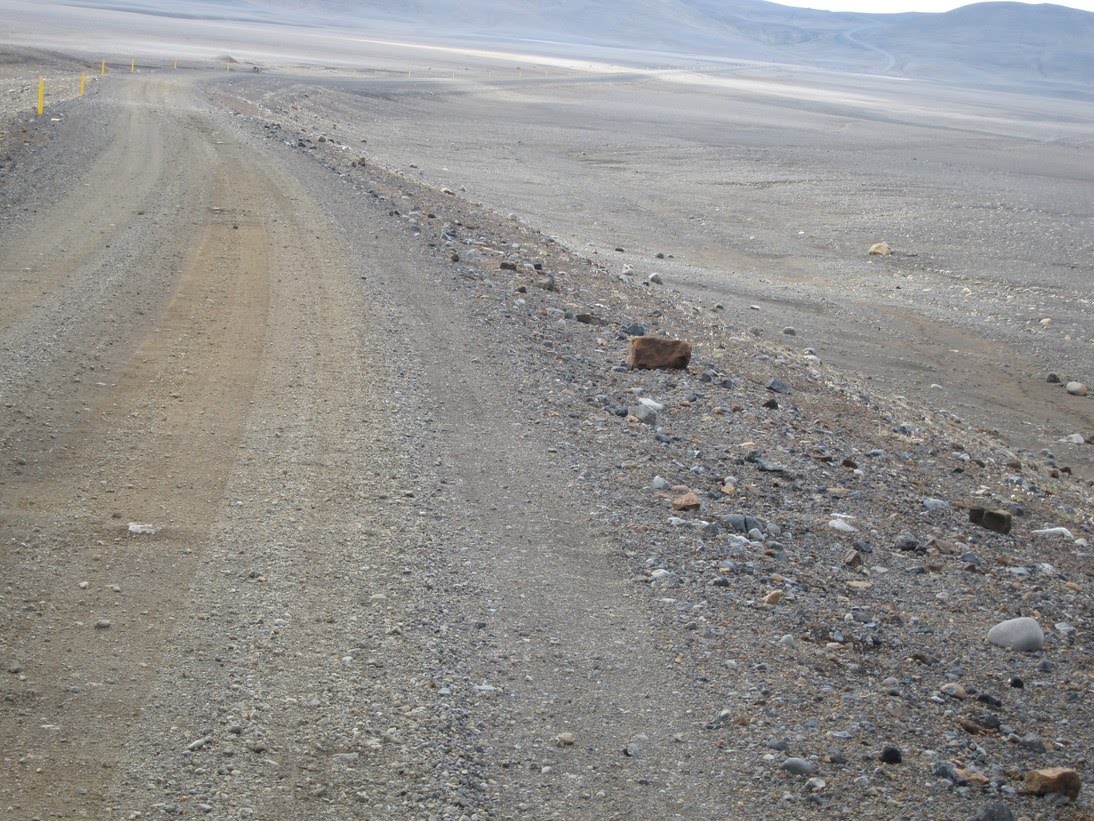
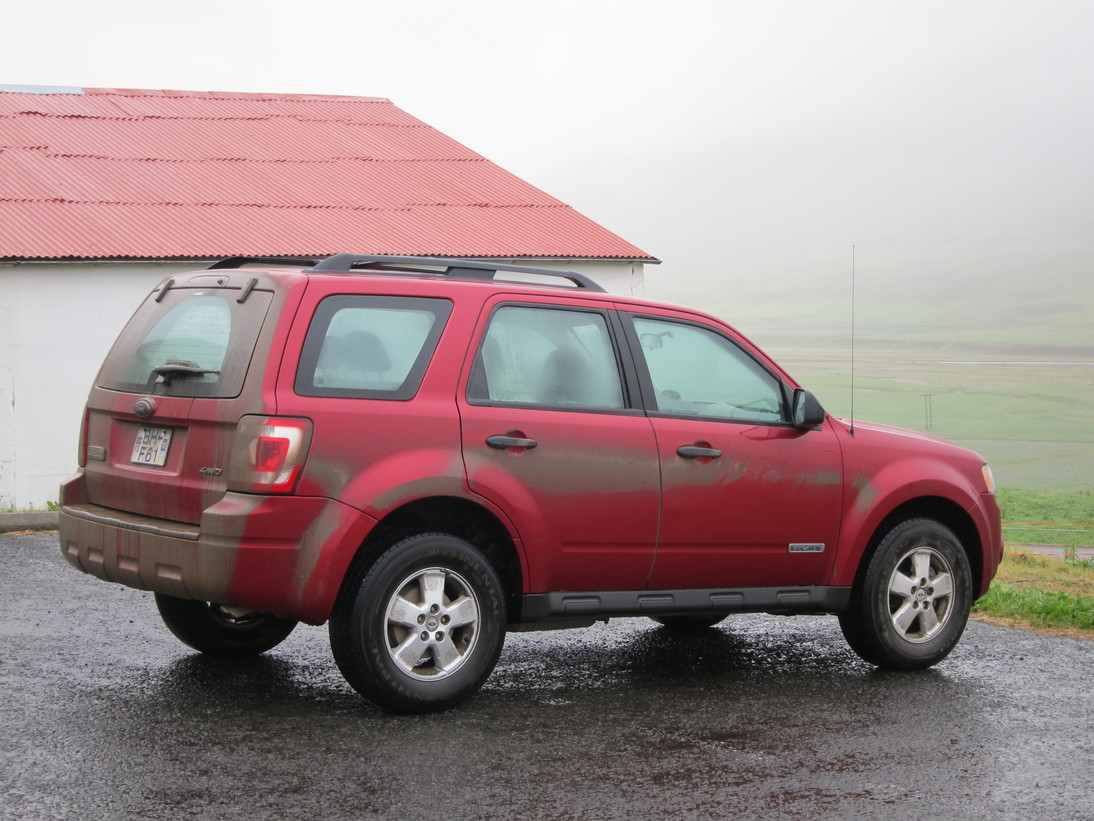
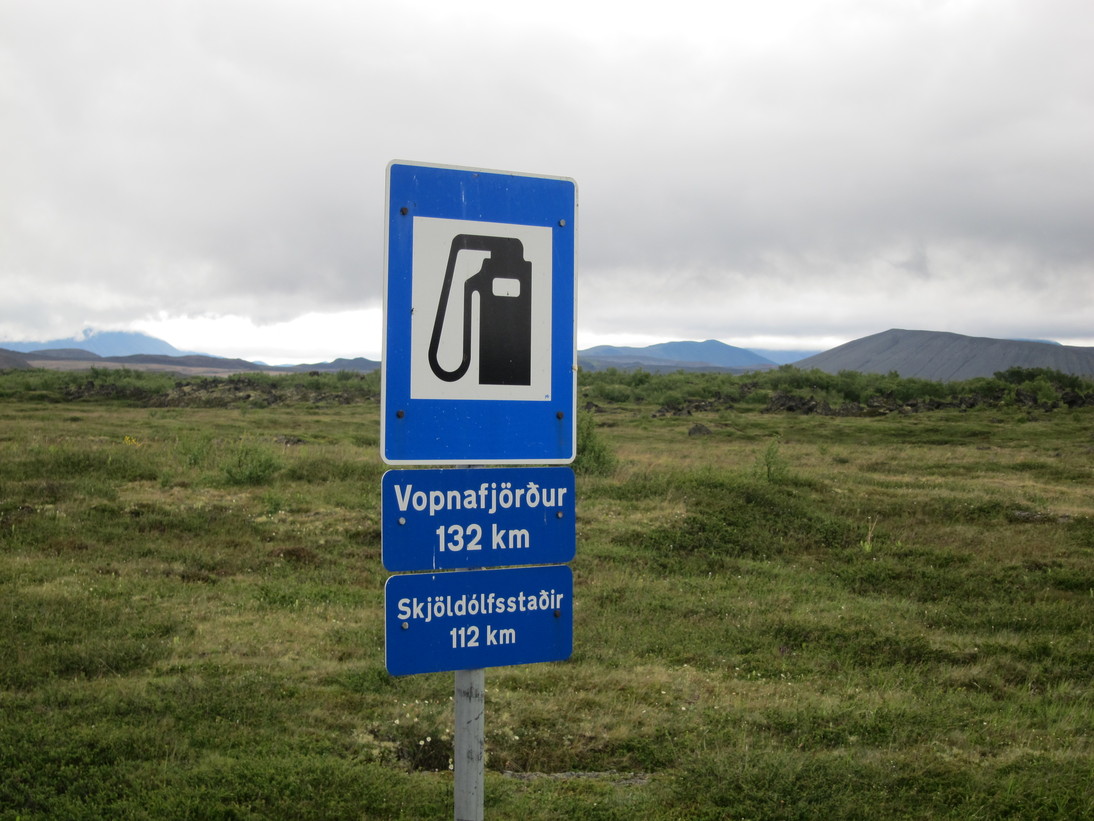
Some mountain roads can be filled with mud, which will cover your front and back wind-shield, even your headlamps. In all gas stations there are free water hoses to clean your car. Do it often, at least clean your lights for safety. Yours and everyone else's.
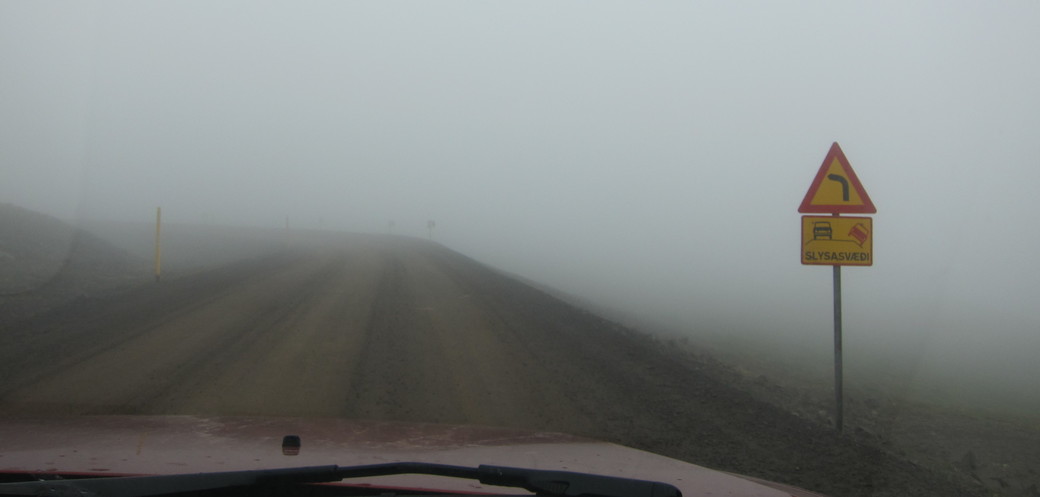
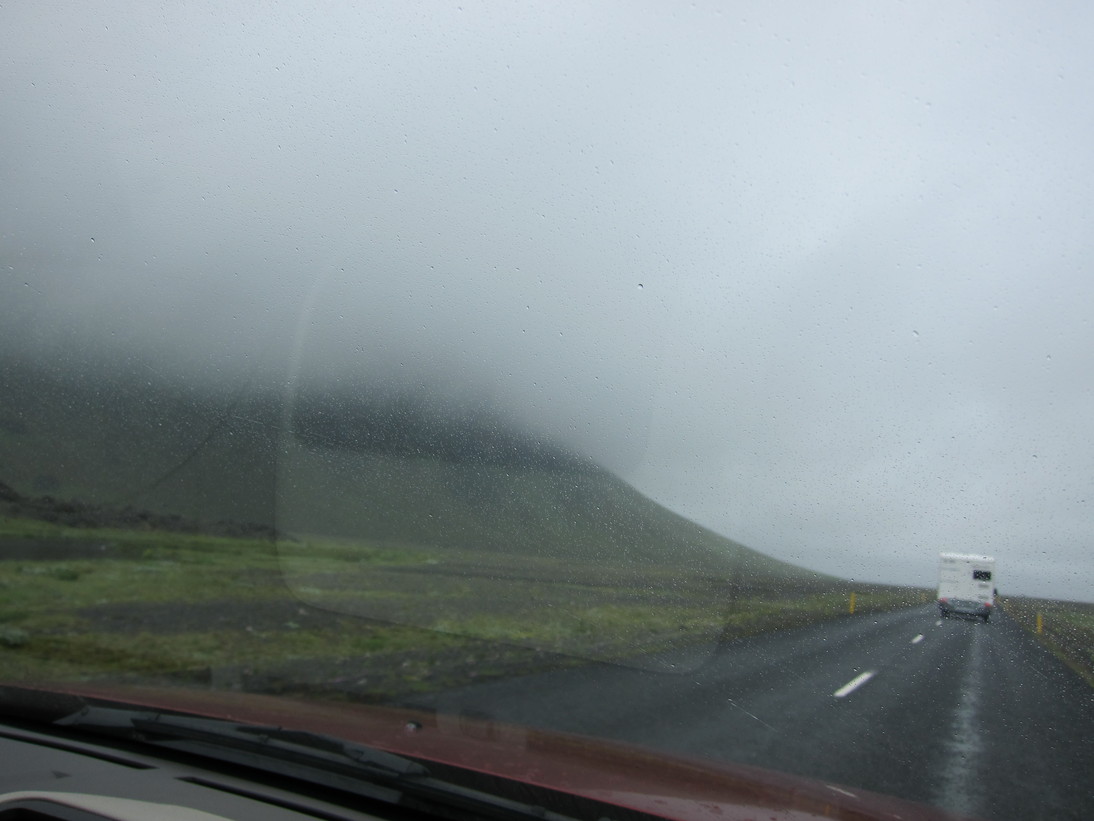
I guess you came to Iceland hoping to see fjords. Well, if you drive counter clockwise, i.e. from Reykjavík to Vík to Egilsstadir... Maybe you don't see a fjord. We had very thick fog all our way through the East fjords. And thick fog means thick fog. Thick as in mortar thick. Icelandic fog feels like a cloud coming down from the skies, you start getting up in a cliff... and then you see just one meter ahead. Driving tips #2 and #3: Drive slowly under fog and don't stop driving in the middle of the road! I guess this is common sense, but common sense is not that common, and better have a reminder.
What's the smell of clouds?
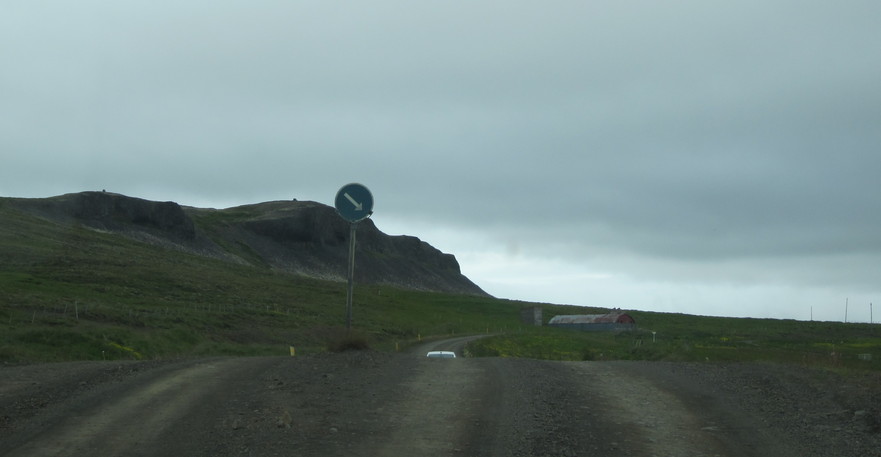
If you come from a flat country, and even Spain counts as flat for this, blind heads may sound like nothing special to you. They are not in Iceland. Blindhæd (blind head) and blindhædir (blind heads) are pretty common, and they are really blind, as some times you don't even see the signal because it is too foggy. A lot of blind heads have a white arrow over a blue circle, pointing to the way you should go in a one lane two way road. Driving tip #4: when there is a signalled blind head ahead, slow down a lot, and beware of the arrow as it can lead you to a cliff!
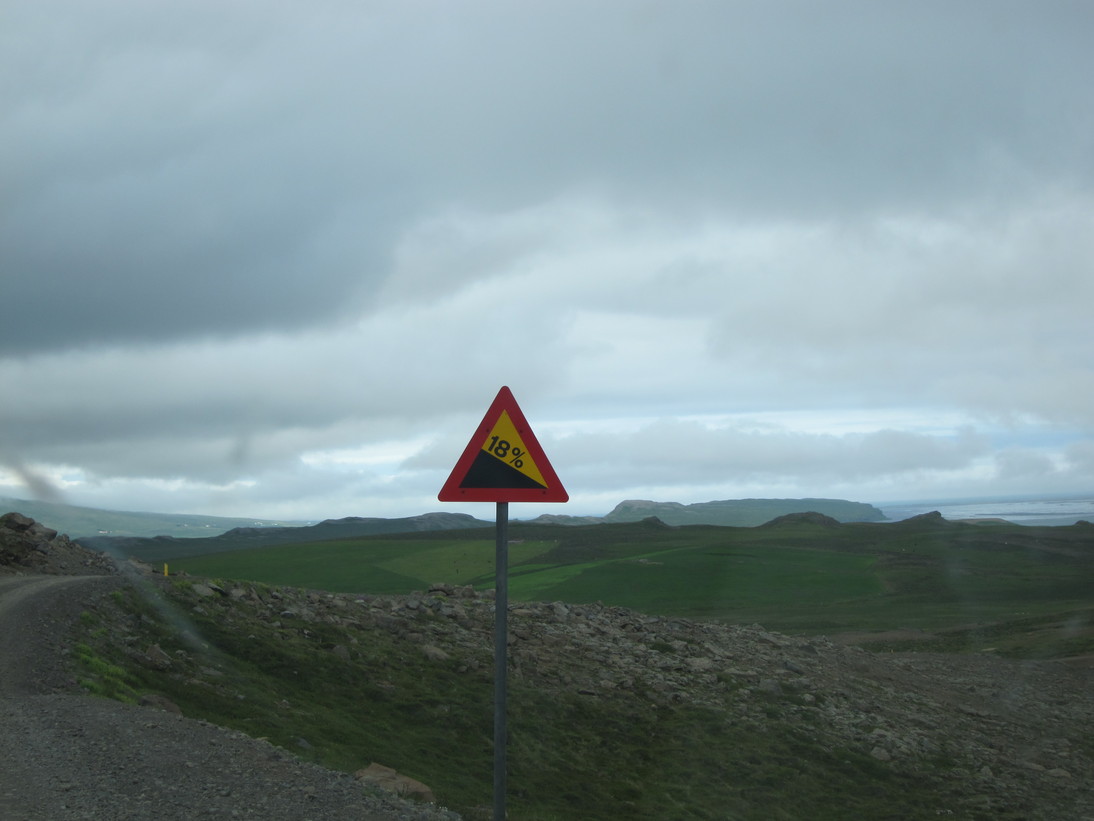
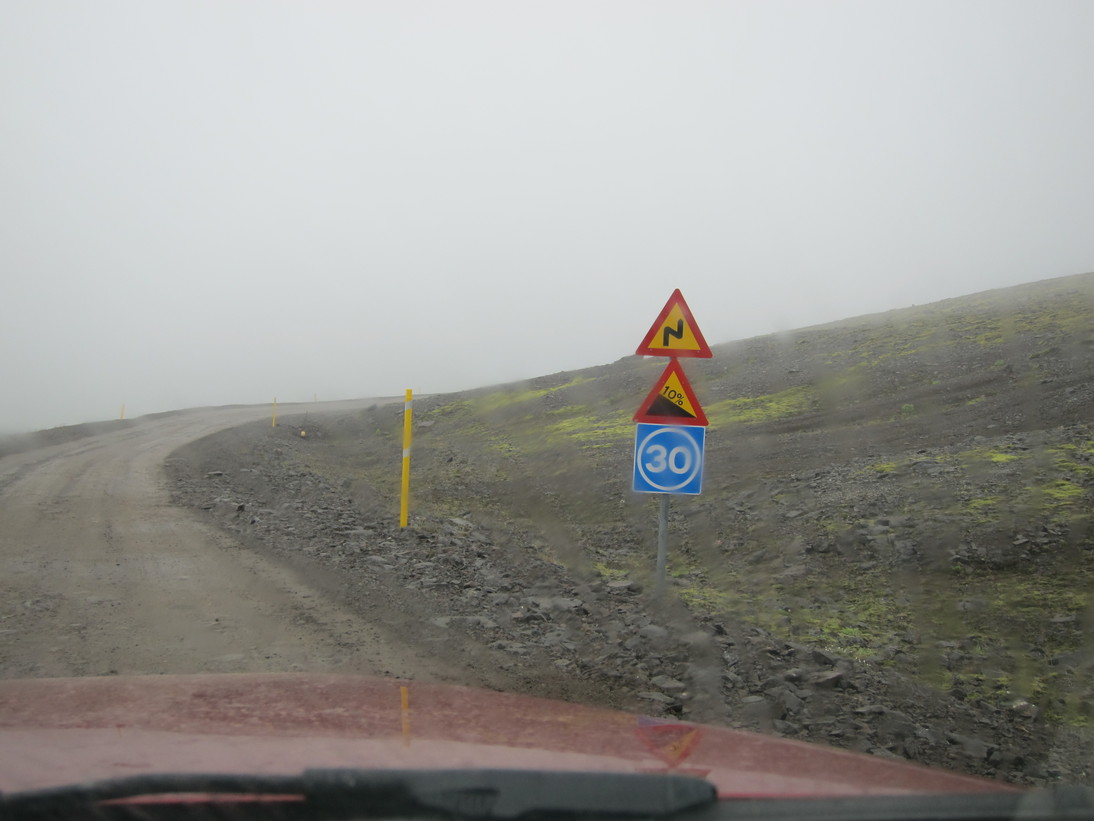
Iceland is bumpy, without any big mountain but a lot of ups and downs. You will find strong road rises and falls. Mixed with fog, strong turns and whatever it can throw you.
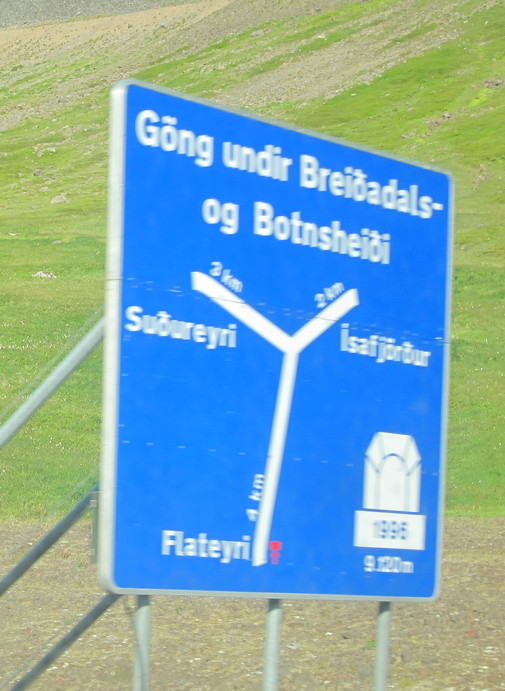
And this bumpiness some times leads to very long tunnels... Like the 9km one-lane tunnel near Isafjördur!
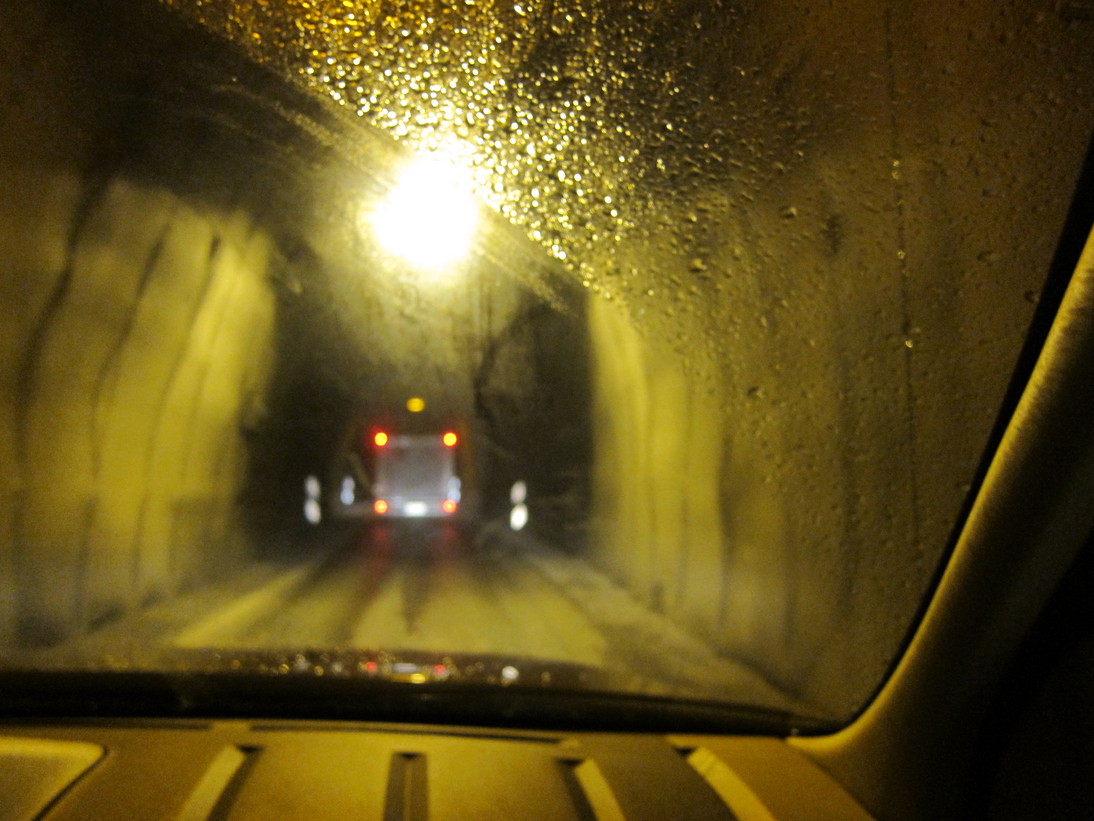
Another risky event are... landscapes! Iceland has amazing landscapes, and the driver can be easily distracted... and run down a cliff, or just over the side of the road, overturn the vehicle and ruin your trip. Driving tip #4: The driver should concentrate on the road, if the co-pilot sees something amazing, stop in one parking place, enjoy your views and keep driving.
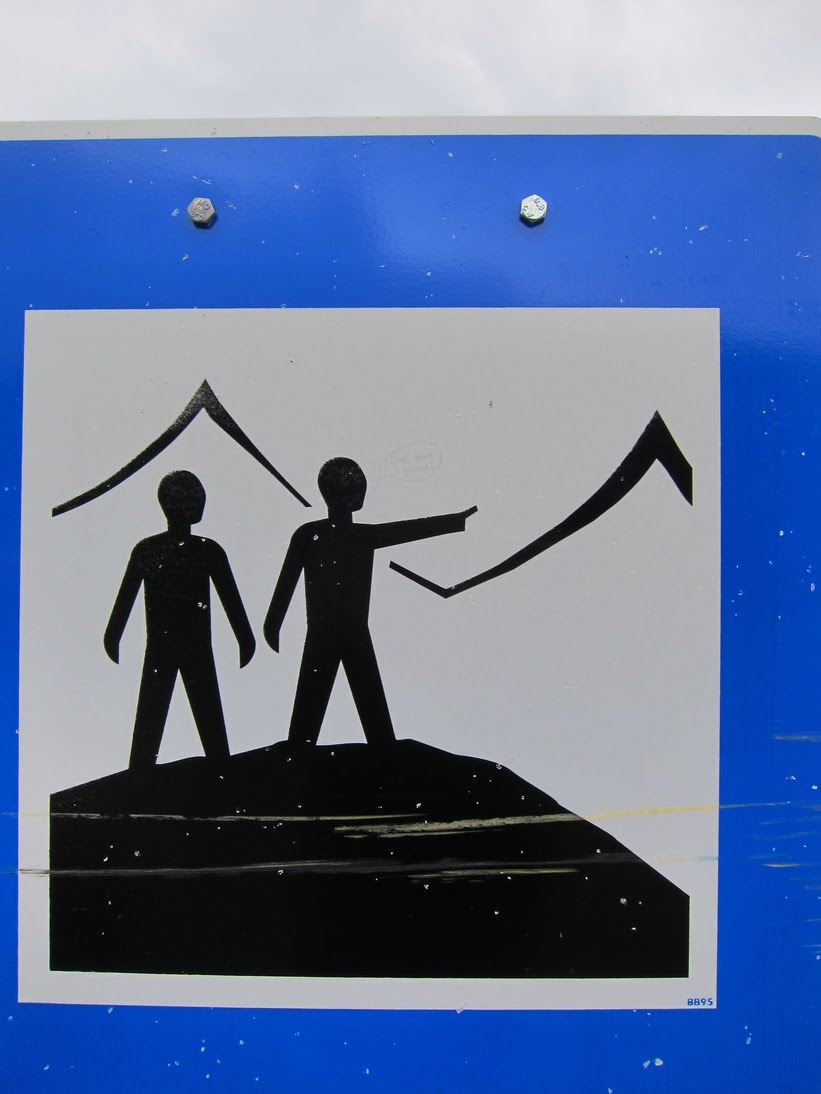
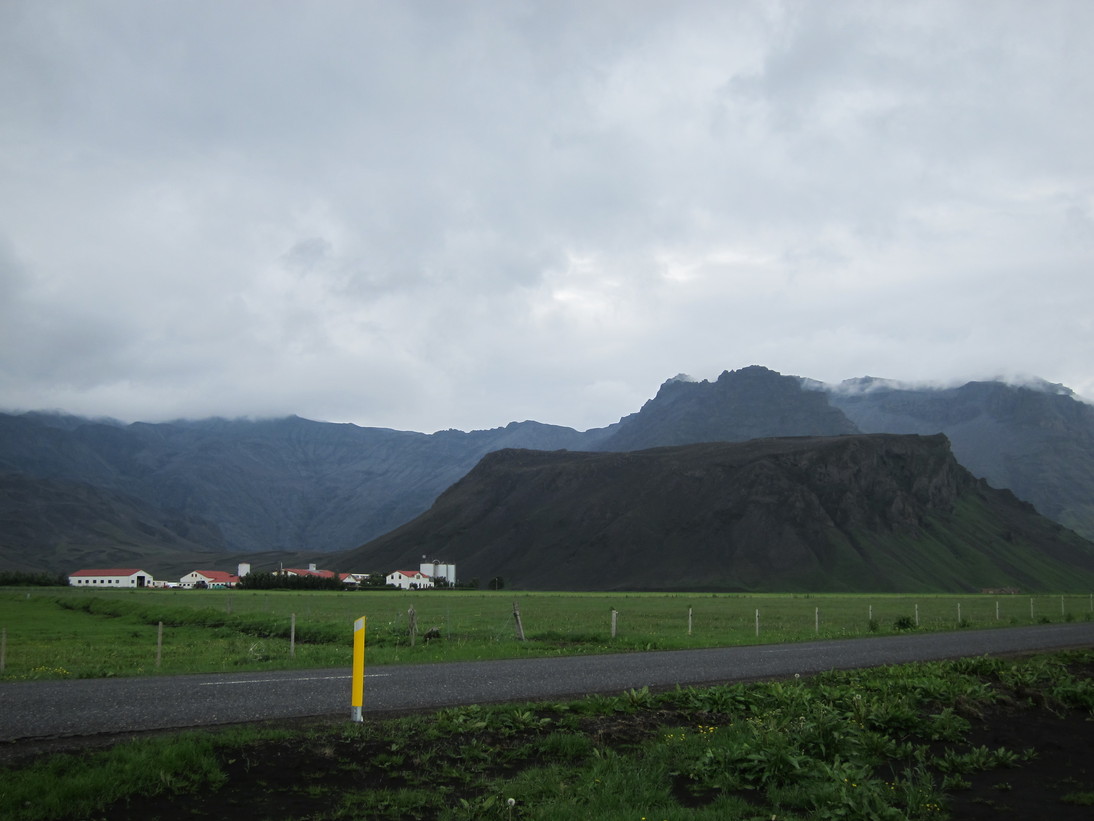
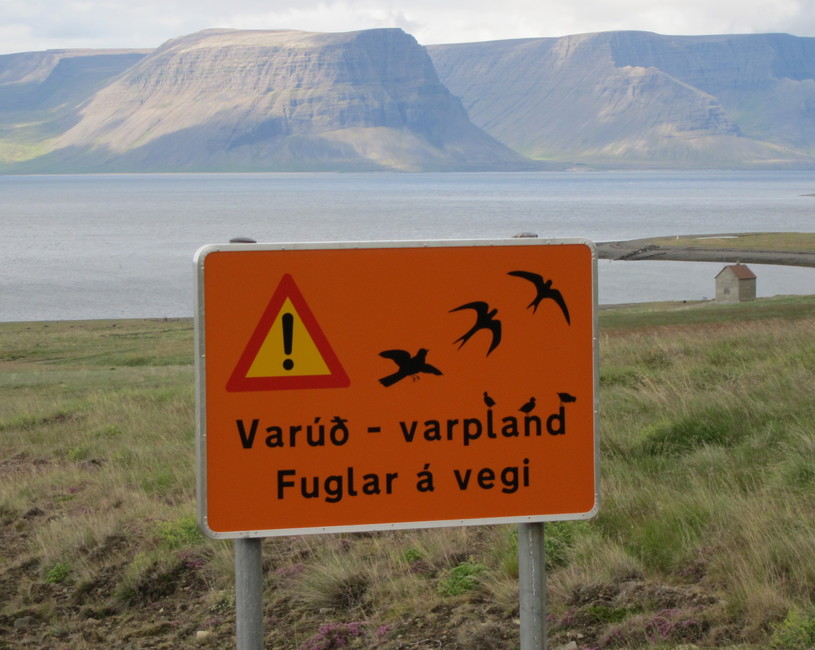
As a final note, you will probably drive over some birds. A lot of birds nest by the sides of the road, or eat there, thus they start flying ahead when you drive nearby... and others are dumb and will drive straight...
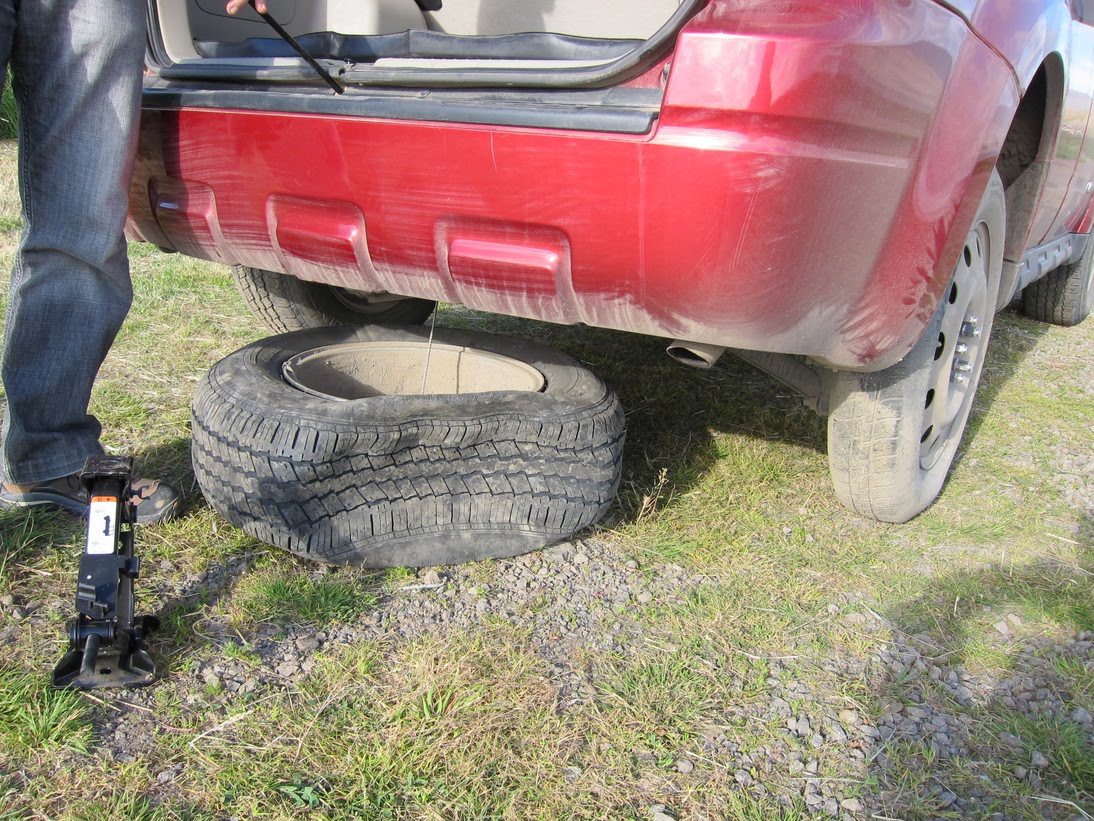
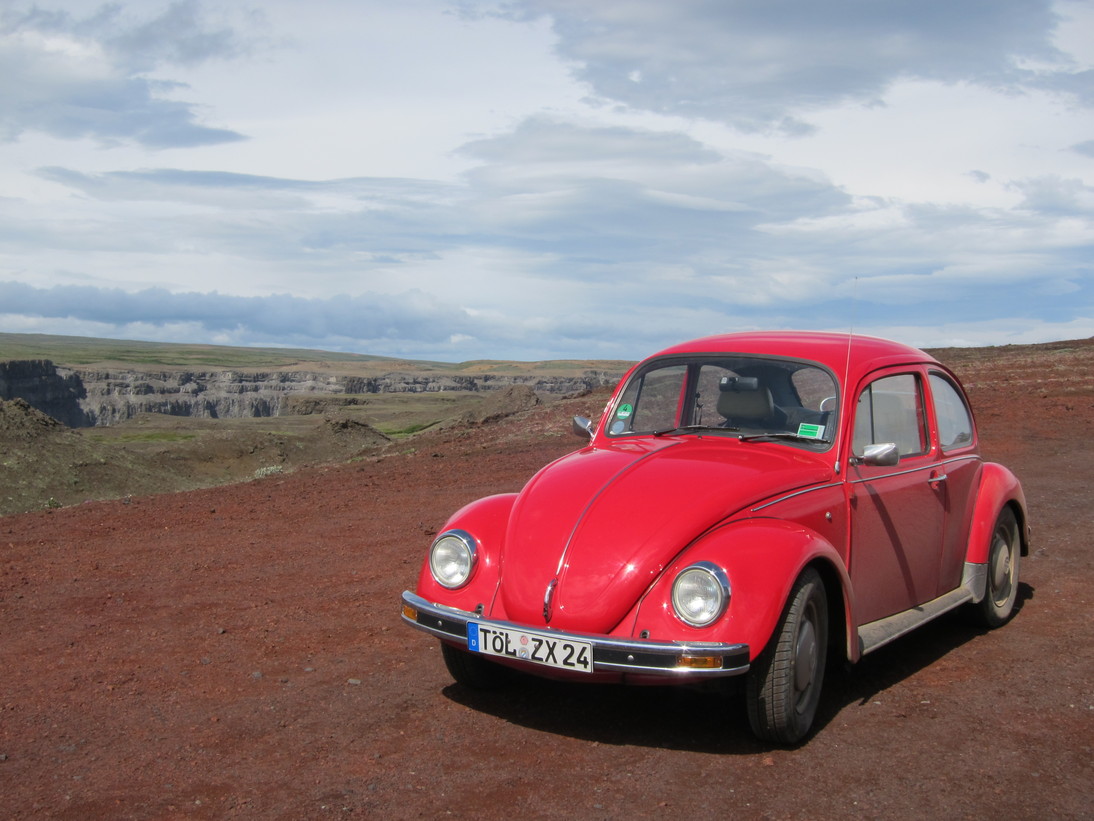
But don't be too scared: we found an old Volkswagen Beetle coming all the way from Germany. If they did it, you can do it too!
Our mighty travel guide (Iceland, by Andrew Evans) was pretty obsessive about Icelandic driving fines. Don't run over the limit (there are plenty of radars, and on clear days, air-planes) to spot fast drivers and people who try to drive through F roads (the bumpier roads, where only 4x4 vehicles are allowed to pass). Don't go off-roads. Fines can ruin your trip.
You can also be fined by parking in not allowed places, but we had no problem and found plenty of free places. For instance, in front of almost all tourist information spots there is free parking, and also beside the Hallgrímskirkja in Reykjavík there are a lot of free spots.
Finally, before allowing you to rent a car, they will tell you to watch this video. You can do it now and save you the waste of time there.
You can also be fined by parking in not allowed places, but we had no problem and found plenty of free places. For instance, in front of almost all tourist information spots there is free parking, and also beside the Hallgrímskirkja in Reykjavík there are a lot of free spots.
Finally, before allowing you to rent a car, they will tell you to watch this video. You can do it now and save you the waste of time there.
Don't forget to look at the previous posts in this series, and subscribe to read the following!
Related posts:
Eating in Iceland (if you are not an Icelander) Icelandic Waterfall and Rock Wallpaper Things you should read about before travelling to Iceland 9+4 fundamental things you should pack in your travelsThe "Related posts" method I use involves Javascript, thus it doesn't work in the RSS feed. To view related posts, please refer to the original article. Thanks!
01/09/2010 - Waterfall and Rock Wallpaper
This is a picture I shot in Iceland, in the Dynjandi Waterfall. If a caption is needed, it would be Never give up. Click the thumbnails to download the high resolution images.
 | 2560 x 1600 pixels Works for 1280 x 800 (MacBook size) with a higher resolution |
 | 2048 x 1200 pixels Works for 1024 x 600 (Netbook size) with a higher resolution |
 | 1536 x 1536 pixels Works for 1024 x 1024 (iPad size) with a higher resolution |
 | 960 x 1440 pixels Works for 320 x 480 (iPhone size) with a higher resolution |
If you have a screen resolution that does not work with these sizes, don't hesitate to leave a comment and I'll create it.
You may also be interested in this other wallpaper: Douady Rabbit Wallpaper, or this one Siegel disk wallpaper,
You may also be interested in this other wallpaper: Douady Rabbit Wallpaper, or this one Siegel disk wallpaper,
The "Related posts" method I use involves Javascript, thus it doesn't work in the RSS feed. To view related posts, please refer to the original article. Thanks!
31/08/2010 - Eating in Iceland (if you are not an Icelander)
As you may remember, Laia and me spent three weeks in Iceland for holidays two months ago. This is the first post in the series Things you should read about before travelling to Iceland. Be sure to stay tuned for the following posts!
First I would like to say you one thing about Iceland's food: don't be scared! They don't eat anything odd, except for a few national foods which are not that usual: hákari (rotten shark meat) and hrutspungar (pickled ram testicles). These two are delicacies Icelanders eat for Þorramatur (a celebration held in February).
As almost every restaurant offers a carte in English, you can be pretty safe of what you will eat. Unless it is some soup, as soups are usually just súpa dagsins (soup of the day) or kjötsupa (meat soup). Enjoy them, Iceland's soups are pretty good, just a little bland (don't have a lot of salt, but are a little spicy).
The national fast food is the pylsur (or pylsa). It is a hot dog variant, with ketchup, sweet mustard, fresh and dried onion and remolaði, a mayonnaise-like sauce. The best place to eat them is in Bæjarins Beztu Pylsur (Best pylsurs of the city, in Icelandic) in Reykjavík, near the harbour and the flea market. It is definitely the best hot dog we have eaten ever, and ate quite a lot when we were at the capital. It can be found in gas stations all over the country, but better eaten in the best place!
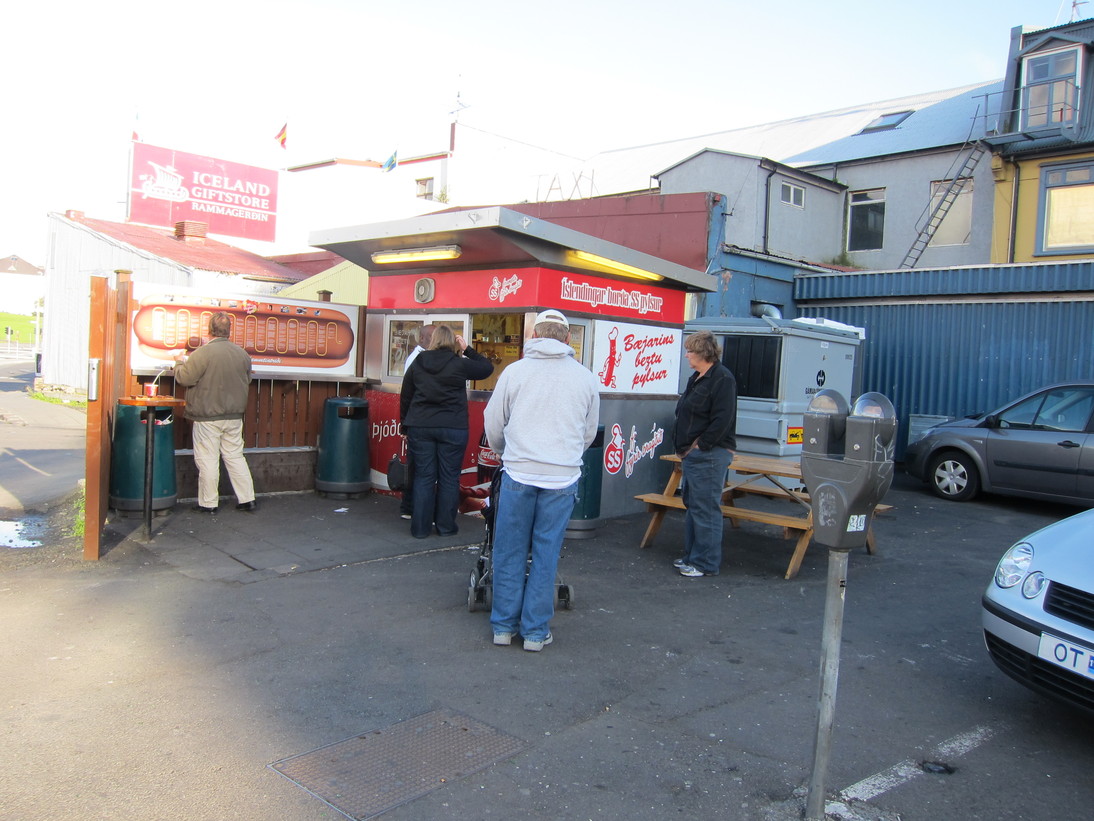
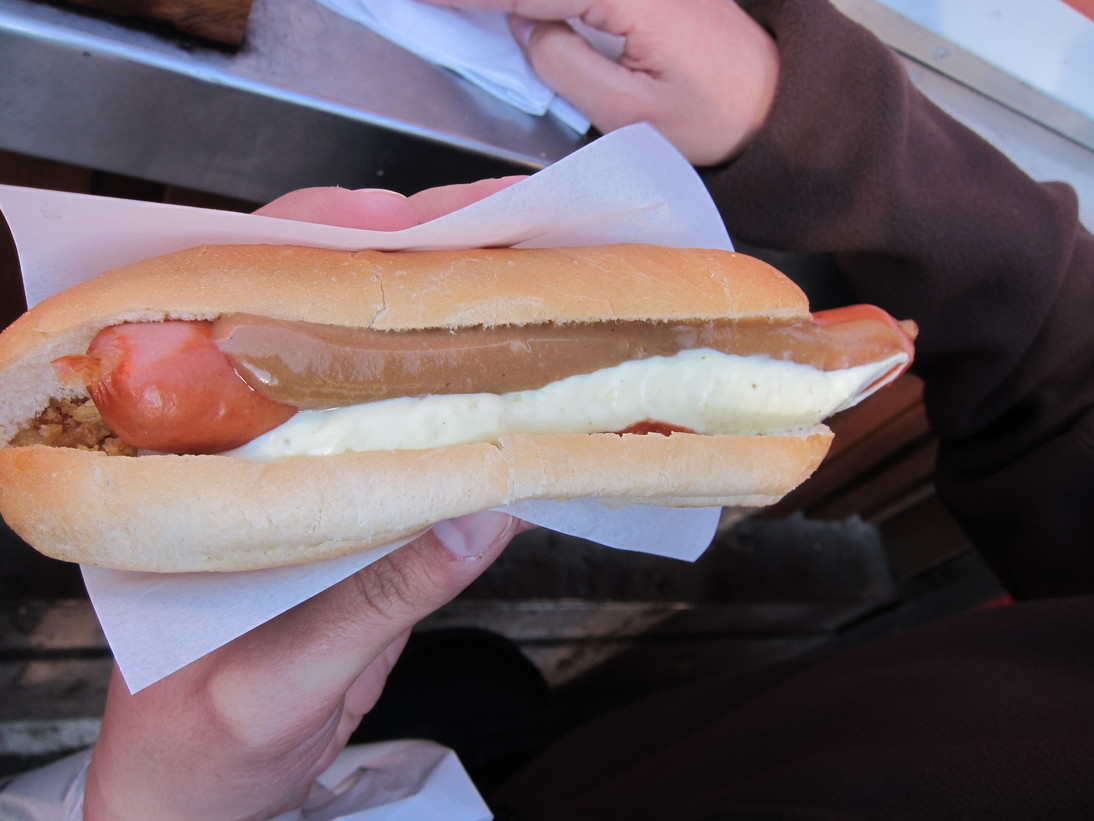
I have tried to do something similar at home and the results were pretty decent, although the original is better. You can read more about my home-made pylsur recipe.
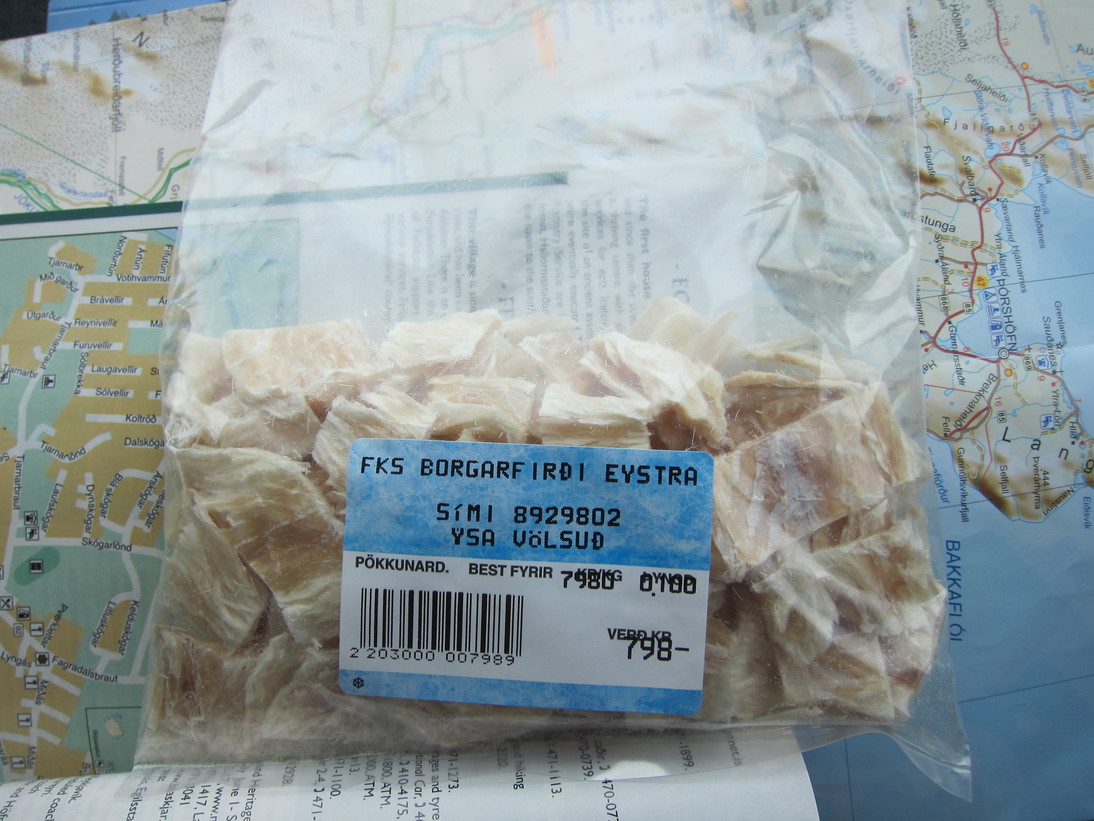
Dried fish is one of the other typical fast food here. We read in our travel guide that it is a typical snack while driving. I conceded and bought a pack of dried cod (once we realised which fish it was). If you like fish, you may find it interesting, but it was not that good. If you dislike fish... you better don't eat it. But it is worth a try nevertheless.
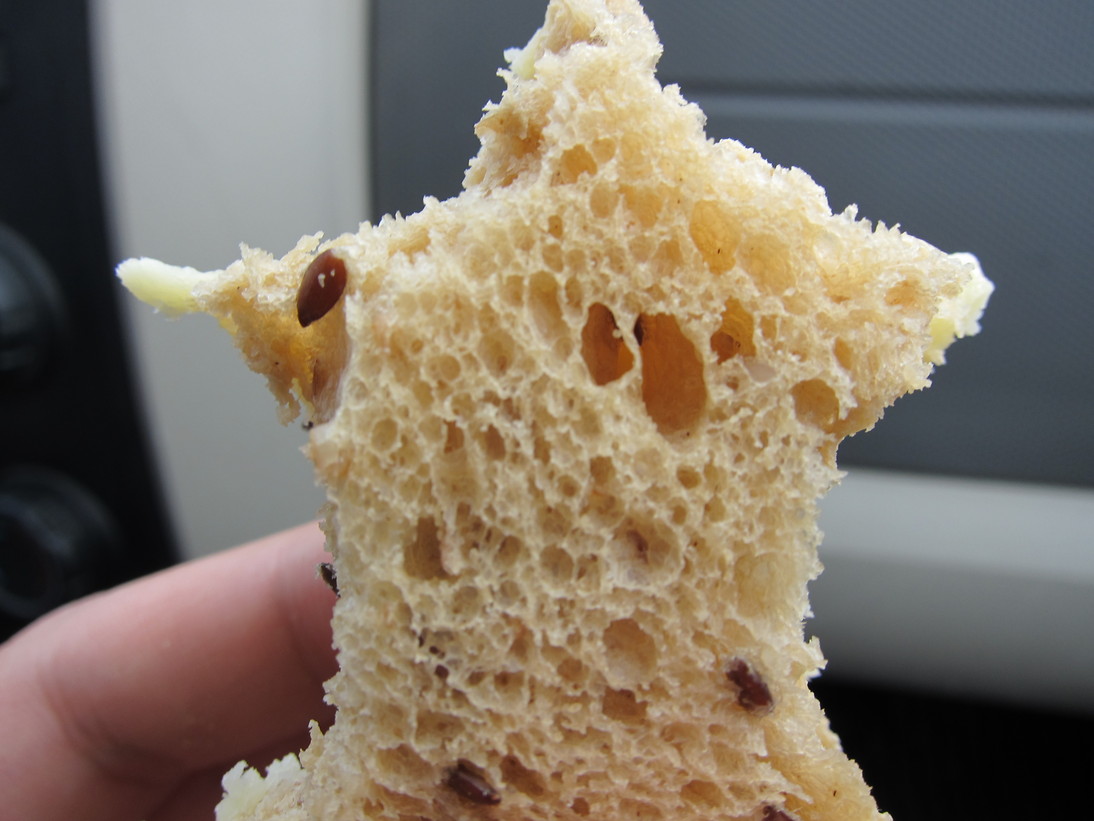
While you are in Iceland, don't be shy and try all types of bread you can. There are several local bread types, the ones we liked the most were the flatbrauð and the kryddbrauð. The first is a flat bread (as the name suggests) but it tastes quite different from any bread I had eaten. It is odd, but good. It looks like a crêpe, it is very flat. The second one is a spice bread (krydd means spices) and it made Laia go nuts for it. A lot of guest-houses also baked its own bread and gave it for breakfast. Fresh baked bread in the morning is delightful!
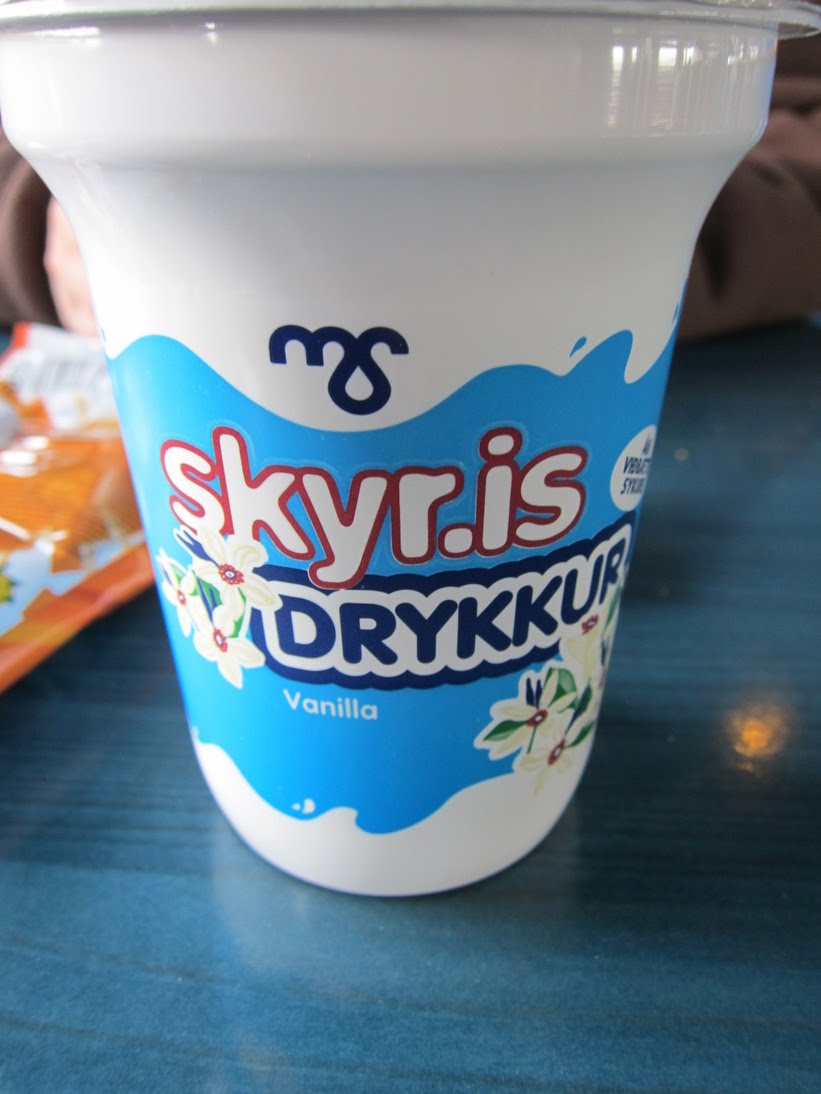
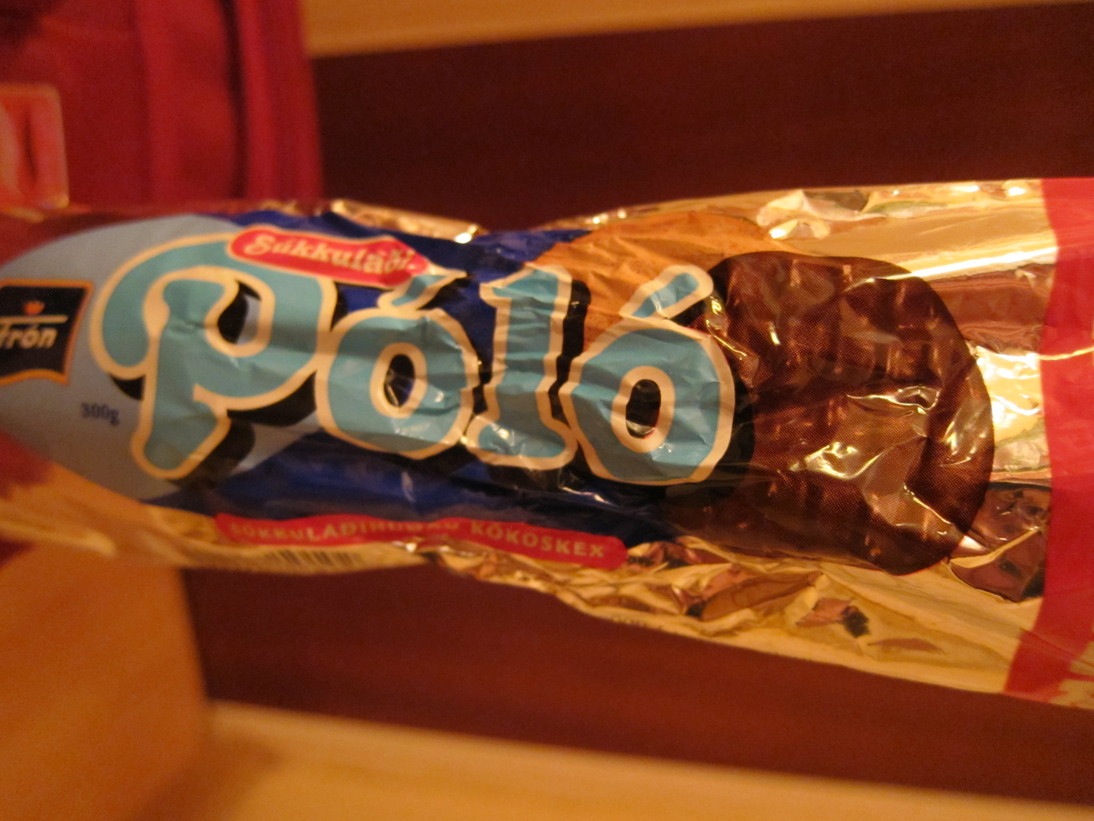
Another treat I loved was Frón's Póló chocolate and coconut cookies. You can buy them in some supermarkets (look for the cookies section and then for a blue tube with Póló written on it). If you like chocolate-coconut combinations, you'll love these cookies.
Related posts:
Things you should read about before travelling to Iceland 9+4 fundamental things you should pack in your travelsThe "Related posts" method I use involves Javascript, thus it doesn't work in the RSS feed. To view related posts, please refer to the original article. Thanks!
27/08/2010 - Things you should read before travelling to Iceland
Interesting things to know before going to Iceland
As you may remember, Laia and myself went to Iceland for a 2 and half weeks trip last June-July. It was a wonderful experience, managed by the wonderful (and helpful!) people at Nordic Visitor. This is the first post in a series named Things you should read before travelling to Iceland. In these posts I will cover the following (I will add links to the individual posts here as I write them, bookmark this page!):
When I finish this preliminary series of posts, I will post another, with a daily account of our trip: sightseeing places, where we got lost, what we saw, what we didn't. Share and enjoy!
Related posts:
9+4 fundamental things you should pack in your travelsThe "Related posts" method I use involves Javascript, thus it doesn't work in the RSS feed. To view related posts, please refer to the original article. Thanks!
15/07/2010 - 9+4 fundamental things you should pack in your travels
Being a copilot in Iceland can be either stressing or boring. It depends if you are going to an almost unmarked farm where you will spend the night or just in the middle of an unending straight road. And in the boredom moments, I decided to compile a list of things we had packed and were really useful. I hope this helps you in your next trip!
.
As extra options, depending on what you plan to do/can pack:
- Swiss knife: Far better than having just your dental floss cutter. Imagine what McGyver could do with your previous 9 items and a Swiss knife! Of course, if you don't check luggage you have no option to pack it.
- Technogadget of choice: I always travel with my iPod touch. If offers me reading for bored moments (either mathematics, books, you name it), and also playing. Moreover, music, time and internet connection whenever I find a wifi hotspot. You can buy an iPod touch in you nearest Apple reseller, or from this affiliate Amazon link: iPod Touch 3rd Gen. 32 Gb
- Notebooks, pen, pencil: If you enjoy writing or drawing, I don't need to say you how useful this items are. I rarely draw while traveling, too little time usually, but just in case always carry my Moleskines and pens.
- One instant soup dose: It doesn't take any space, and could save you from an expensive supper when you just want to get back to your bed.

The "Related posts" method I use involves Javascript, thus it doesn't work in the RSS feed. To view related posts, please refer to the original article. Thanks!
25/06/2010 - Leaving on holidays
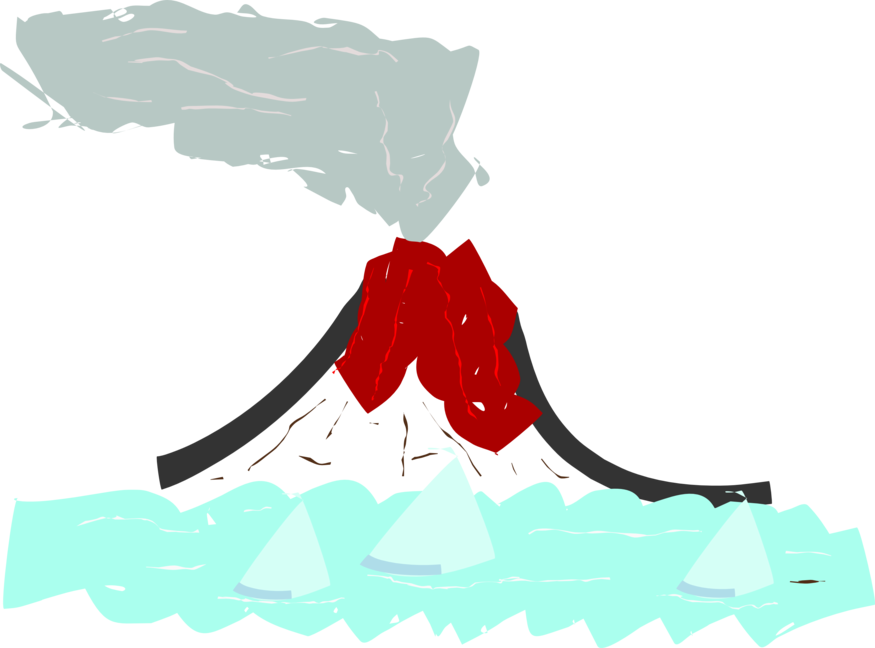
Today I am leaving on holiday... Destination: Iceland. It is funny, because we arranged everything (accomodation, car rental and such) just two weeks before Eyjafjallajökull started spitting ash. It have been a few months wondering whether we could make it to Iceland and come back... Fortunately the little volcano took a pause and here we go.
I have a few scheduled posts for this few weeks (I'll be back around 16th July) but I will be again posting more frequently after I am back.
If I can get Internet connection there (in Reykjavík it should be no problem, but I can't be so sure about the rest of the island) I'll try to post a comment or picture.
Once we are back we will try to write a joint post: Laia's pictures with maybe one or two mine (she is the photography enthusiast) and my text (with Laia's ideas and proofreading) explaining what we did, saw and experienced.
See you soon!
I have a few scheduled posts for this few weeks (I'll be back around 16th July) but I will be again posting more frequently after I am back.
If I can get Internet connection there (in Reykjavík it should be no problem, but I can't be so sure about the rest of the island) I'll try to post a comment or picture.
Once we are back we will try to write a joint post: Laia's pictures with maybe one or two mine (she is the photography enthusiast) and my text (with Laia's ideas and proofreading) explaining what we did, saw and experienced.
See you soon!
The "Related posts" method I use involves Javascript, thus it doesn't work in the RSS feed. To view related posts, please refer to the original article. Thanks!
31/10/2009 - Den lille havfrue
København, Denmark
02/09/2009 - Heat wave
Monday, 16:00A heat wave is cruising Catalonia, starting Monday... ending Wednesday. Wednesday (today, in about 1 hour) I'm leaving for Paris... Funny, isn't it?Monday 20:00
29/08/2009 - Paris Space Invaders
While on Paris, I spotted several Space Invaders. Sadly, I wasn't aware enough, as there are plenty.
03/08/2009 - Old books' scent
I love the smell of old (really old, but not dusty) books. It reminds me of some kind of vanilla scent, that is only to be found in them. I smelled it a few weeks ago, when I bought Conrad's Heart of Darkness, second hand 1972 Penguin Modern Classics edition (3€) in a second hand bookstore in Göttingen (Germany).


