

Nombre de resultats 14
per a Iceland
04/06/2012 - It's Not Only the Politicians: This country is completely fucked up
Beware, in what follows I rant. All figures come from Wikipedia or similar and are expressed with many zeroes and also in written form to make clear what a billion may be.
If you are a regular reader of mostlymaths.net, you'll be aware that I don't write a lot about current subjects. In fact, I actively try not to write about what's going on at the moment, one notable exception may be a post I wrote about Mesut Özil's stellar debut in the 2010 World Cup. As a curious example, last week we (Laia and me) had a wonderful dinner with Michael and her girlfriend. He's been a week on holiday here in Barcelona and we found time for a tasty Indonesian dinner. He talked me about a mining strike in Asturias (in the Northern area in Spain,) and I was completely unaware of it. My usual news sources are Reddit, HackerNews and my tweeps. And almost none are Spanish.
But now, I just feel compelled to write about the state of Spain and Catalonia as a byproduct. I am pretty sure out there I could find a decent politician... Given an infinite set of politicians and the axiom of choice. But I don't like doing NP-hard problems by hand anyway, and I've thought for a long, long while that someday politician will be an insult. And banker could (as well) be another, at least referring to the heads of the bank.
What made me break my standard silence? This article. It's in Spanish, but I can give you a rough summary (or read it via Google Translate)
A municipality in Cáceres (center-west of Spain) formed by 3 towns had 15,000€ prepared for summer festivities... Money destined to bull fighting. The major of the district had a better idea: use these 15.000€ to hire (temporarily) some workers, alleviating the area unemployment. The result?
- Town A: 242-181 for unemployment (40% of citizens voted)
- Town B: 47-126 for bull fighting (27% of citizens voted)
- Town C: 19-76 for bull fighting (27.6% of citizens voted)
The paper interviewed some people. The opinion of a citizen of town A is that "festivities are two days and invoices are due all year long". The opinion of 3 17-year old girls (town unnamed) is that "they are too young to work and they enjoy a lot the acts".
As the title says, it's not only this country's politicians. There's a very deep problem here, it's not only that a lot of people don't care about what happens to others. In some sense, I'm also guilty of this. It's more like people don't realise what is going on. "Fiesta!" They think money grows on trees (or on printers,) in fact, a former minister (from the supposedly left-winged party, now in opposition) said
We administer public money, and public money is nobody's money.
Yes, this is the idea coming from someone "we" elected. This is the stupid idea running amok in my country's society: public money comes from nowhere. Somehow I feel it all started 30 years ago with the beginning of our democracy, when to soften Catalonia's and Basque Country's special consideration someone invented the "café para todos" (coffee for all.) What this meant is doing the same in all regions. Barcelona has an airport? Why can't Castelló have an airport, too (and all other regional capitals, even if they have less than 150,000 inhabitants)? High speed train from Madrid to Barcelona? Let's get it going to Cuenca, again.
When the plan started it wasn't as stupid as it is now. Maybe because politicians knew where money was coming from? Who knows. But now the only thing we have is majors and regional presidents building unnecessary infrastructures, after all, who pays the bills? Someone else. Who? Not the Doctor.
And this is the state of affairs. Regions have no money, some less than others. Valencia is completely bankrupt, but they don't care at all. In Catalonia, we are too, and still the central government asks for more cuts. Public employees (who are mostly tenured in all Spain) got a 10% cut (average over all incomes) in Catalonia, but not everywhere else: a general strike of public employees could stop the country. Instead, health and education budgets got a huge cut, while all savings from them go to saving bankrupt banks. The last case, Bankia...
The Bankia case deserves a special post, and there are plenty. For the uninitiated, it was the merge of 7 smaller banks, all of them bankrupt. It should be clear to any lay person that a lot of companies with a lot of debt, joined, result in a big company with a very big debt. Go figure. It was created with money from other banks and government money, trying to clean the worse assets in these 7 magnificent. And who was in charge of Bankia? Rodrigo Rato, former economy minister with the same right-winged party that is now in charge of things in Spain. This same RR stepped down on May 7th, after getting a salary cut from several millions to "only" 600,000 €/year. It's clear I choose (and probably, you too) a bad career: when I do a lousy job, I don't get money. Clearly the guy did a bad job: he refused a merger with "La Caixa" (the largest Catalan bank) to keep Bankia (mainly a Madrid-controlled bank) from becoming mostly Catalan. This is my "country." Oh, forgot to add this: Bankia had 309,000,000€ of profit in 2011. Turns out, once this was revised, before taxes they had already lost 4,300,000,000 (that's 4.3 thousand million) euro. I'm guilty of messing with my calculations and forecasts. But before doing anything with a result, I double (or triple) check. And from my calculations don't depend the money of a lot of people.
Now the state has to give Bankia around 25,000,000,000 (that's 25 thousand million) euro to keep it from bailing out. For a lay person, this amount of money is just staggering. Here in Europe we are used to big transfer fees in sports, but they are "just" of the order of 100,000,000 euro (hundred million). So, let's see what 25 thousand million are for Spain
- The GDP (nominal) of Spain is 1,400,000,000,000 (that's 1.4 million millions) euro. So Bankia's bailout is equivalent to 1/56th of the total GDP.
- Spanish government revenue is 515,000,000,000 (that's 515 thousand millions) euro. Bankia's bailout is ~ 1/20th of the total revenue. BUT
- Spanish government expenses (as of 2010) were already 616,000,000,000 (yes, 616 thousand millions.)
- NASA's budget is 14,250,000,000 (14.25 thousand millions) euro. Almost half of it.
Okay, in short, it is a f**cking lot of money. Money that our country does not have, that Europe can't lend.
What happens when the whole Spanish government bails out? Who knows? Most likely the Euro as a whole breaks... Unless Germany let's the ECB start printing euro bills like crazy.
This is the rant. Not only politicians are stupid, our own countrypeople are stupid. And there's nothing rational people can do about it.
Damn, how I'd love to be able to live in Iceland. At least the ratio of shouting-reforming people there is higher.
Further reading (via Google Translate):
- High speed trains, airports and cable cars (there's a Google Translate selector on the right, under "Traductor de la página"
- Bail Out The People (check the Rodrio Rato box)

21/06/2011 - Road Trip Through Iceland: Day 11 – A fjord day and visit to Ísafjörður
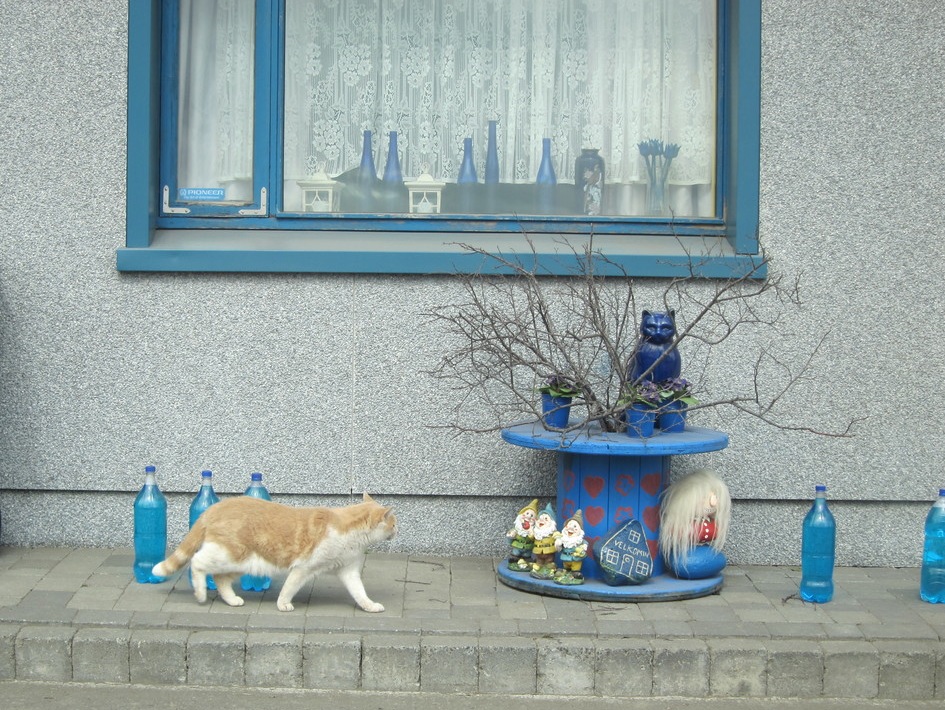
In Back to the Future, Doc sets the clock in the DeLorean to a day 25 years in the future. Today (2010, 6th July) is that day.Today was a really amazing day. It was very sunny, and we visited Ísafjörður, a city that stole our hearts.
Holmavík's Witchcraft Museum, Reykjanes
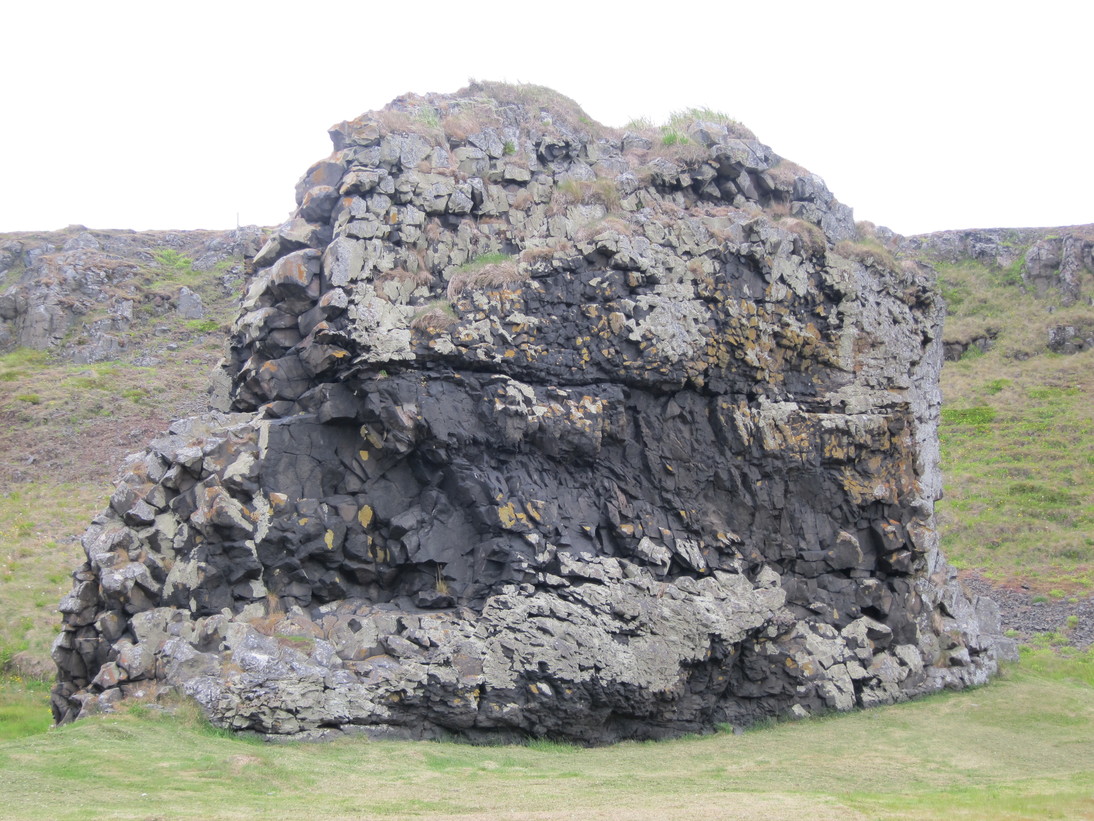
We started our day with breakfast and taking a quick picture of Drangsnes' Rock troll. It does not look like a troll for us, but anyway.
Fueled at Holmavík, and then visited Holmavík's Witchcraft Museum. It was very interesting! It only costs 700 ISK with and included an mp3 player-audioguide. They also had an open wifi hotspot, thus we took a coffee while relaxing, at Kaffi Glaður while checking our mail and twitter.
From Holmavík we drove to Reykjanes... Where we did not find Reykjanes' old pool... We just walked around for a while, then we went back to the car. Fueled again (it had been a longer drive than expected!)... This N1 station only offered gas, no food or anything else. No skýr, no market, not handcrafts. A boring stop, if not for the views!
From Holmavík we drove to Reykjanes... Where we did not find Reykjanes' old pool... We just walked around for a while, then we went back to the car. Fueled again (it had been a longer drive than expected!)... This N1 station only offered gas, no food or anything else. No skýr, no market, not handcrafts. A boring stop, if not for the views!
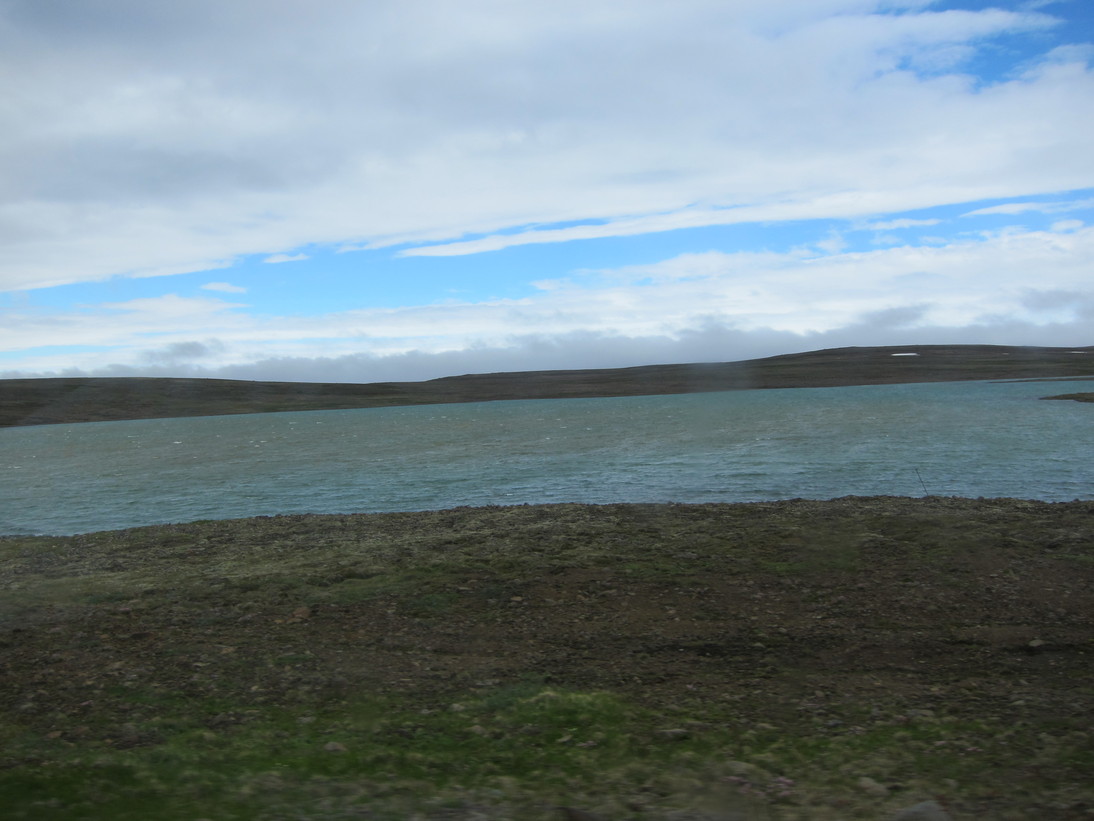
(View in front of Vigur)
Way to Ísafjörður
We started to drive around the fjord area, taking pictures all around. The day was sunny and warm... Incredible. It was the best moment for a change of weather, the views of the fjords were incredible.
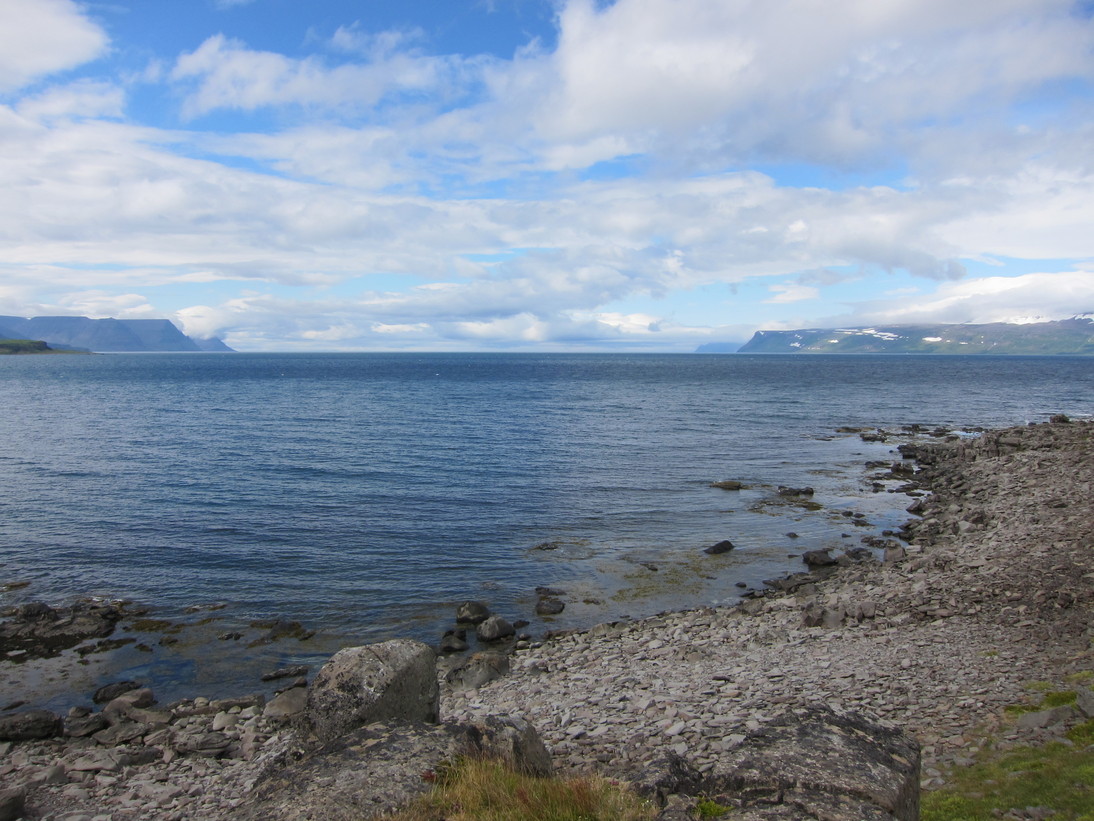
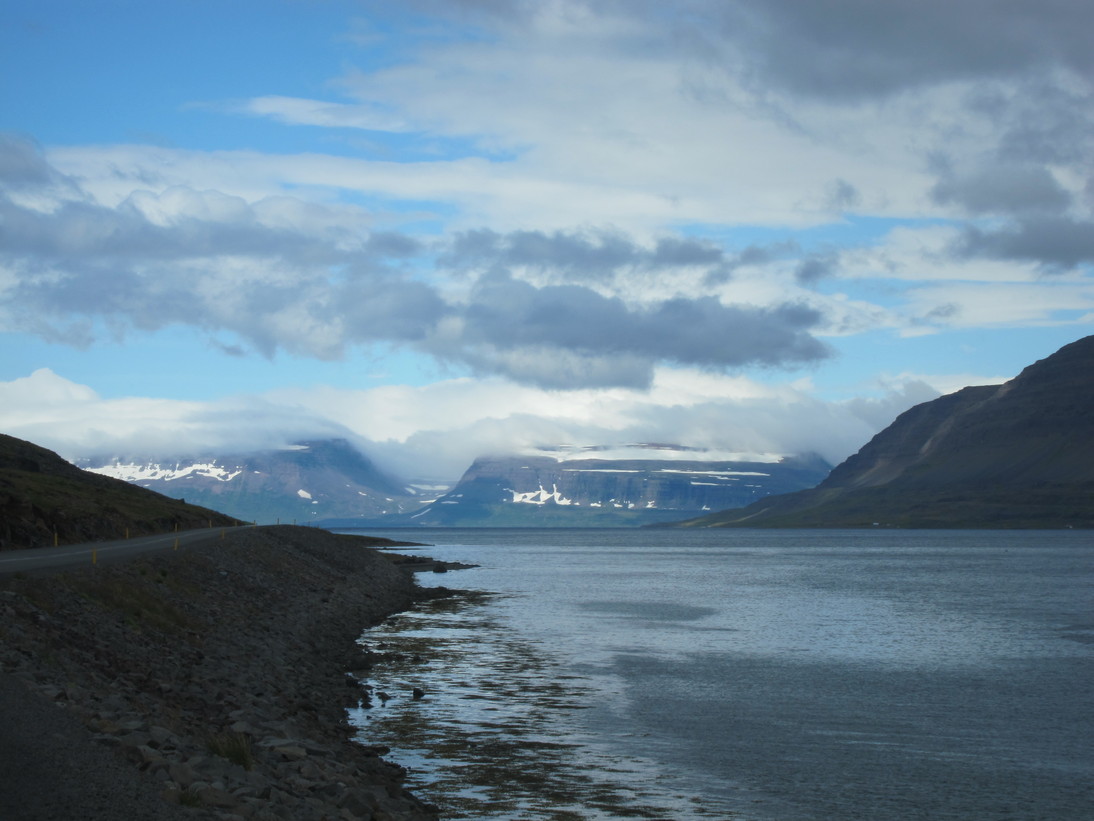
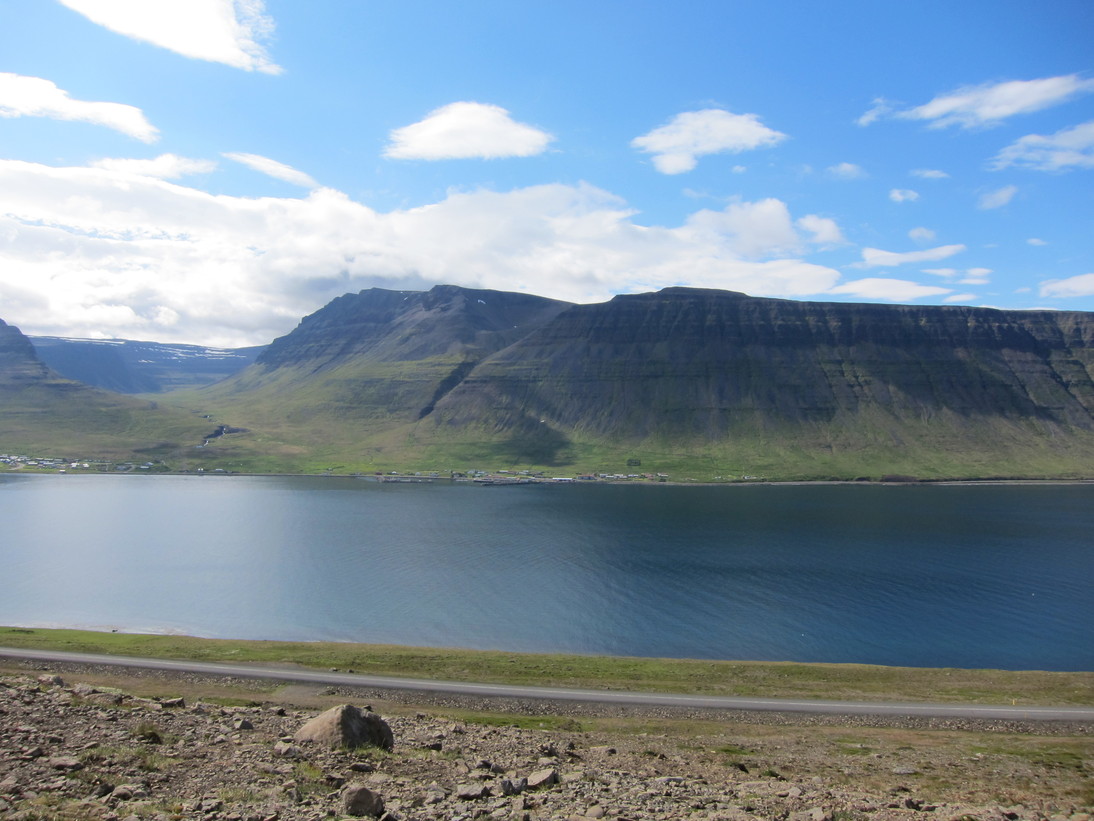
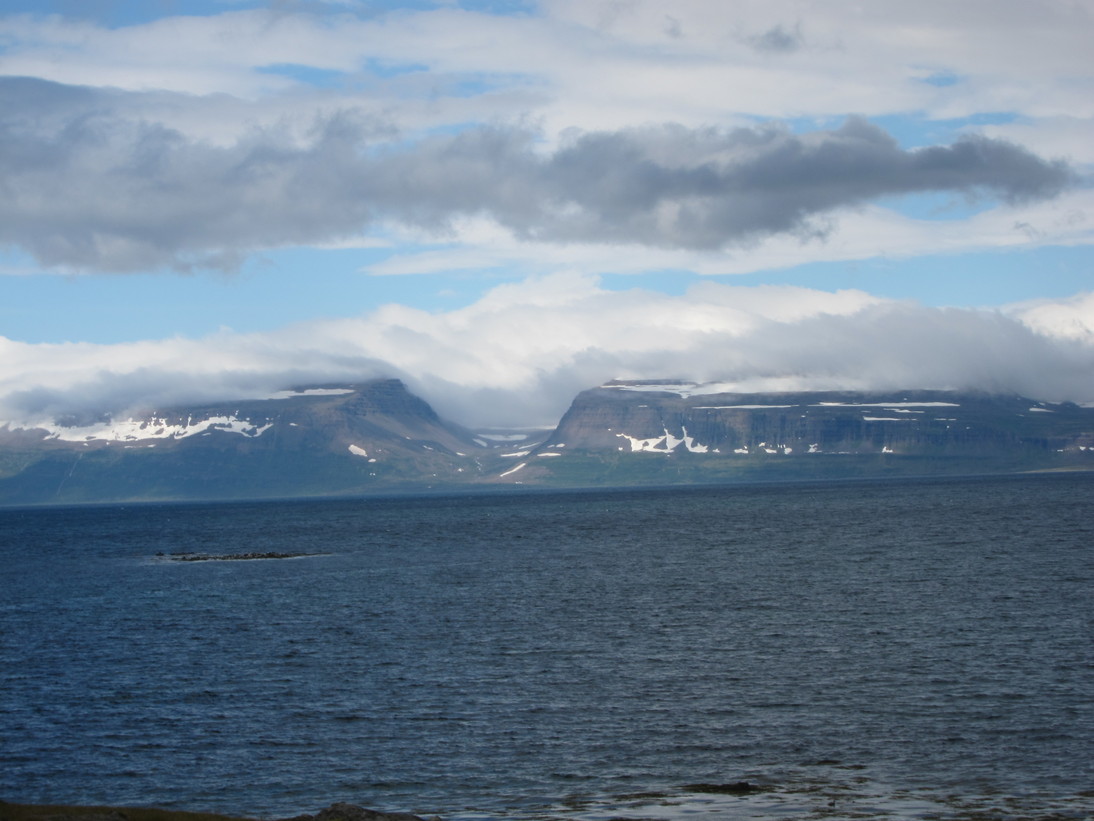
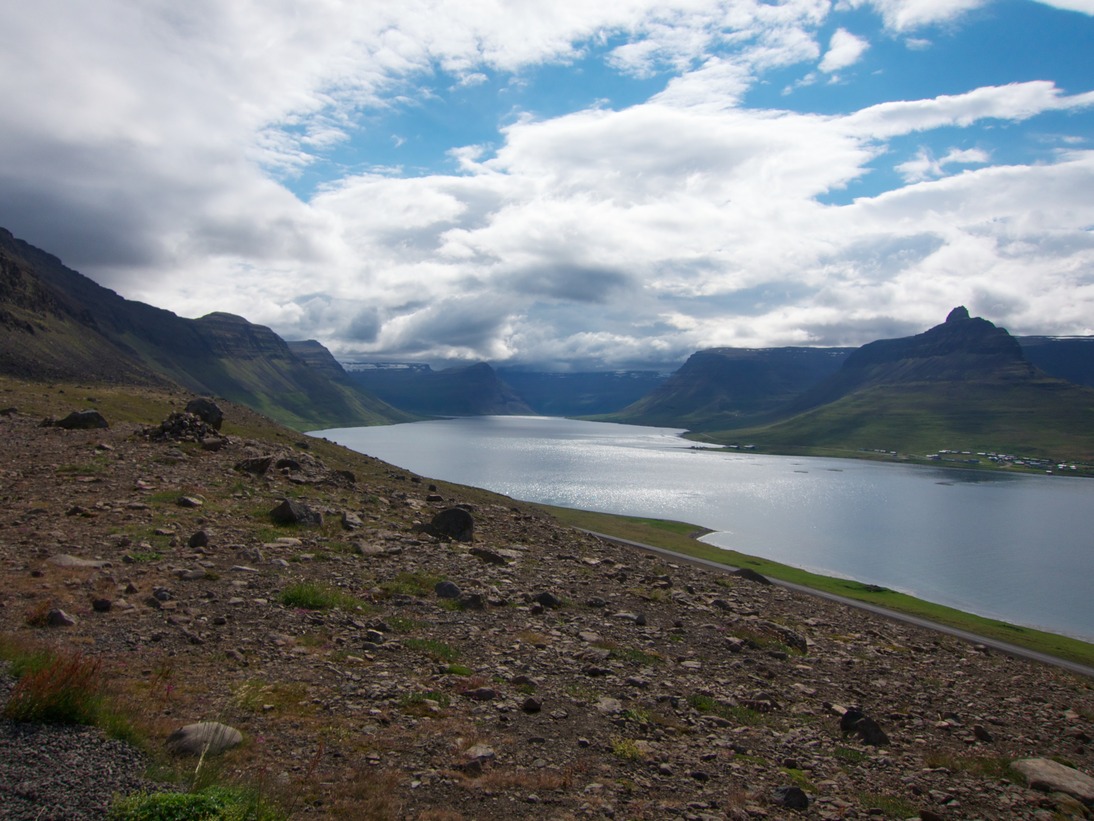
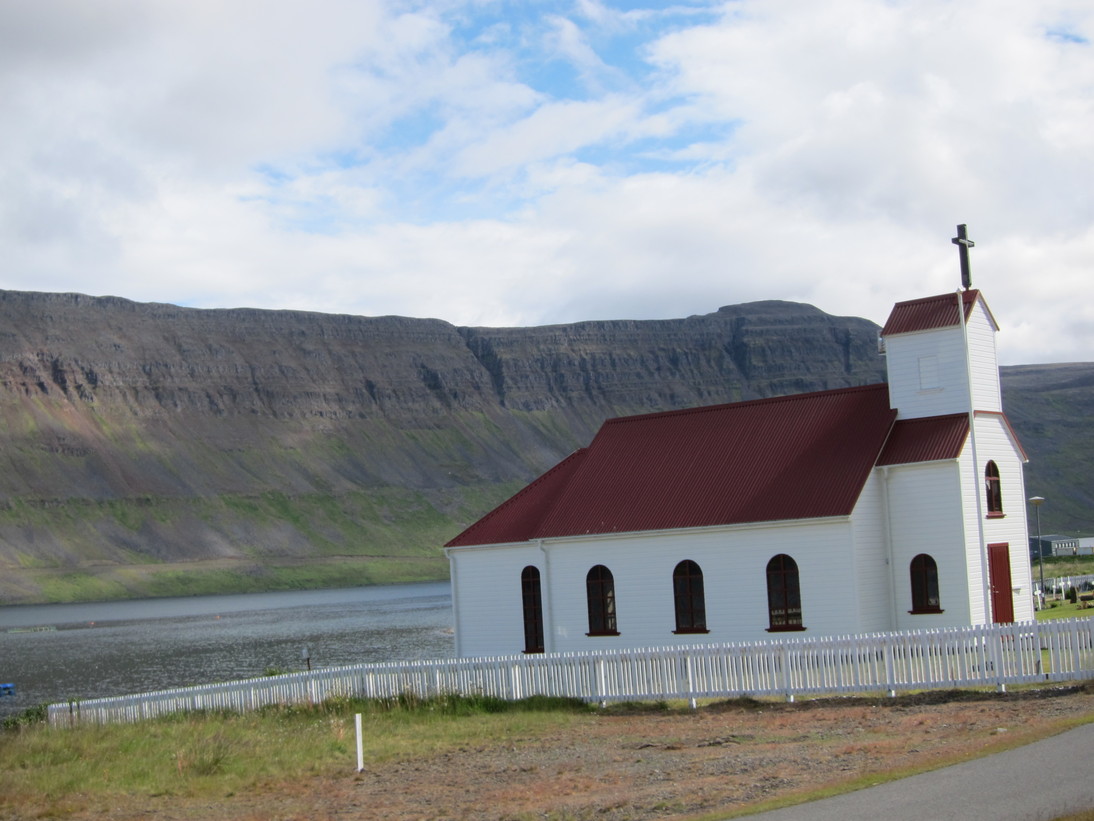
Ísafjörður is an awesome city. Probably this impression was heavily biased by the fantastic weather, but anyway. If I ever get to work whenever I want in the world, this is the place we want to stay.
Parked in front of the information centre, where parking is free (which happens almost everywhere, in spite of what our travel guide explained). Walked around for a while, before having a look at the local Eymundsson bookstore, which had absorbed the old local bookshop. Nothing interesting, the same books we saw at Akureyri. But beside it we found a wonderful "store", mix of cafe and wool and handcrafts. We had a coffee with a rhubarb pie, very similar to my æblekage.
Parked in front of the information centre, where parking is free (which happens almost everywhere, in spite of what our travel guide explained). Walked around for a while, before having a look at the local Eymundsson bookstore, which had absorbed the old local bookshop. Nothing interesting, the same books we saw at Akureyri. But beside it we found a wonderful "store", mix of cafe and wool and handcrafts. We had a coffee with a rhubarb pie, very similar to my æblekage.
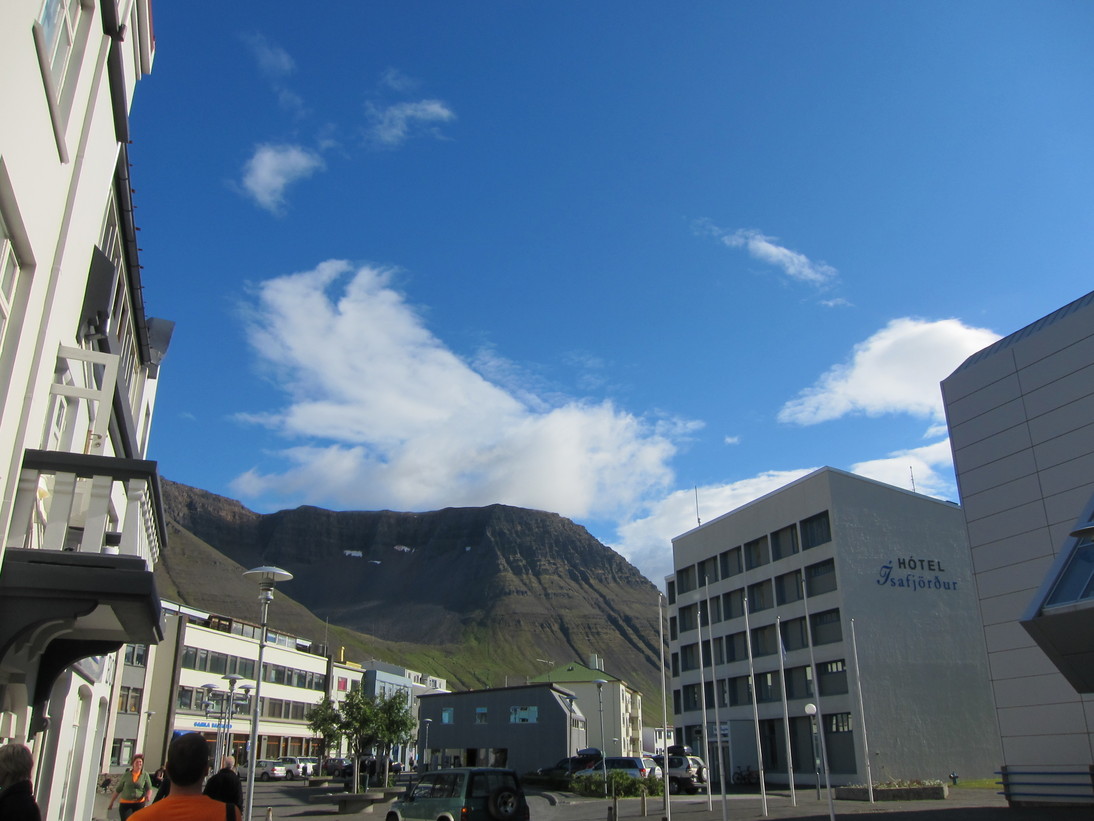
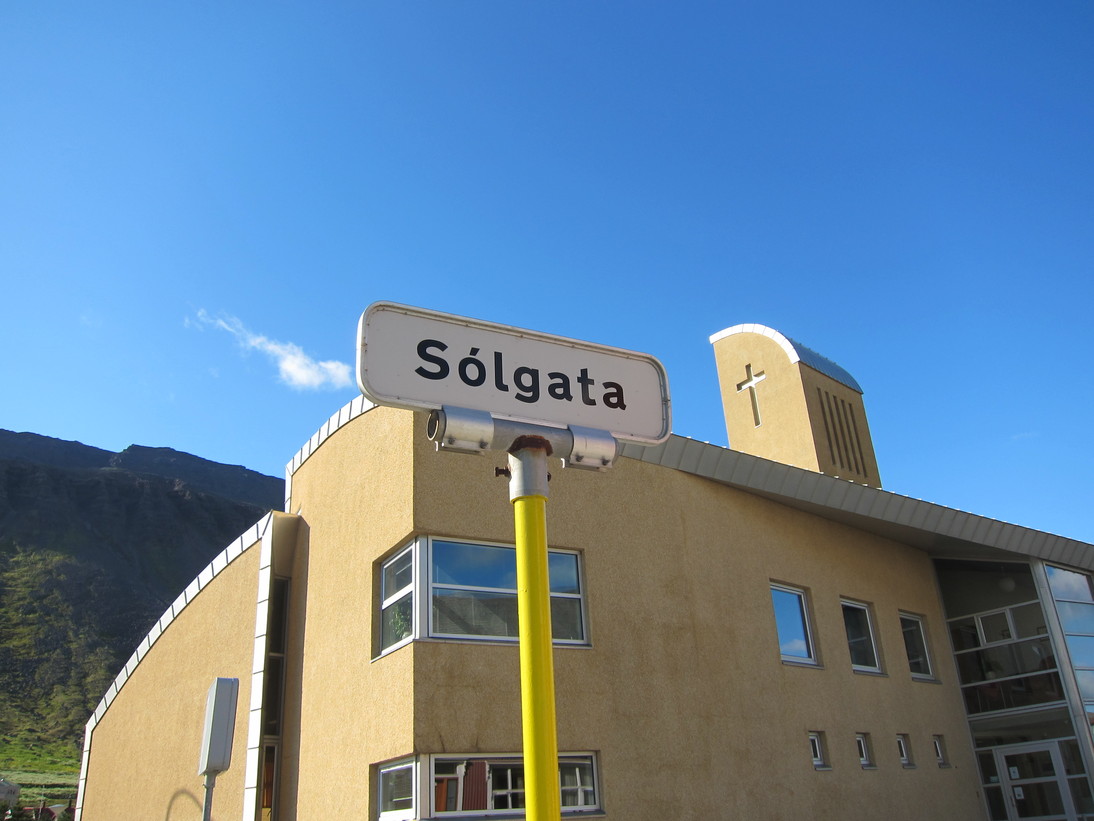
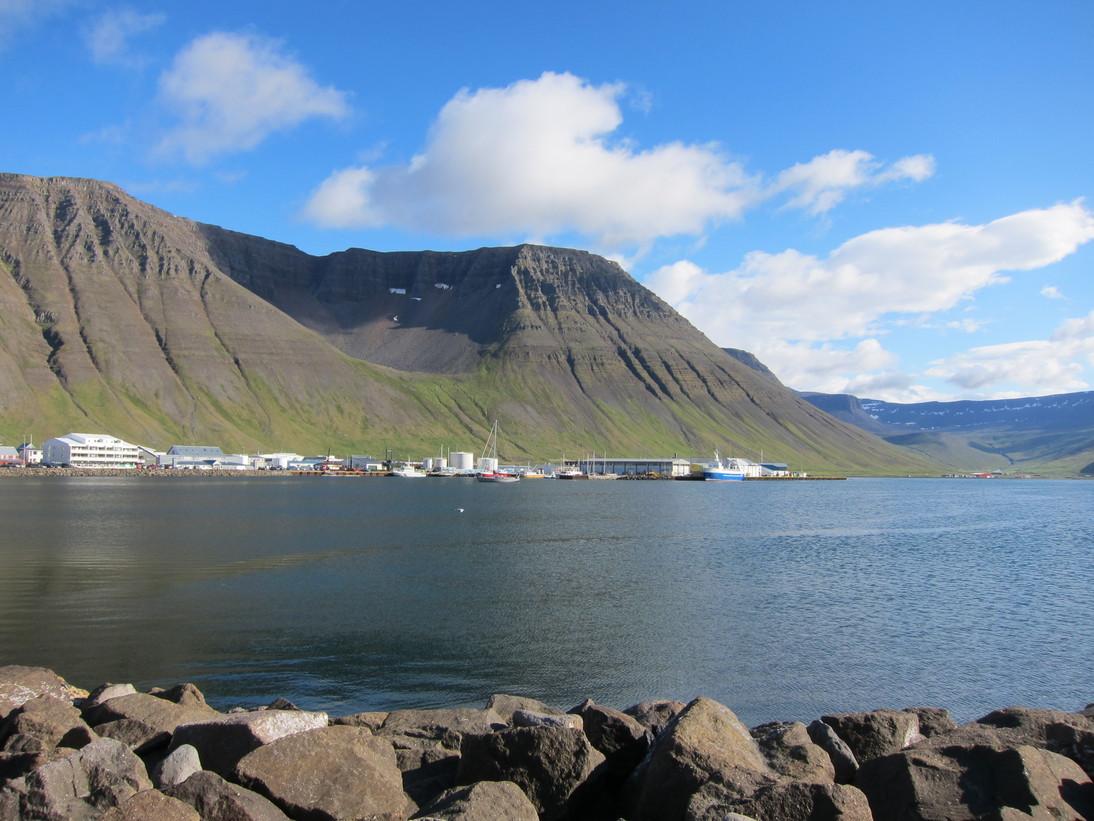
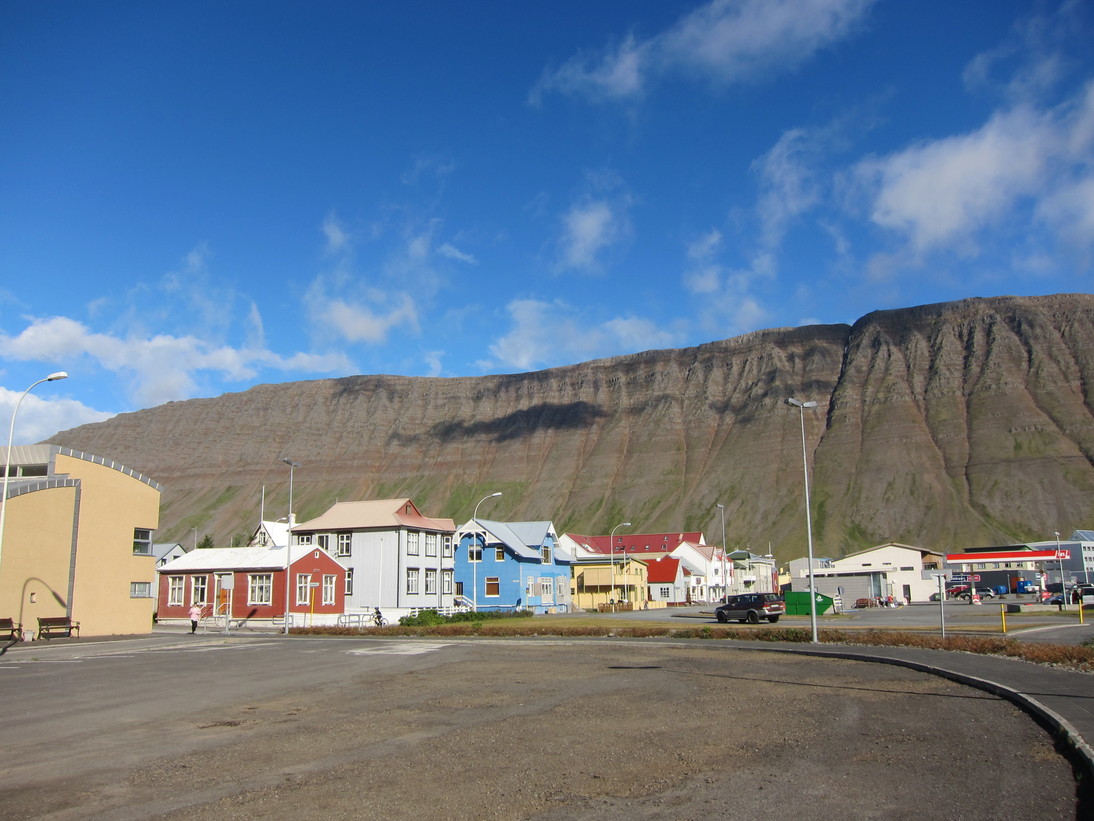
We walked a lot around the city, under the sun. Wonderful, just wonderful. If you have the chance, visit this city.
End of the day at Þinfeyri
Tunnel!: a 9km tunnel, 4 of which were just one lane, between Ísafjörður and Flateyri. It even had a forking in the middle to drive towards Suðureyri. After the tunnel we stopped to collect seashells and take pictures of the surrounding firðir (plural of fjörd in Icelandic).
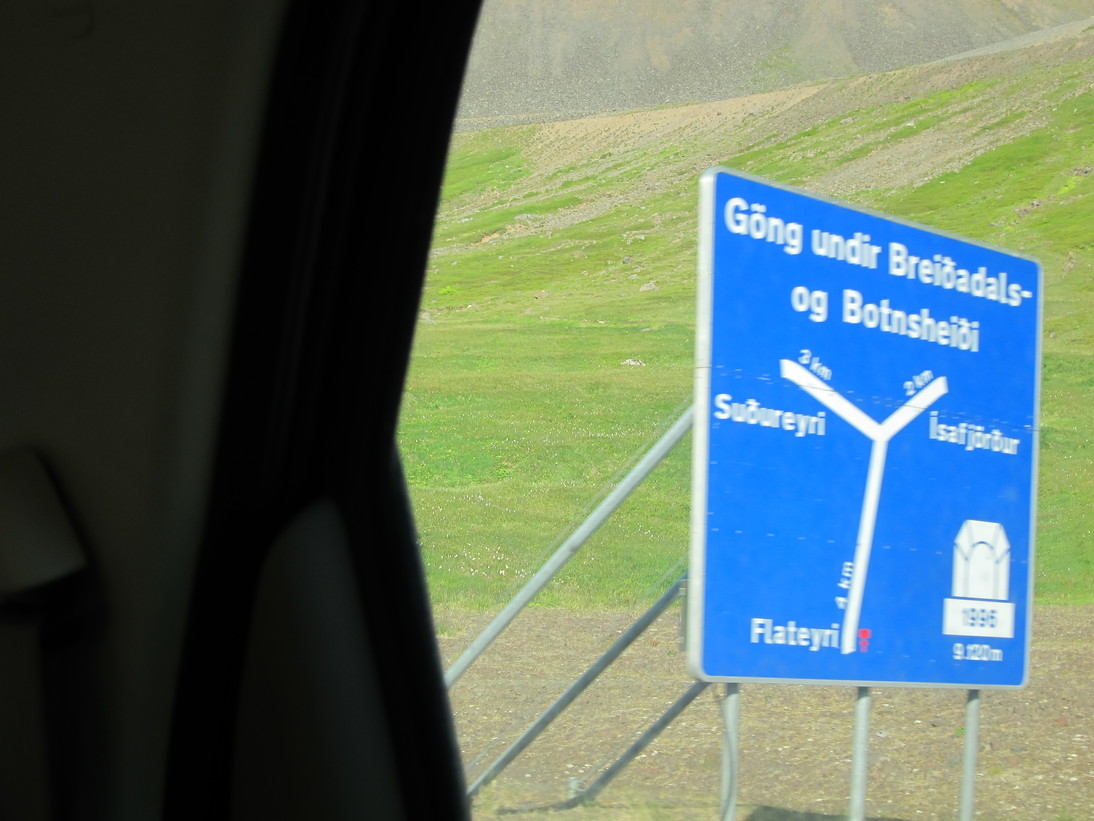
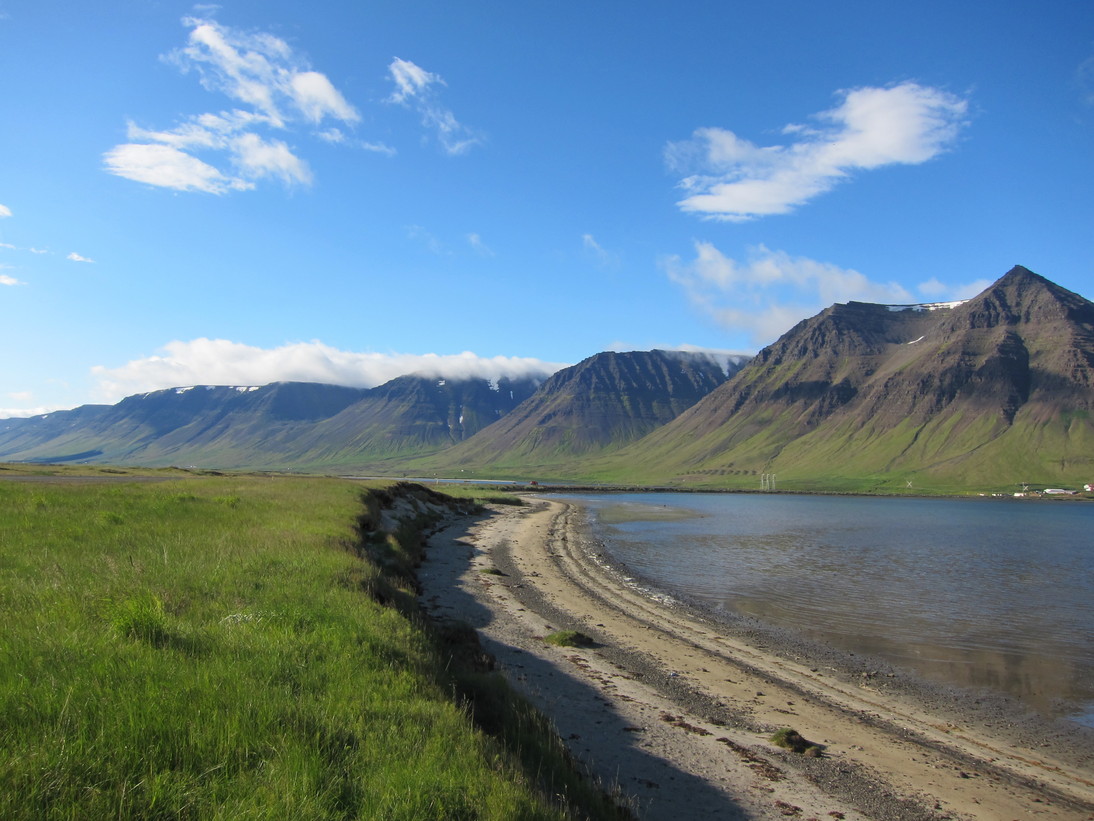
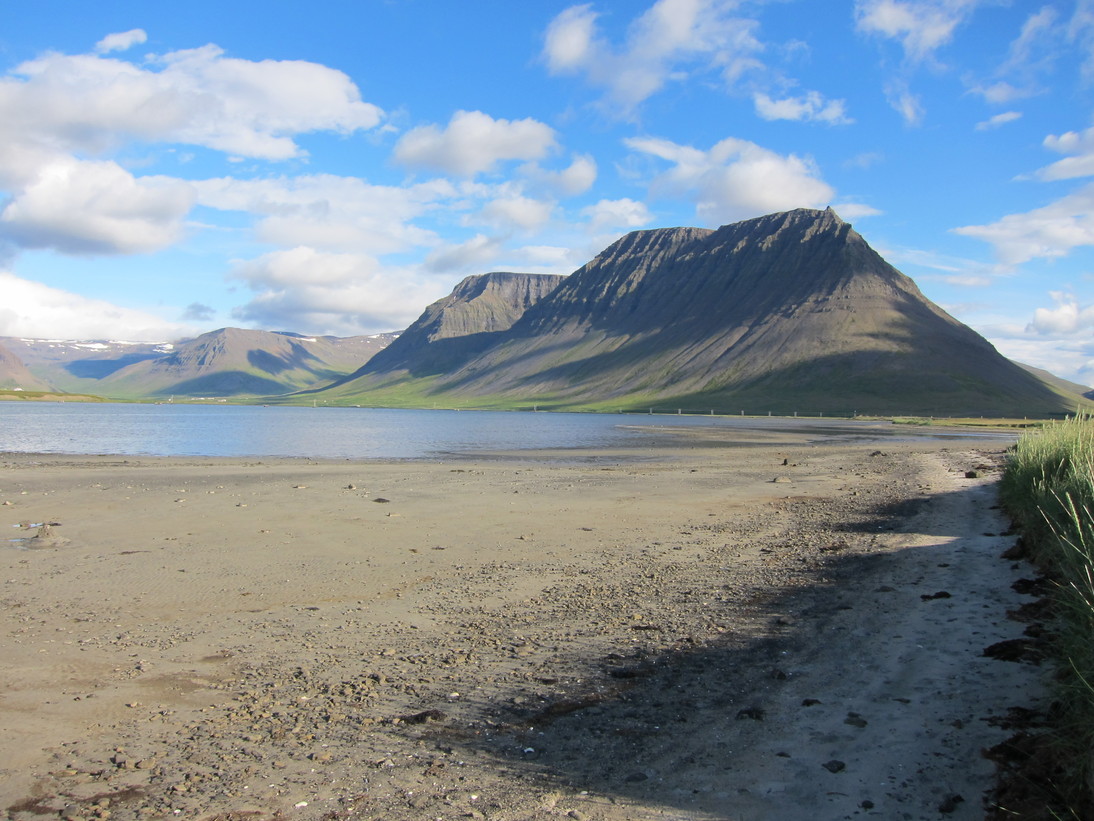
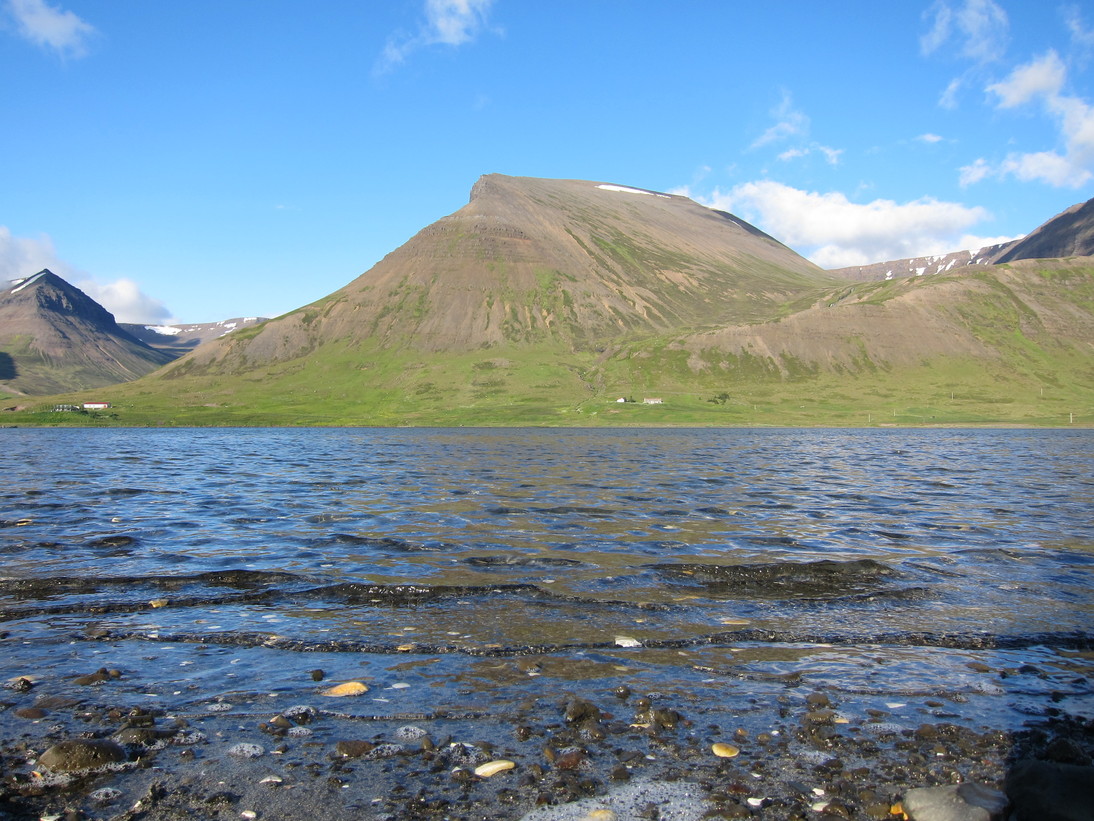
Kept on driving, and before we realised it we were already in Þingeyri! Our "hotel" was not really a hotel, but a guesthouse without cooking facilities. Oh well... Shared bath and restaurant. Could be worse. We had a soup of the day with salad and bread for 1250 ISK, which is not that much, and as usual was really good. The bread was homemade, without salt but with sunflower seeds. Wonderful with butter!
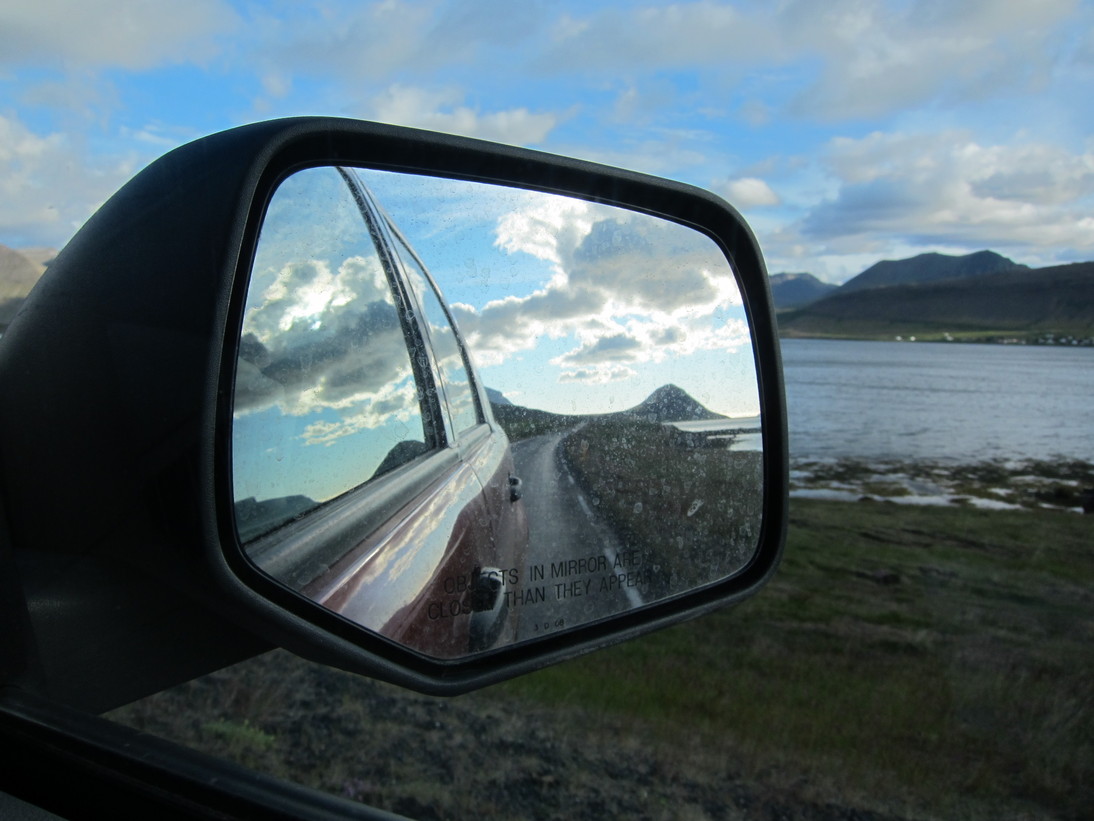
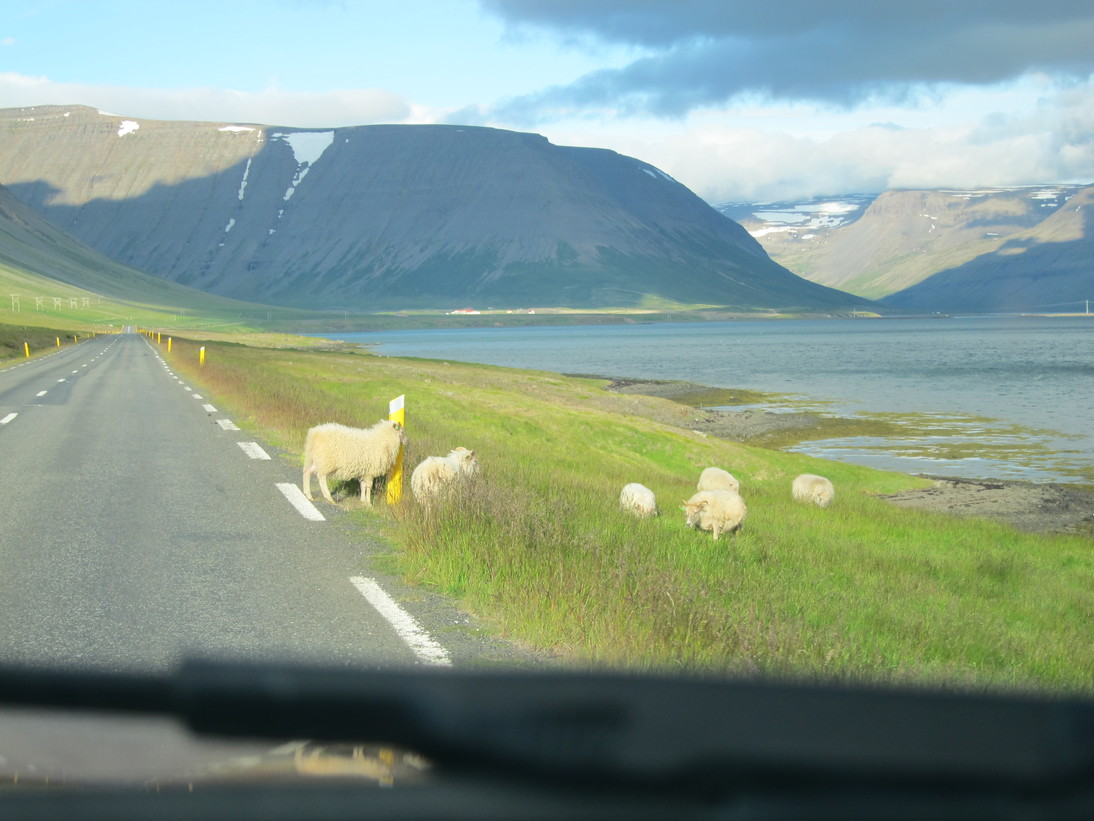
Went to sleep, expecting another sunny day tomorrow!
Catch previous posts in Road Trip Around Iceland: The Index.

08/06/2011 - Road Trip Through Iceland: Day 10 – Hvítserkur
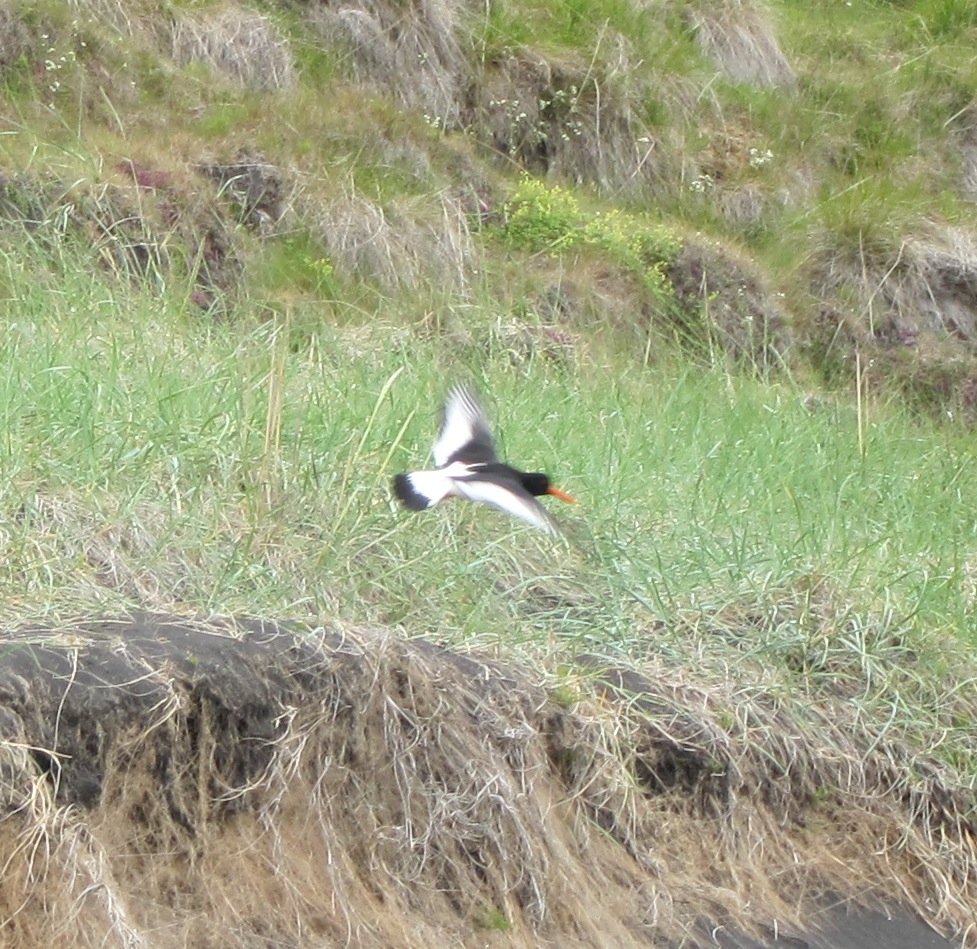
As you may remember, yesterday we were not happy with our guest house. And in addition to what we saw yesterday, today our breakfast was d––n late. When you are driving around a country trying to be on time everywhere, you wake up early and drive a lot. If you breakfast is late, you are bound to either go faster (not a good idea in Iceland) or get to places later. Anyway, let's stop the rant.
After leaving our guesthouse, we went to get some fuel and buy some souvenirs. We got some nice key-chains made with treated fish "skin" (cod, salmon and others) and our usual dose of skýr for the trip.
After leaving our guesthouse, we went to get some fuel and buy some souvenirs. We got some nice key-chains made with treated fish "skin" (cod, salmon and others) and our usual dose of skýr for the trip.
Blönduós' textile museum, Borgarvirki's fortress
Our first stop was Blönduós, where we visited the textile museum. The entry fee was 600 ISK, and it was somewhat interesting. If you happen to pass around there it is worth a look just for the old clothes you can see.
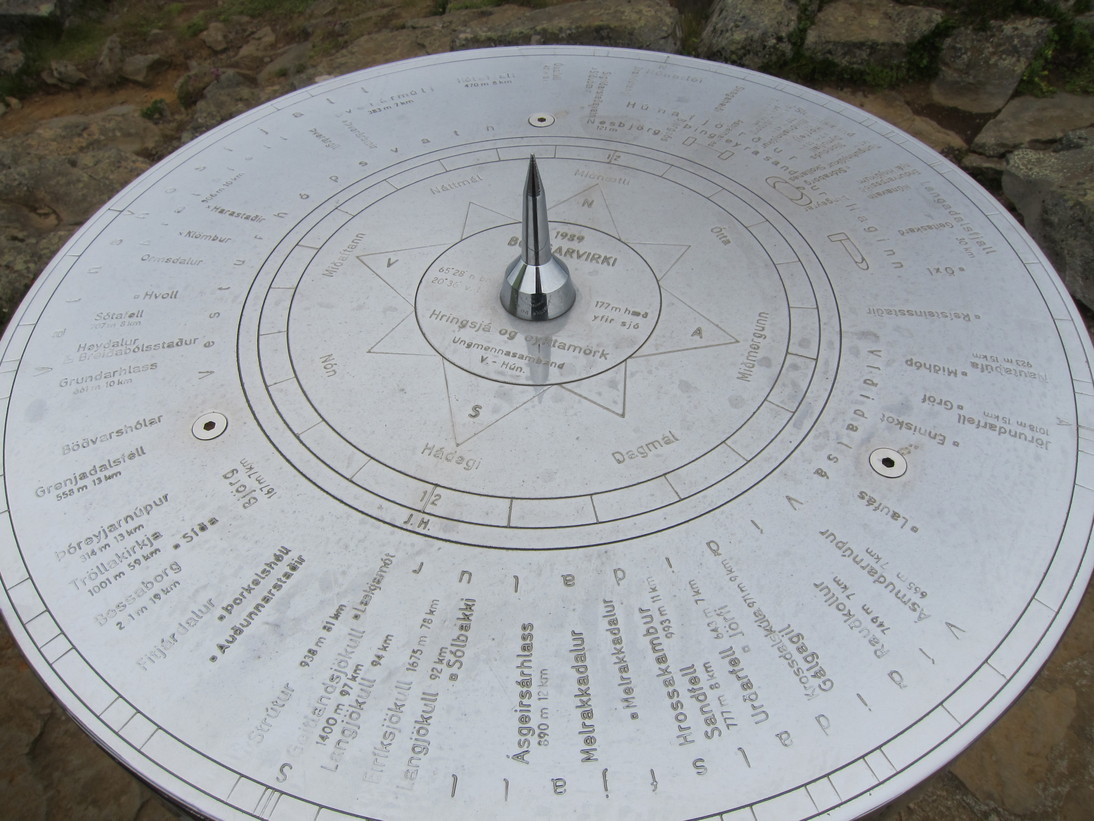
It is an usual view around Iceland, signaling places
Next came Borgarvirki, which is supposedly a natural fortress, used by local settlers to defend the area. If it was really used or just an odd-shaped hill is still unsettled, but the views from the place are just huge. As a defense point it looks really good. The road up the hill is quite rough, beware.
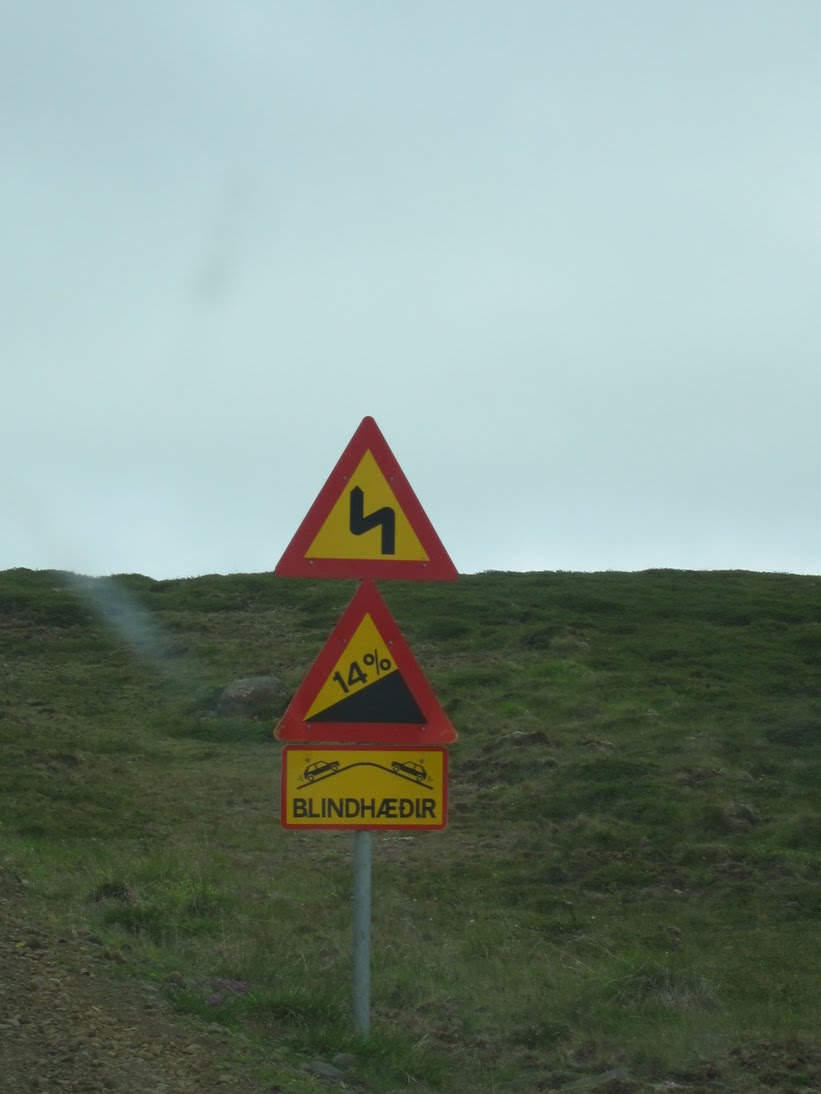
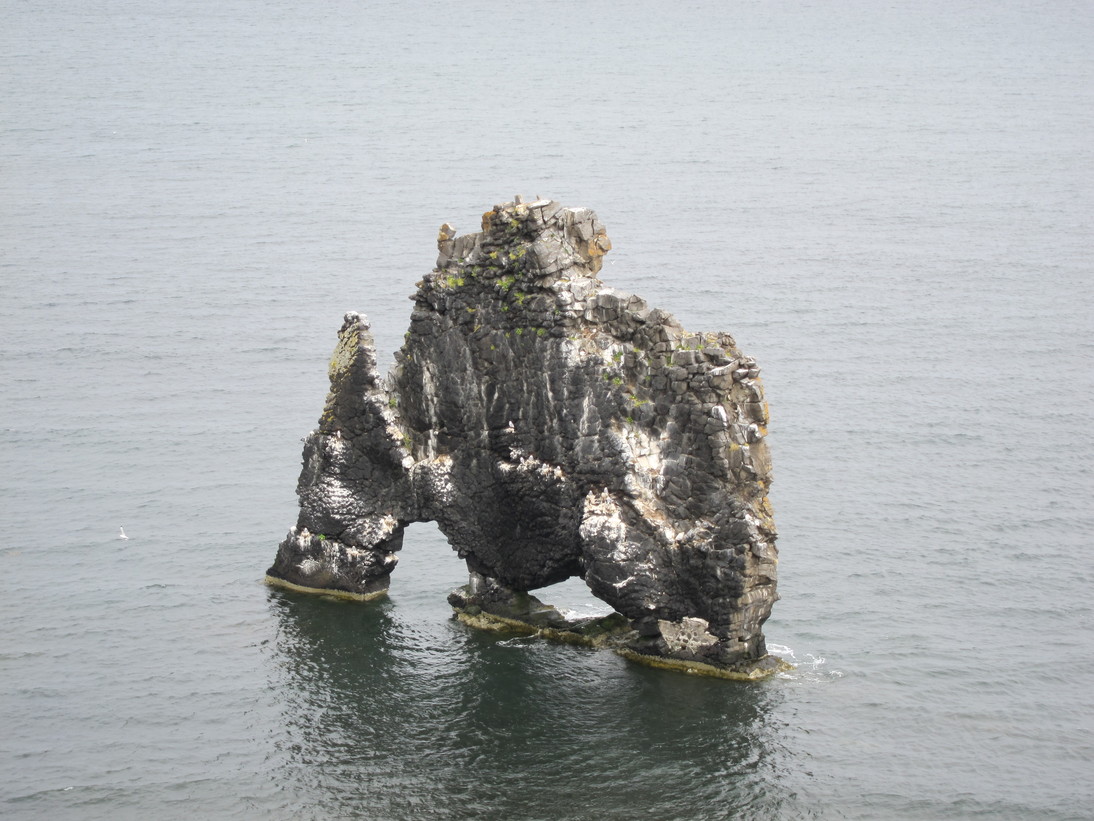
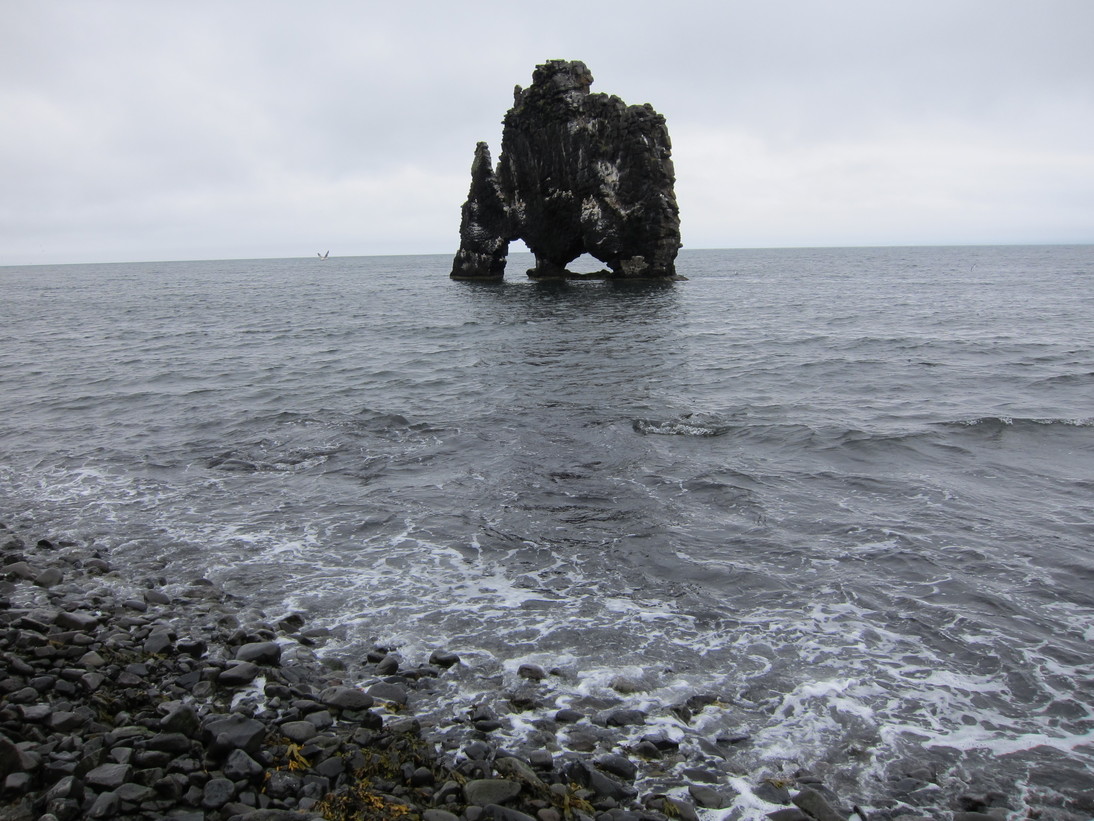
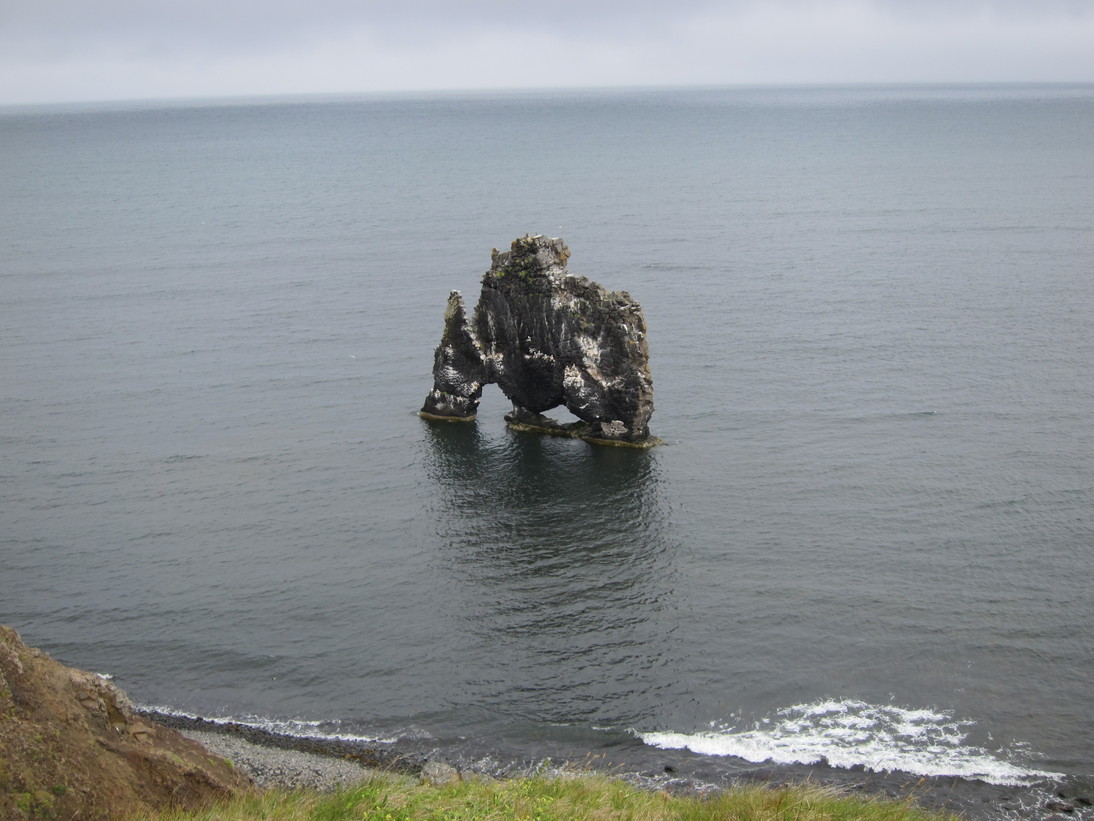
Hvítserkur
The Hvítserkur is an odd-shaped rock formation, 15 meters from the shore. It looks really interesting, and it is one of the most visited things in this area. There are two ways down the beach: to the right of the parking zone, slowly and going pretty far in an almost flat walking path or an uneven quite steep path just below the viewing area.
We recommend the steep path, after our experience with the flat one. This is the first place we had Hitchcock like moments with the local birds, Arctic Terns, known as kría in Icelandic. The national bird (depicted in postage stamps), loved by the locals for its protective behavior is an animal we hate. Kría lay their eggs in flat areas, with a preference for the sides of pathways. They are highly territorial, and will attack anything that goes close to their nests... Or any other bird's nest in the area. And indeed, they attack. First they scream around your head, 6 or 7 meters above, two or three times trying to get you away from their nests. If you don't, they'll dive to your head. They have hard beaks.
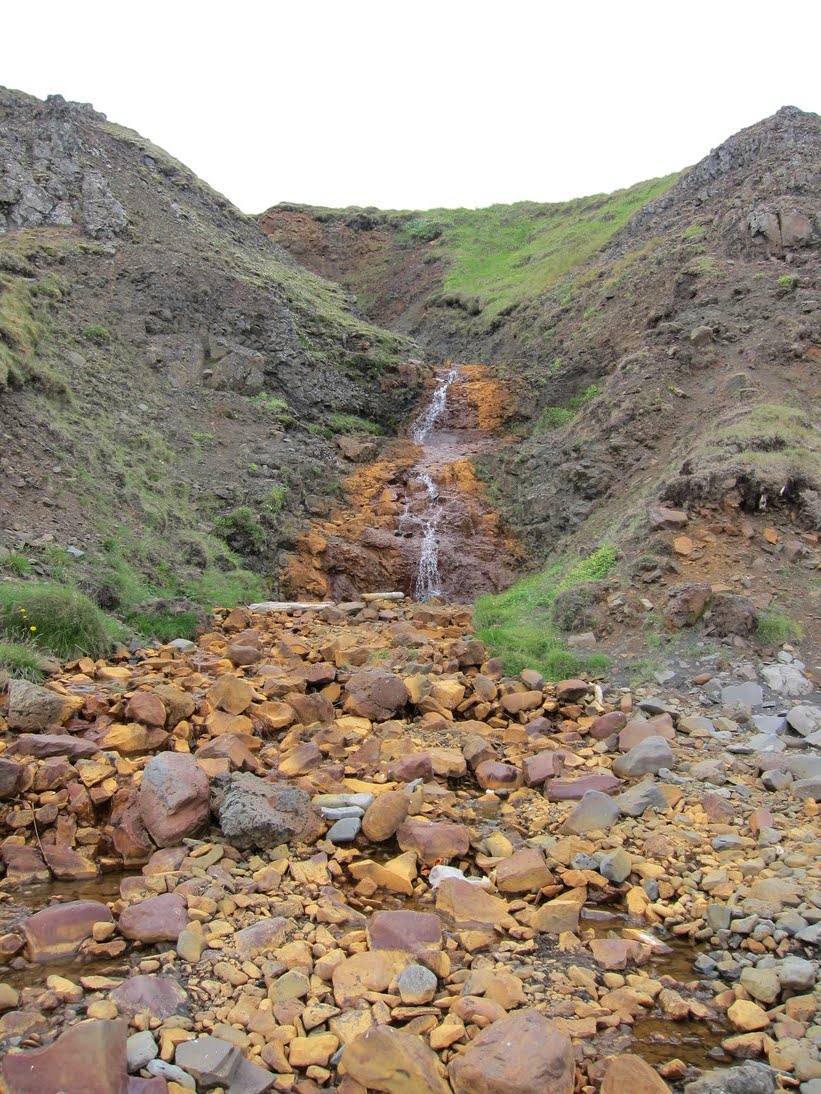
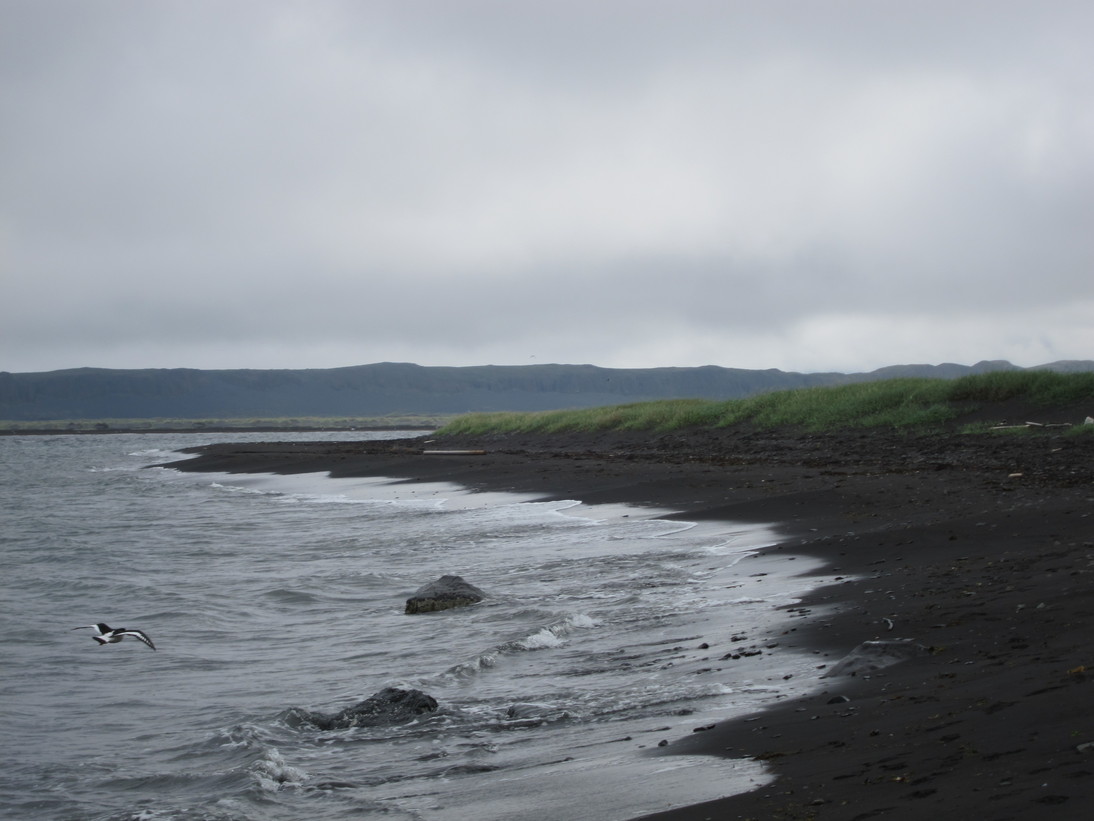
We had to run for our heads' sake a few moments before reaching the beach in front of the Hvítserkur, where we collected rocks and seashells. Facing the prospect of more attacks, we climbed the wall in front of it. An interesting feature is the small waterfall in front of the rock, beside the downward path. It was probably due to the recent rain.
On The Way to Holmavík: Seal Watching
On our way to our guesthouse, we stopped in an old, abandoned farm set as a seal watching area. Really wonderful! Also full of kría... We saw how a careless Frenchman hit in the head by some birds.
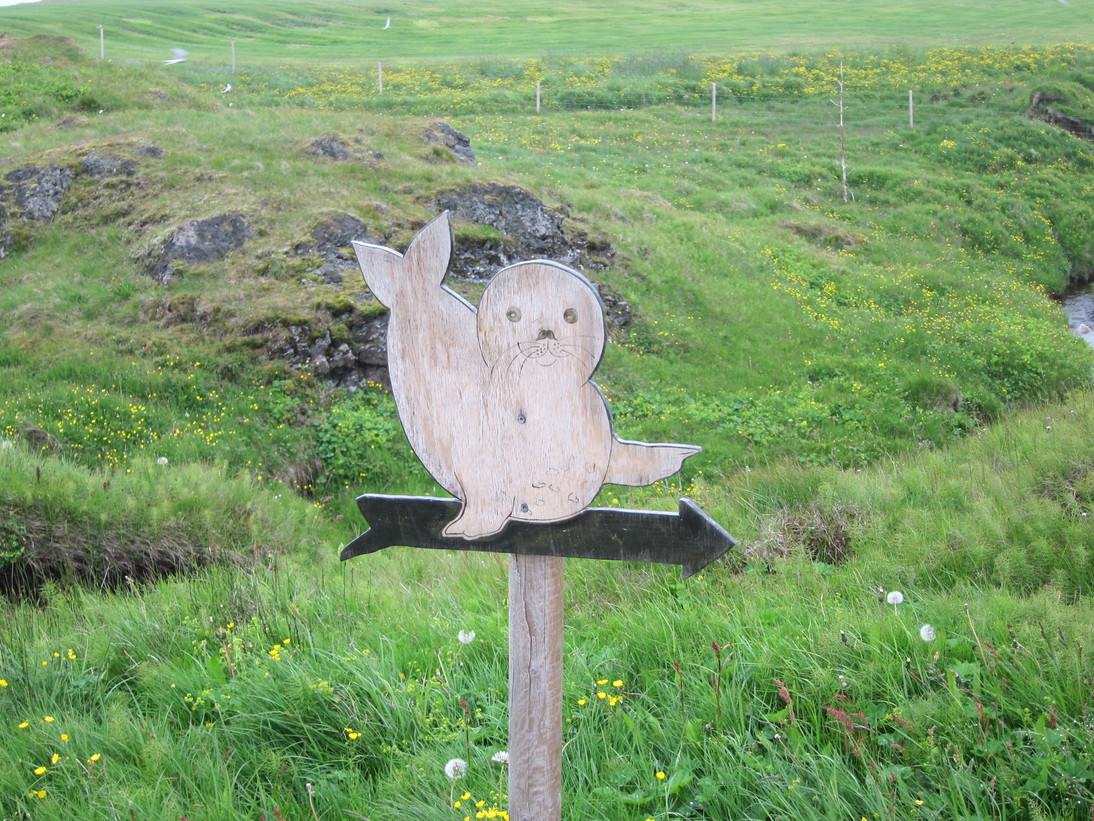
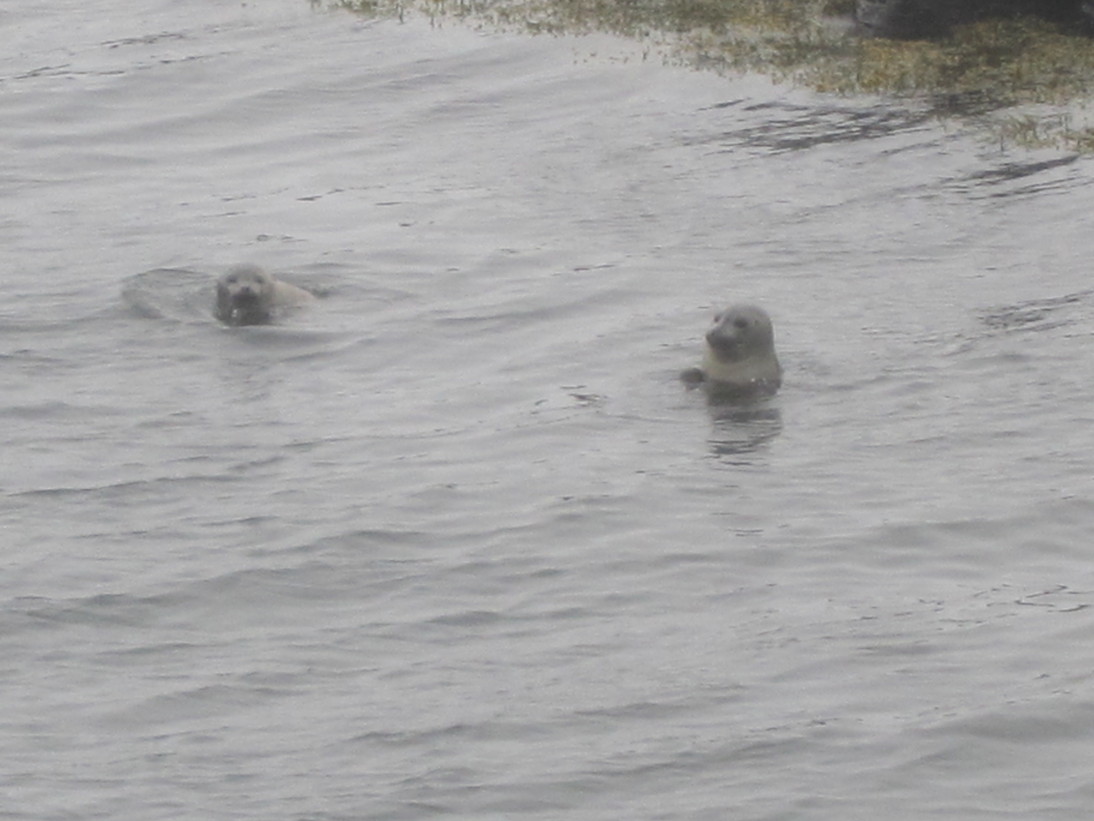
It was also damn cold, and we were lucky to have a hot chocolate in the farm. It was not expensive (it wasn't incredibly good either) but made us feel warmer.
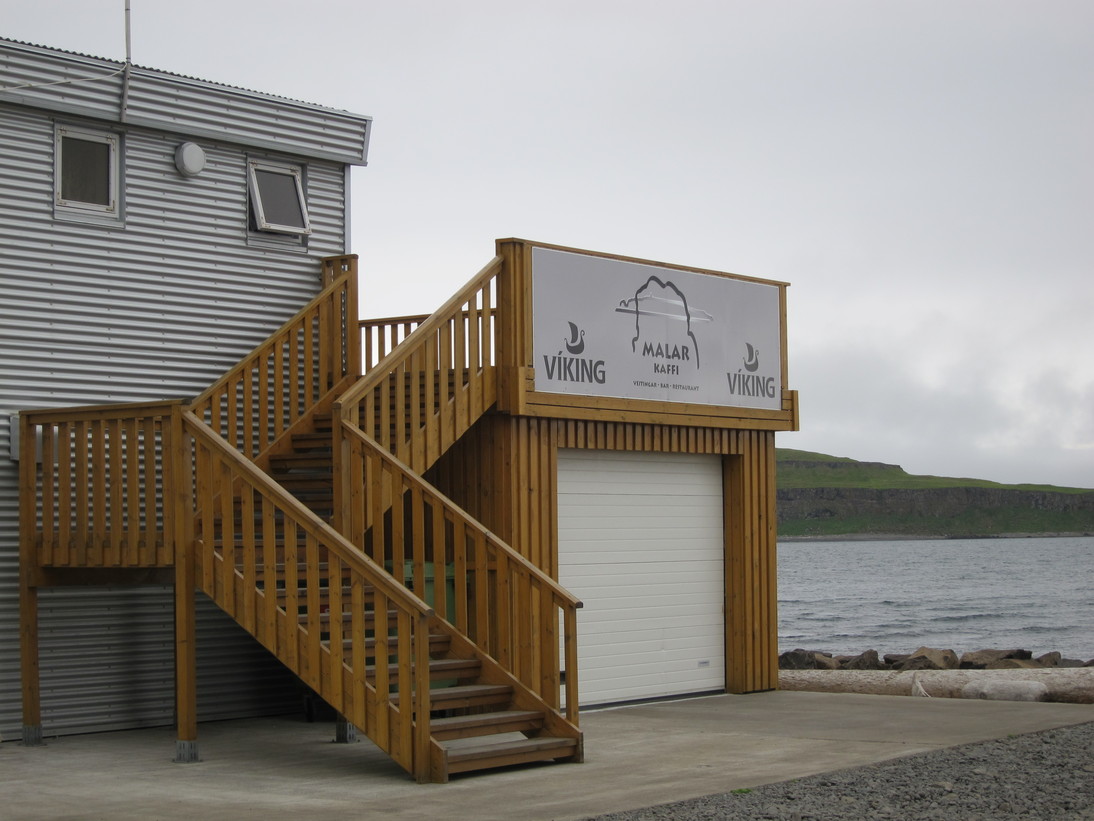
Our guesthouse was in Drangsnes, and we had some problems locating it: it is named Malarhorn, but the signs read Malarcafe. The road was odd: we had lots of fog for a long while, and then suddenly everything was clear as soon as we reached the seashore.
Our guesthouse was in Drangsnes, and we had some problems locating it: it is named Malarhorn, but the signs read Malarcafe. The road was odd: we had lots of fog for a long while, and then suddenly everything was clear as soon as we reached the seashore.
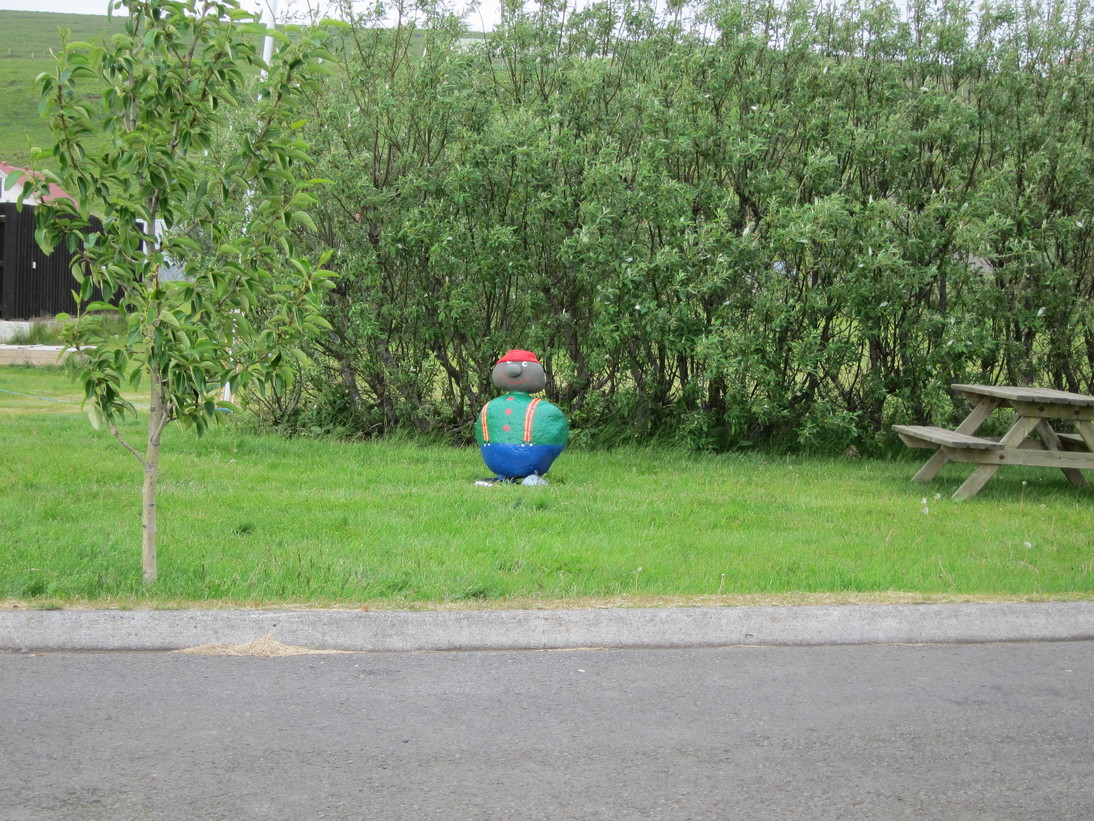
Let's rest, tomorrow will be a long day...

01/06/2011 - Road Trip Through Iceland: Day 9 - Goðafoss and Hólar
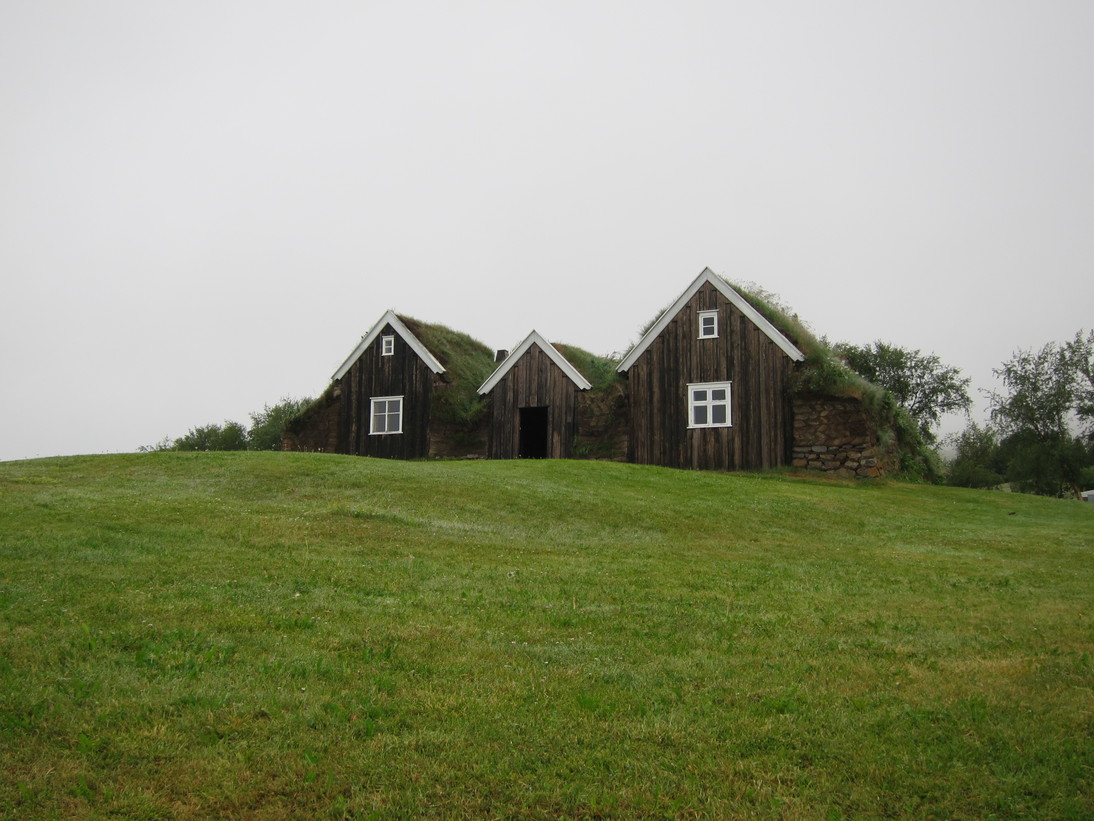
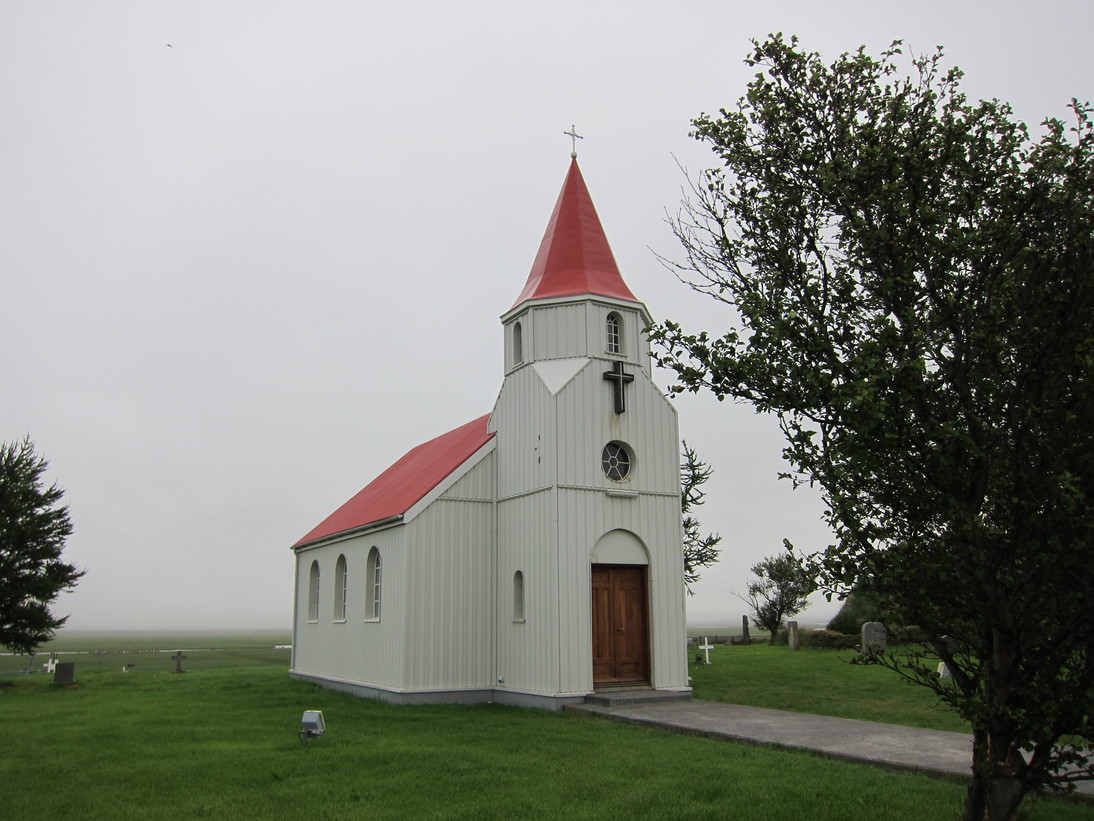
Hólar's church, if I'm not wrong
I've been procrastinating a lot with this post. Although it may not look like this from the pictures (or even the text), this was one of the worse days in our trip. Uneventful, visiting not-so-interesting places and with a lousy guest house at the end of the day. Let's see if you find if interesting! If not, the next post will be, don't worry.
The day started in Husavík, with a wonderful breakfast: toasts and marinated herring. I just love marinated herring since I was in Germany... But the best comes from Denmark, mind you. After a shower and shave we went for some local shopping. We bought jam for our friends in Barcelona. After this chores, we wanted to visit the Phallological Museum in Husavík. We couldn't... as usual in Iceland, most museums and shops start working at 10 or 11... The museum started at 12. D'oh!
The day started in Husavík, with a wonderful breakfast: toasts and marinated herring. I just love marinated herring since I was in Germany... But the best comes from Denmark, mind you. After a shower and shave we went for some local shopping. We bought jam for our friends in Barcelona. After this chores, we wanted to visit the Phallological Museum in Husavík. We couldn't... as usual in Iceland, most museums and shops start working at 10 or 11... The museum started at 12. D'oh!

It should have been an interesting sight: it holds 272 specimens of embalmed or dried penises.. trying to get a specimen from every mammal in Iceland. When we were there, human was lacking but 12th April 2011, an Icelander donor died and completed this.
To Akureyri and Goðafoss
From Husavík we headed to Akureyri, the capital of the North of Iceland. We missed the turn to the city... and just went straight to Goðafoss, the God's waterfall. A very nice waterfall indeed.
They were named Goðafoss around AD1100, when the Alþing (the Icelandic gathering of leaders and chieftains) decided to convert Iceland into a Christian nation. The lawmaker at the time decided to convert, but allowing current pagan worshippers to keep doing so in the privacy of their houses. Upon returning to his home after the gathering, he picked his pagan idols and threw them down the falls, hence God's waterfalls.
They were named Goðafoss around AD1100, when the Alþing (the Icelandic gathering of leaders and chieftains) decided to convert Iceland into a Christian nation. The lawmaker at the time decided to convert, but allowing current pagan worshippers to keep doing so in the privacy of their houses. Upon returning to his home after the gathering, he picked his pagan idols and threw them down the falls, hence God's waterfalls.
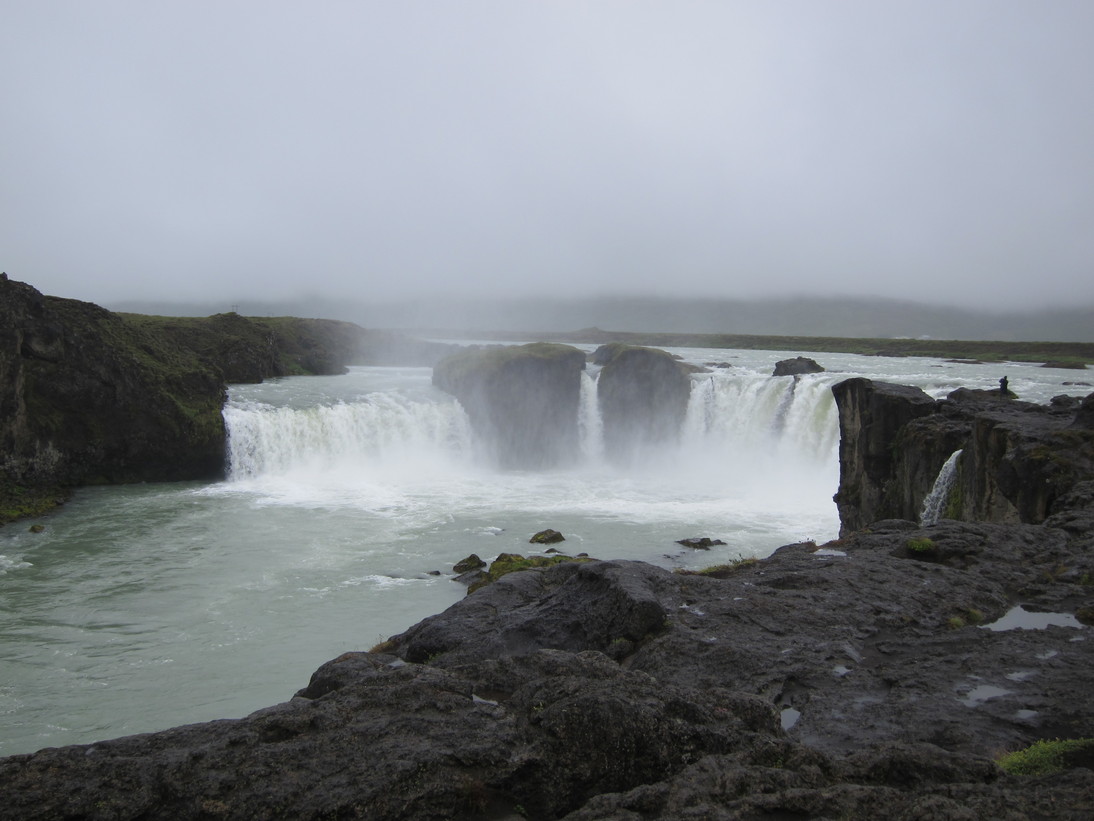
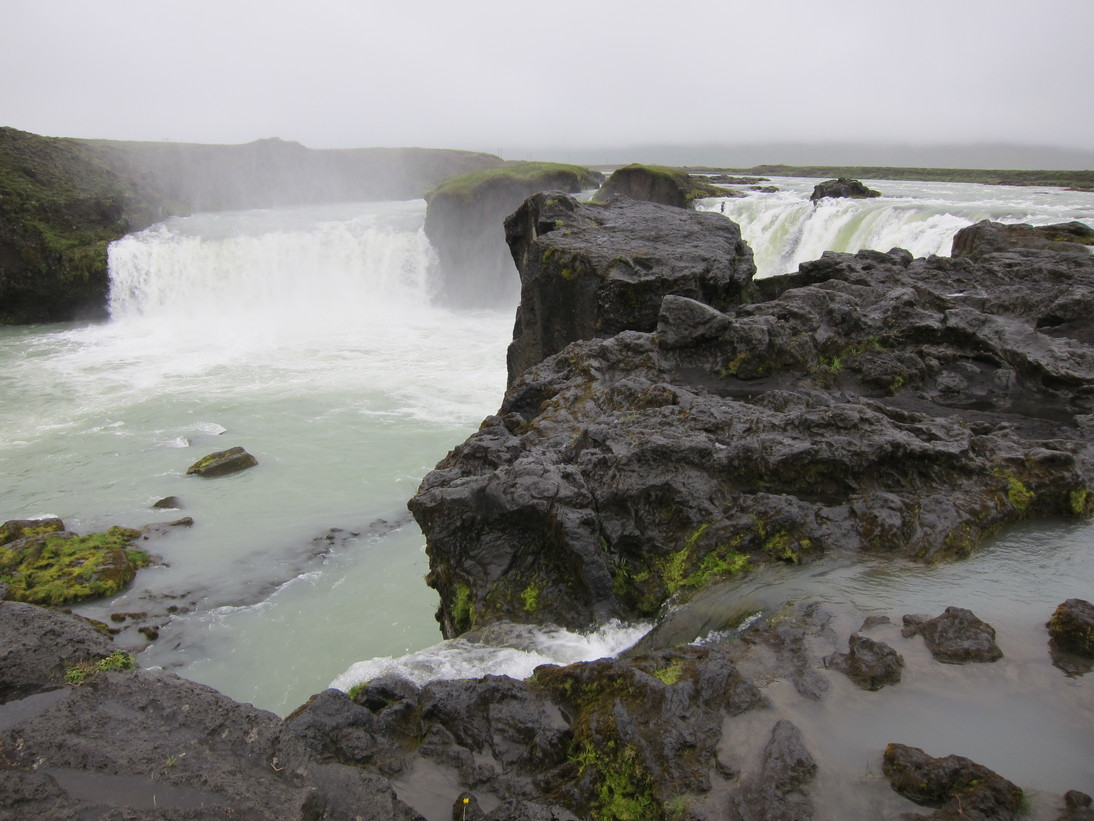
After seeing this wonderful view, we went to the city. Bought some things in a bookshop and had lunch. We also stole some free wifi from Café Akureyri to check our mails and twitter accounts. An interesting sight: Akureyri's traffic lights were shaped like hearts, while we were there.
The rest of the day
Uneventful... We drove along our marked route. The most interesting part... we drove over a long-beeked bird beside an hydroelectric station. This kind of birds nest by the sides of the road, and have a tendency of starting to fly just when you pass them. You'll likely run over one or two.
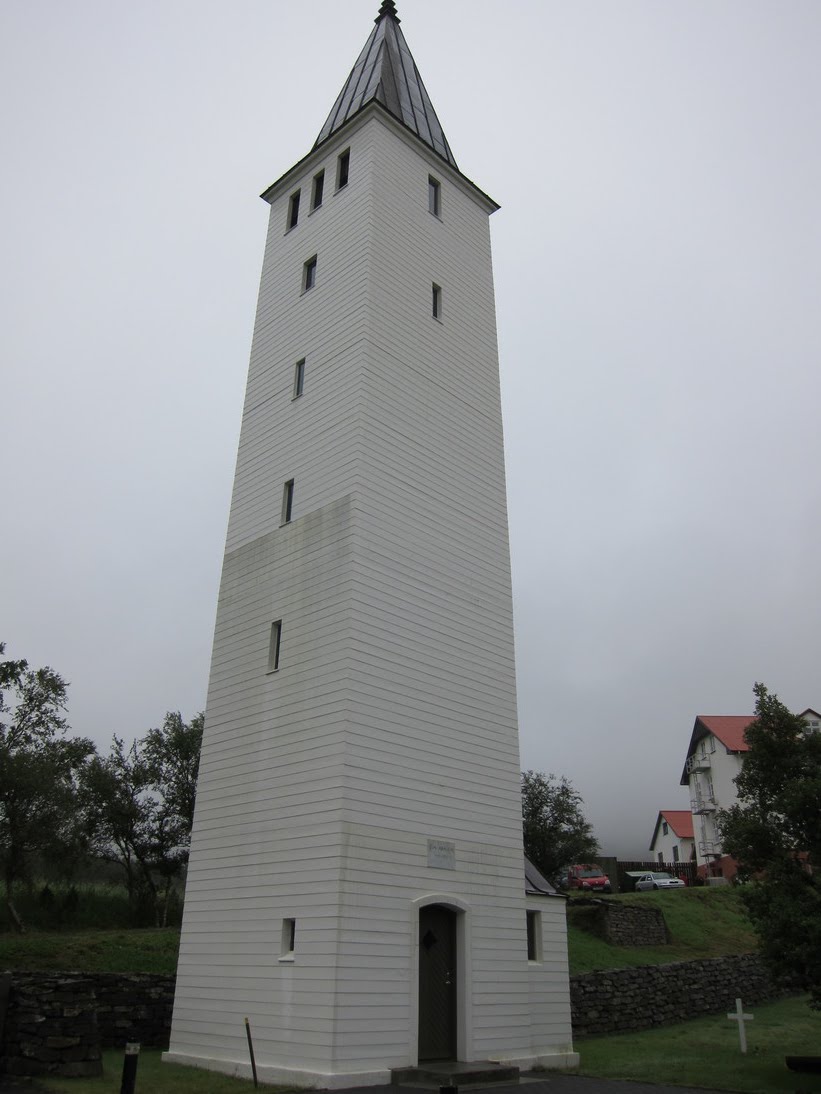
Headed to Hófsos, where an array of Scandinavian style houses sit... but it was too foggy, after stopping for a few minutes we kept on driving to our next landmark, Hólar. Hólar is a religious centre, with a "big" church. I must confess we didn't find it so impressive, and would not have bothered if we knew beforehand.
Next stop was Nybær, a turf farm along the road. Kept on driving until we reached Sauðarkrókur, where we ate at Ólafshús. Good supper! We recommend the place. Our final stop for the day was Glaumbær, another restored turf farm. It wasn't that great, and it was pretty late already.
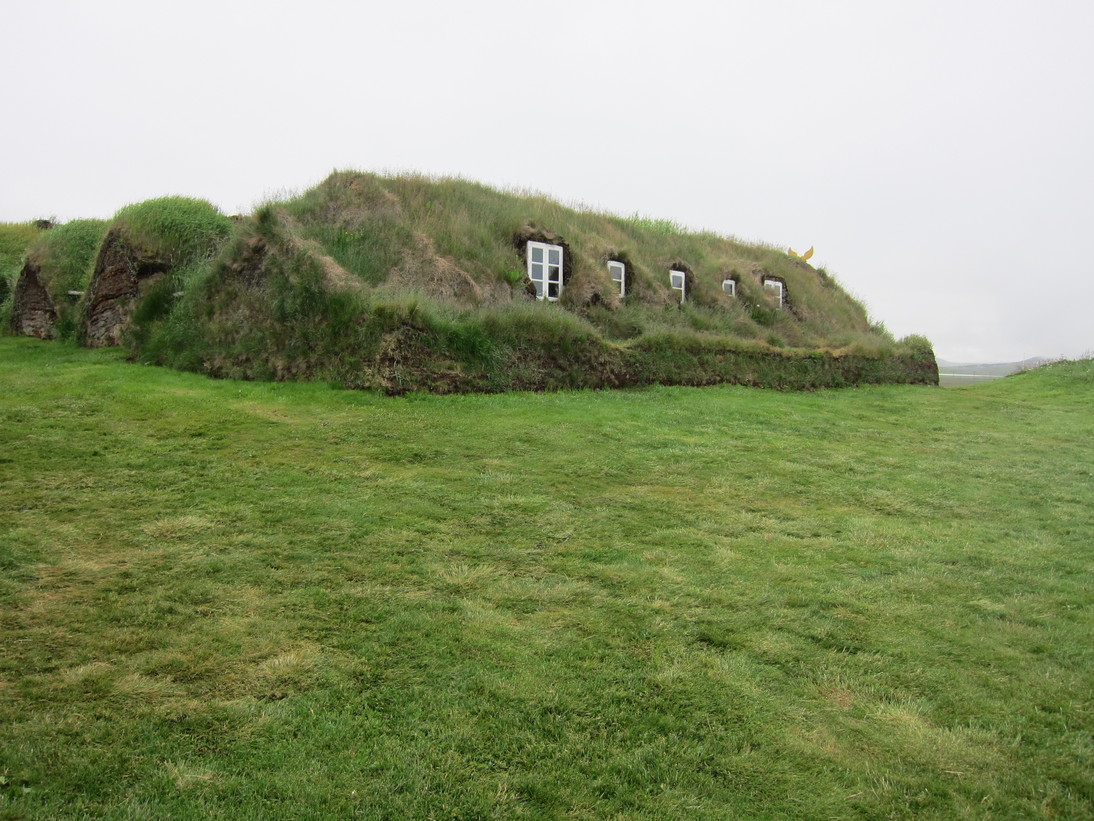
Glaumbær
Our final stop, guest house at Flugumýri. The hosts were hosting (no pun intended) their daughter's birthday. We were to sleep in what looked like the servants room (there were none, mind you), beside the garage and close to the stable. All our bed lining was old, we did not have window blinds... Not a very welcoming place, the worse guest house of our trip.
Let's see what tomorrow has to offer...
« Road Trip Through Iceland: Day 8 - From Mývatn to Husavik visiting Ásbyrgi and Dettifoss
» [...]
Let's see what tomorrow has to offer...

24/04/2011 - Road Trip Through Iceland: Day 8 - From Mývatn to Husavik visiting Ásbyrgi and Dettifoss
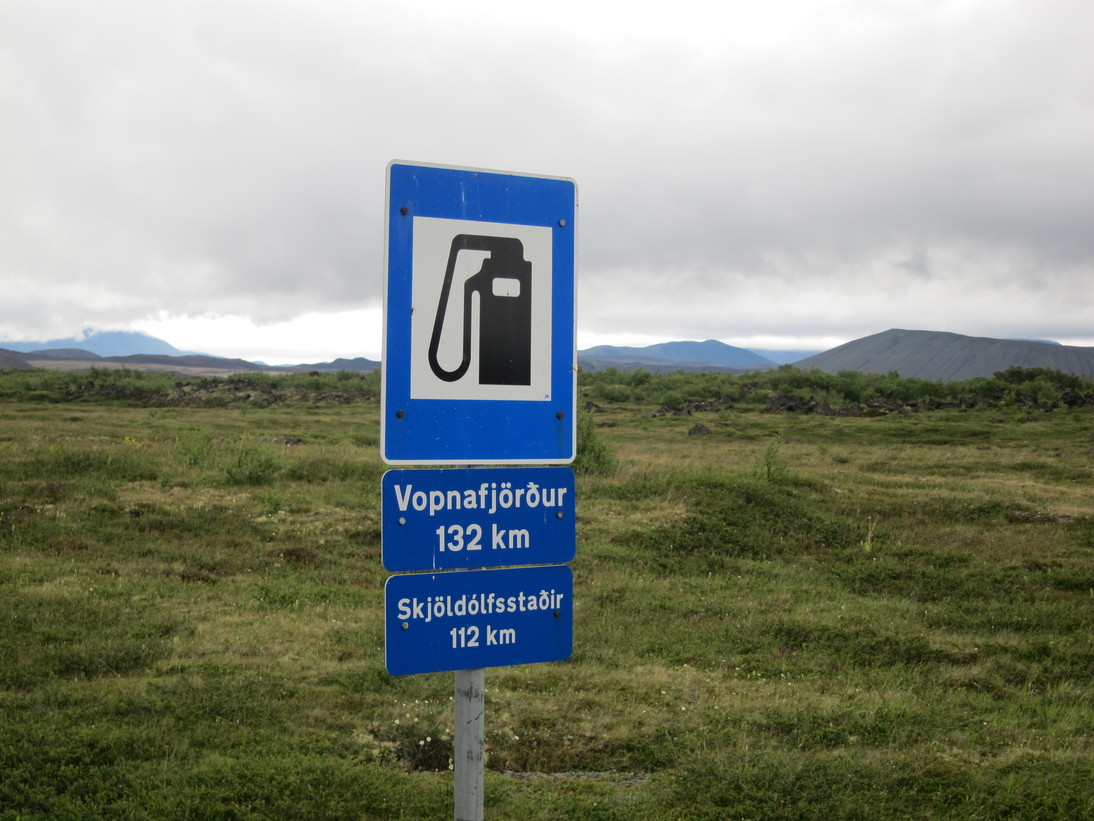
Leaving Mývatn was a little dull. We saw a pair of handcraft stores that looked really interesting... And they were closed until 11! No way we could spend so much time waiting. We fueled, bought vanillated skyr for the route and took the road to Dettifoss. This is one of those places where you definitely have to fuel, there is no other gas station in 130km.
Dettifoss along the way to Ásbyrgi
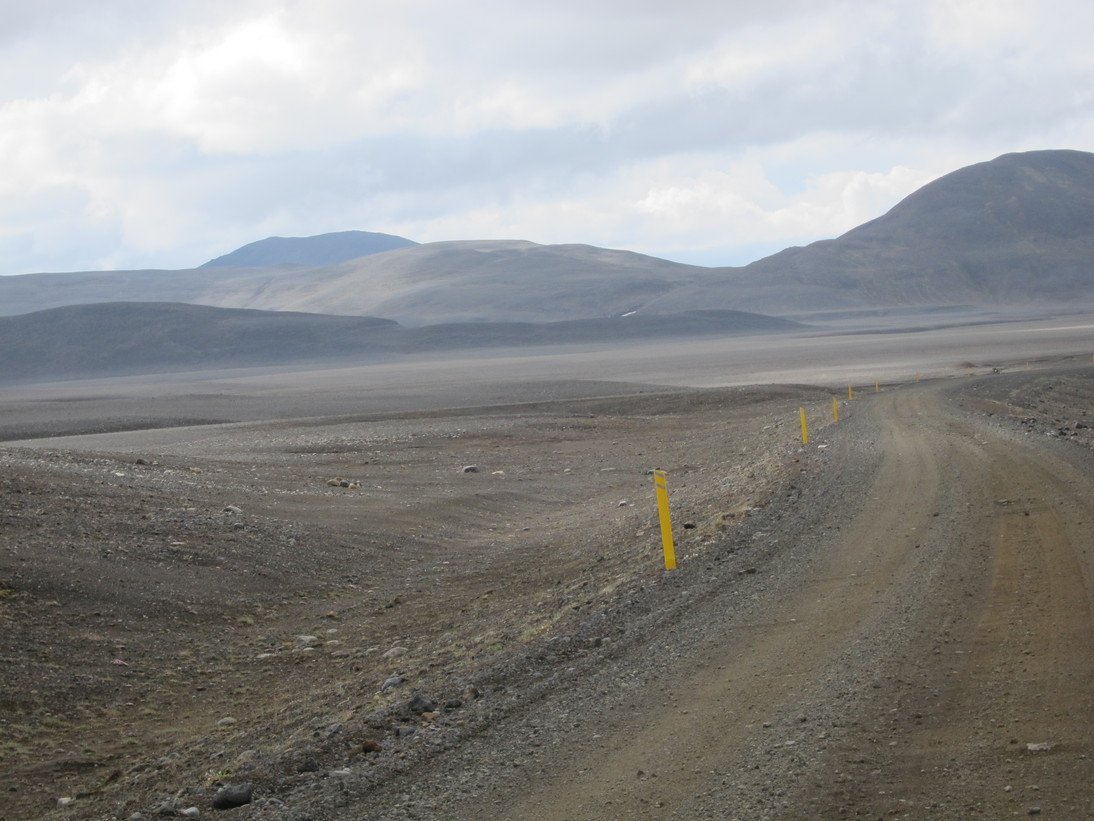
On our way to Dettifoss we passed close to the Apolo 11 geological training zone, a lunar-like desert where Armstrong and Aldrin buzzed along before doing the real deal.

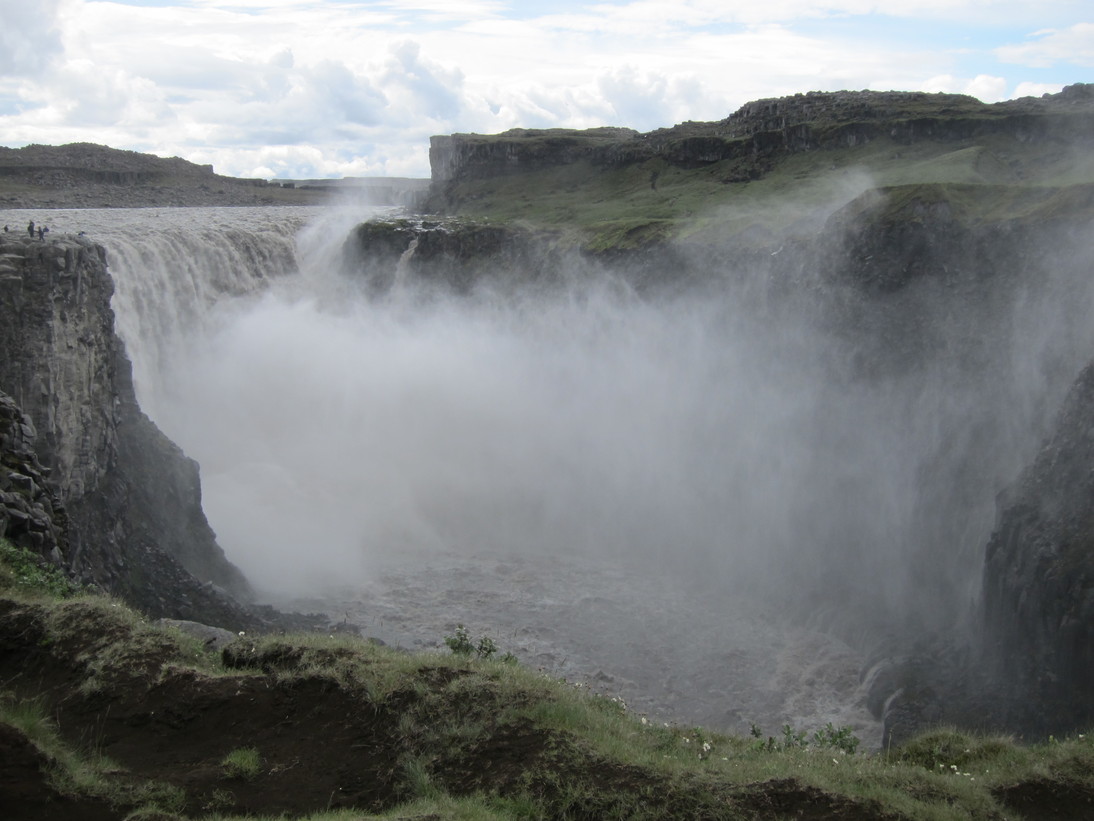
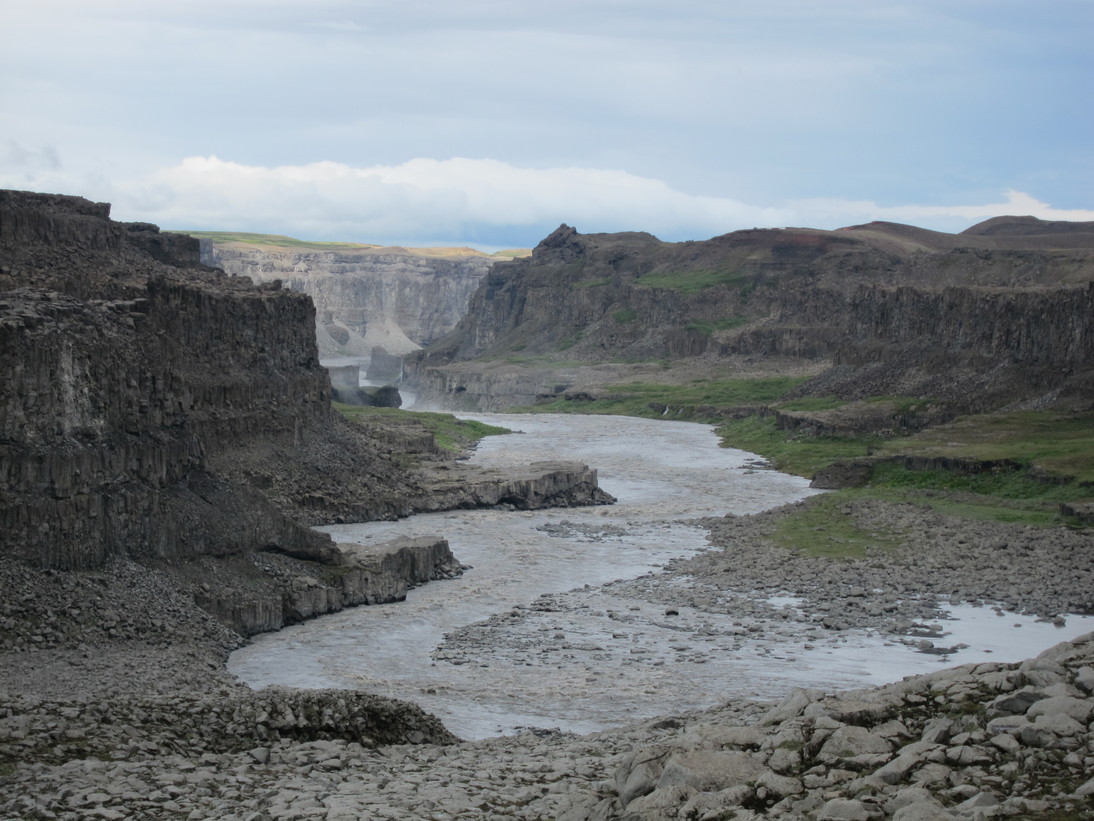
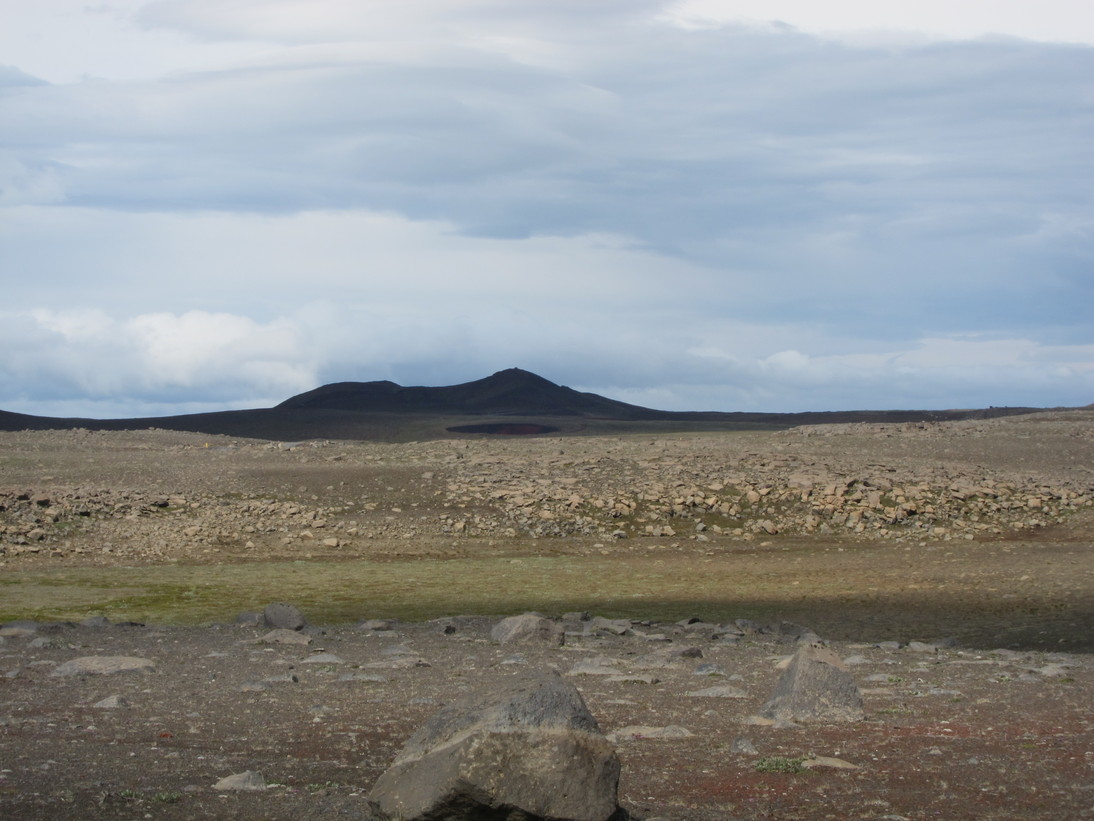
What can I say about Dettifoss? Well, it wasn't that impressive after Gullfoss and that beautiful after Svartifoss. It was a good sight nevertheless, and it was just along the way to the Ásbyrgi. The road before the watching area was a little rough, red volcanic rock. And when we arrived we found a red Volkswagen Beetle from the 70s... Coming from Germany!
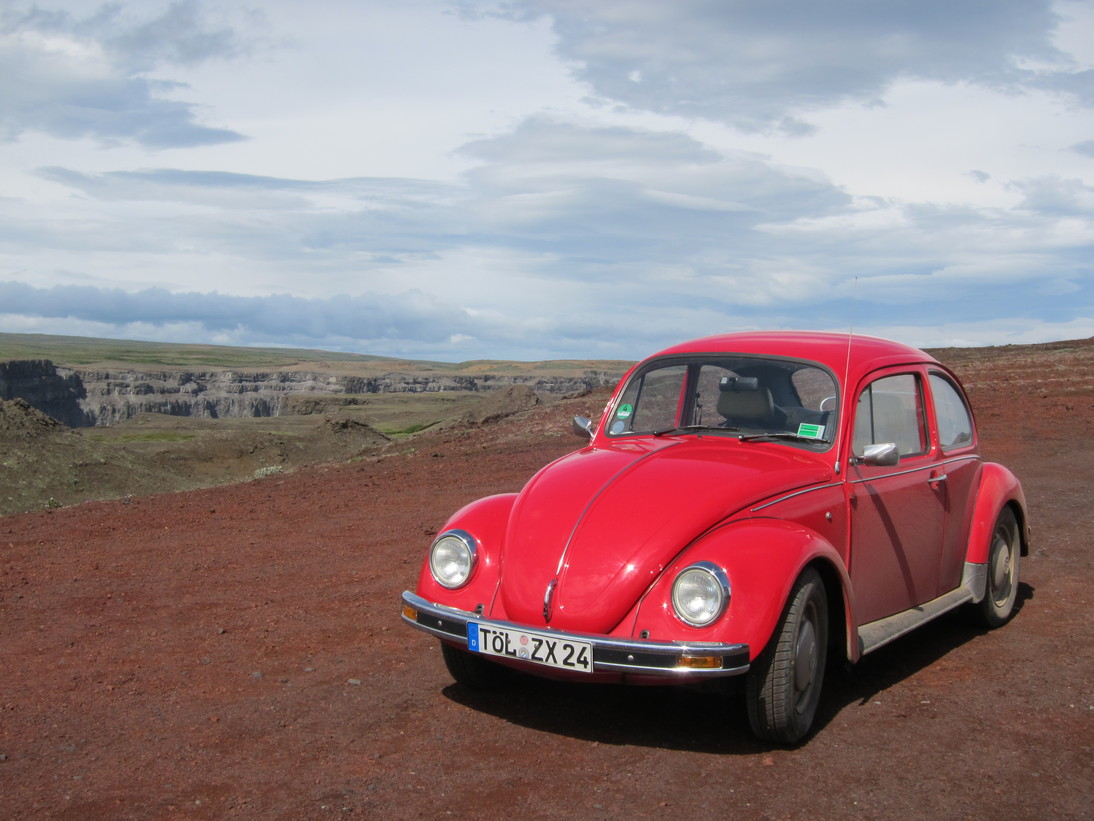


We also stopped along the way in Hafragilsfoss, where we collected red stones and bluish lava rocks.
Ásbyrgi
The Ásbyrgi is according to folk tales where Odin's eight-legged horse, Sleipnir set foot. Seen from the side it reminds me of the Flatiron building in New York.
It is a very odd geological formation, as we learned in Ásbyrgi's information centre. It was caused by a massively strong flood caused by the eruption of a volcano, melting a glacier, which swept away everything that was not strong enough to withstand its force.
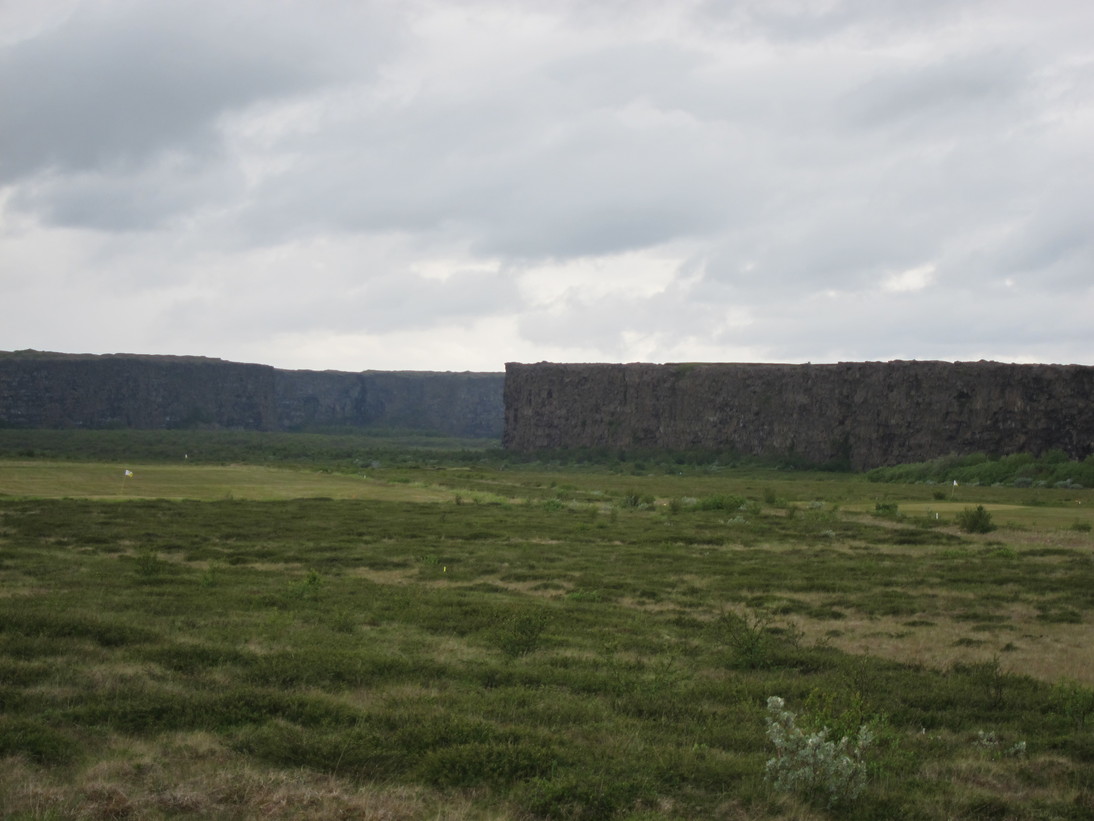

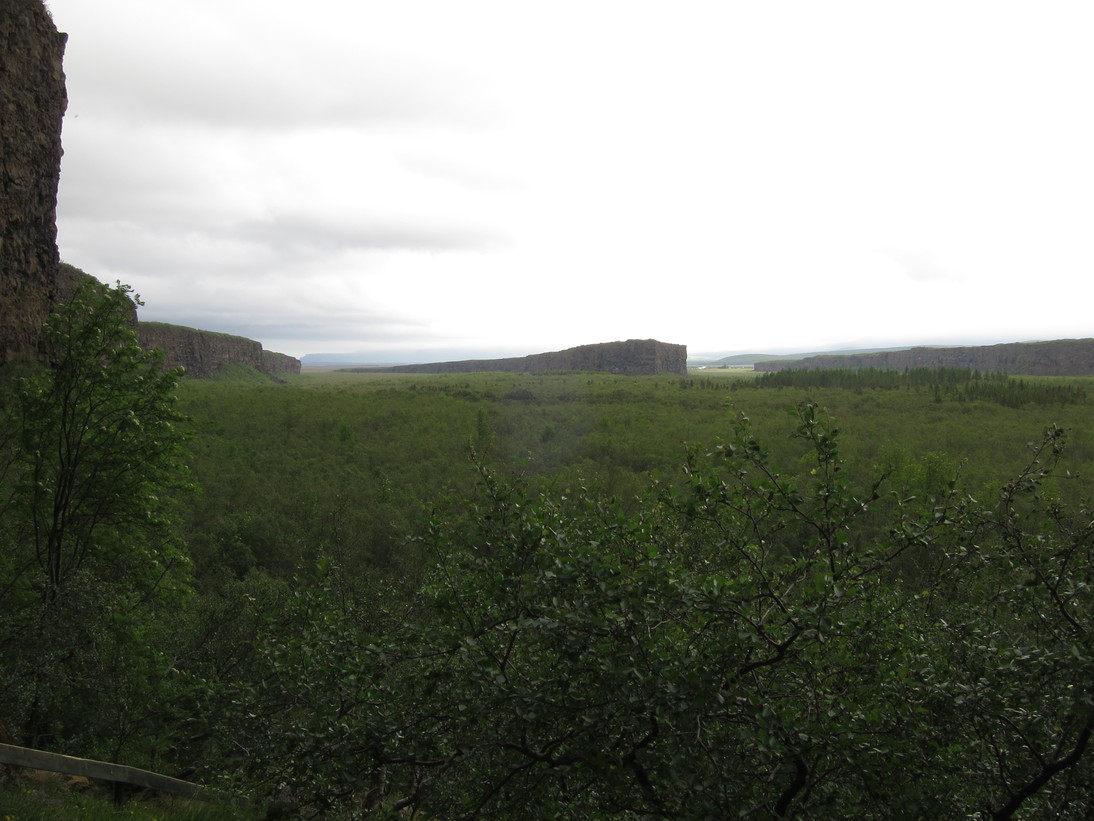
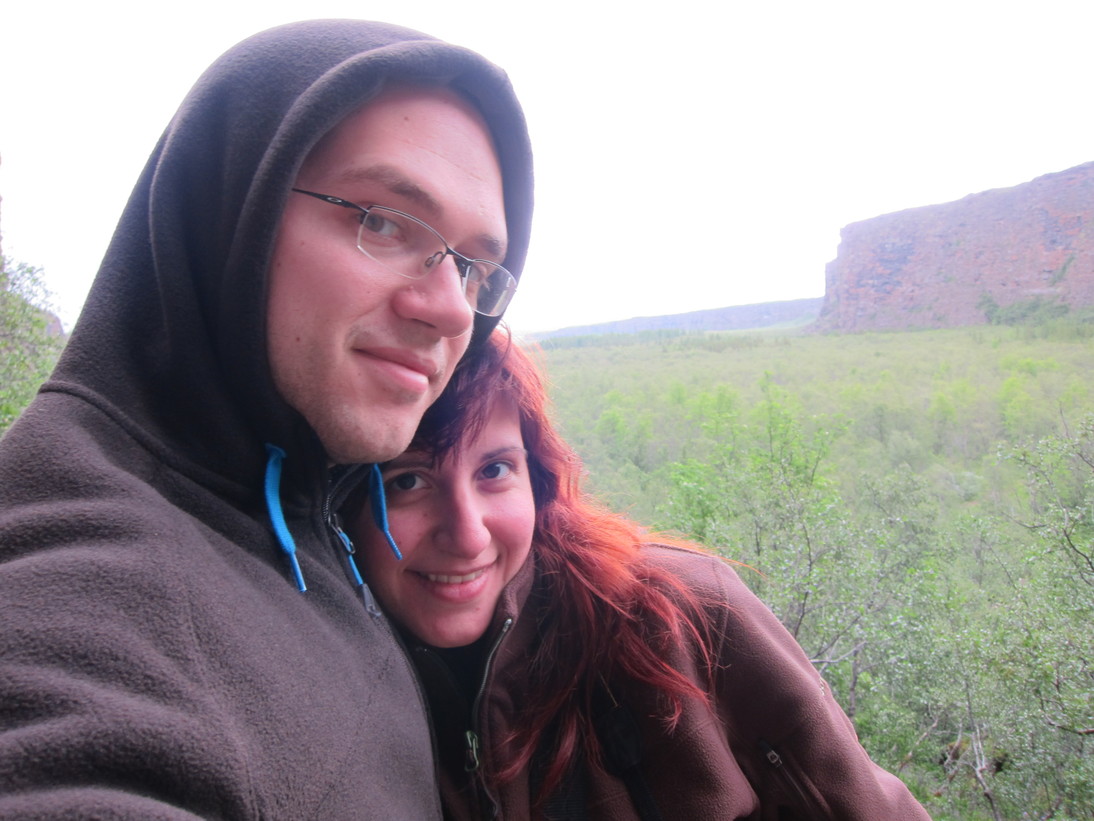
We made some instant coffee and had a walk around the zone, which is full of trees (birch, fir and pine). I don't remember if I had said this before, but Iceland has almost no big trees, and in fact this is one of the first places we saw some except at cities. It turns out that before the Viking discovery the island was full of trees... Which were used as fuel and supplies to build ships and homes. The big deforestation removed every tree, and the climate didn't help them grow again: trees here grow at a very slow rate.
Husavik: Whalewatching takes a "whale"
We left Ásbyrgi and tried to collect some seashells in places that our road map said there were plenty, but didn't have luck: the road was like 20 or 30 meters from the beach, and there was no way to pass except crossing some farm. Even the way to a museum with interesting views was closed by a fence! We had to drive backwards for quite a while and then maneuver to get back to the road.
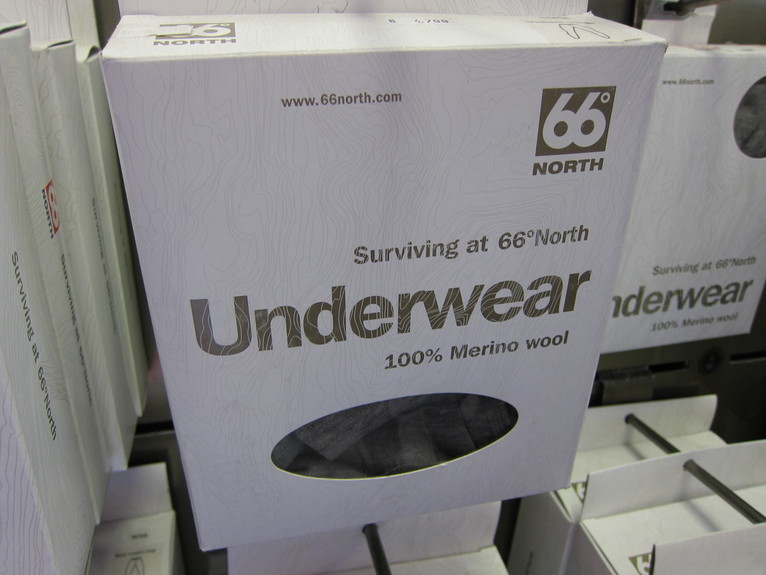
In Husavik we had almost only one thing to do: go whale watching! We had a 7% discount we found in the information centre in Ásbyrgi and went straight to buy it, it was something like 14000 ISK. They told us the sea was a little brave and (as is usual for whale watching) gave us seasickness pills to take before the trip. They also told us to get some heavy jackets: I went to buy a 66º North black jacket for 16000 ISK, it is an awesome jacket: thin but very warm and weights almost nothing. It has been what I wore all this winter here in Spain.
In Husavik we had almost only one thing to do: go whale watching! We had a 7% discount we found in the information centre in Ásbyrgi and went straight to buy it, it was something like 14000 ISK. They told us the sea was a little brave and (as is usual for whale watching) gave us seasickness pills to take before the trip. They also told us to get some heavy jackets: I went to buy a 66º North
black jacket for 16000 ISK, it is an awesome jacket: thin but very warm and weights almost nothing. It has been what I wore all this winter here in Spain.
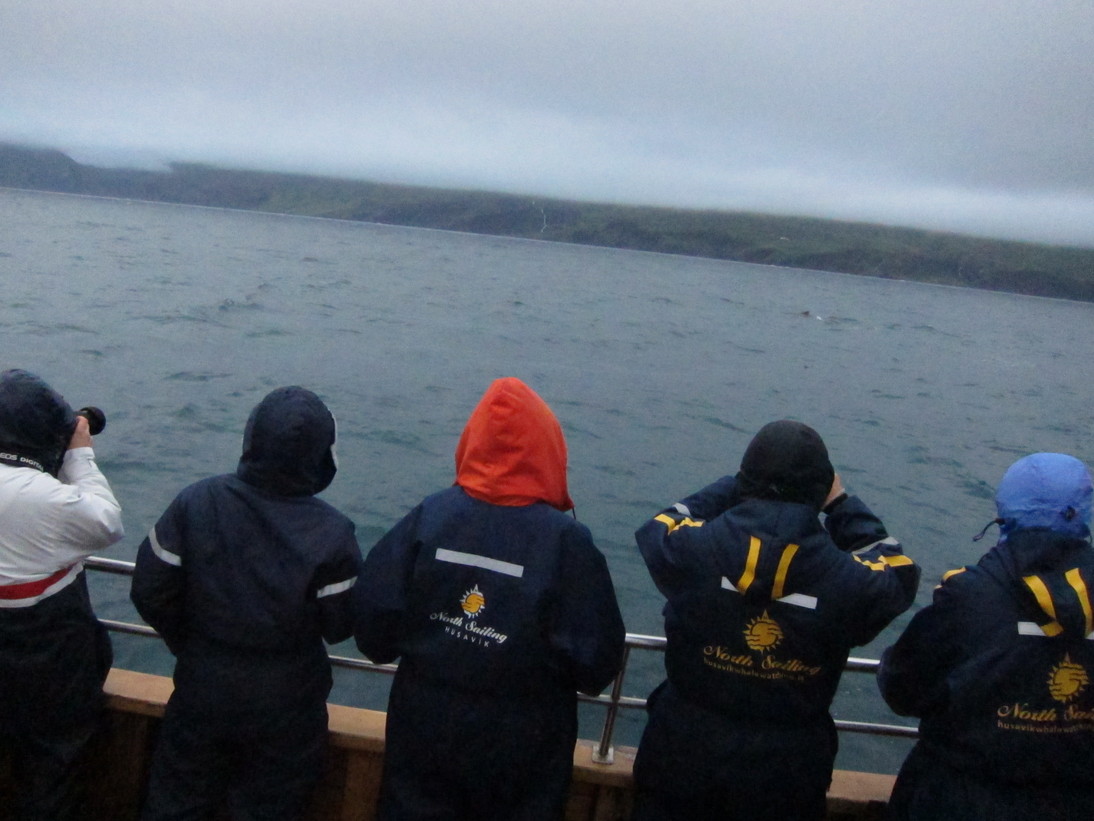
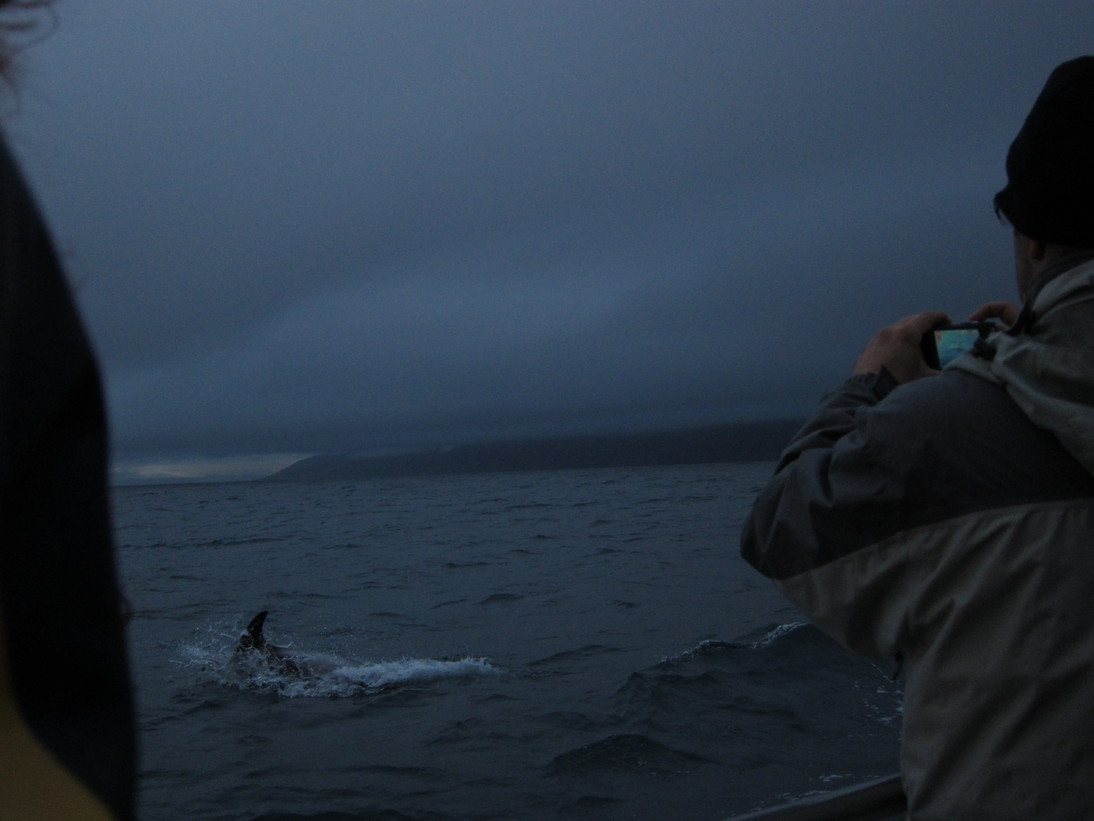
It was really freezing at sea, and as they said, the sea was brave. We catched a humpback whale which we saw several times, also a lot of puffins flying around and some dolphins guided us back to port. An interesting fact: puffins have very short wings and thus don't have enough power to get out of sea. They stay in the water riding the waves until one lifts them up high enough to jump and fly.
On our way back to port I almost felt asleep, even with the rough sea. Something like 20 minutes before docking, they gave us hot chocolate (which was awesome after the freezing wind) and a cinnamon roll. I ate two, mine and Laia's, she looked a little pale and green. If you ever go whale watching and they say the sea is a little rough, don't go. You'll see at least 10 times more people puking from board to starboard than whales or even dolphins.
Back to our guest house and to sleep, we were wasted: it was already tomorrow and we were soaked from head to toes. We needed a shower... Even less time to sleep!
Today we drove for around 170km... Or not.
« Road Trip Through Iceland: Day 7 - From Egilsstaðir to Mývatn passing through Hverir
» [...]
On our way back to port I almost felt asleep, even with the rough sea. Something like 20 minutes before docking, they gave us hot chocolate (which was awesome after the freezing wind) and a cinnamon roll. I ate two, mine and Laia's, she looked a little pale and green. If you ever go whale watching and they say the sea is a little rough, don't go. You'll see at least 10 times more people puking from board to starboard than whales or even dolphins.
Back to our guest house and to sleep, we were wasted: it was already tomorrow and we were soaked from head to toes. We needed a shower... Even less time to sleep!
Today we drove for around 170km... Or not.

13/04/2011 - Road Trip Through Iceland: Day 7 - From Egilsstaðir to Mývatn passing through Hverir
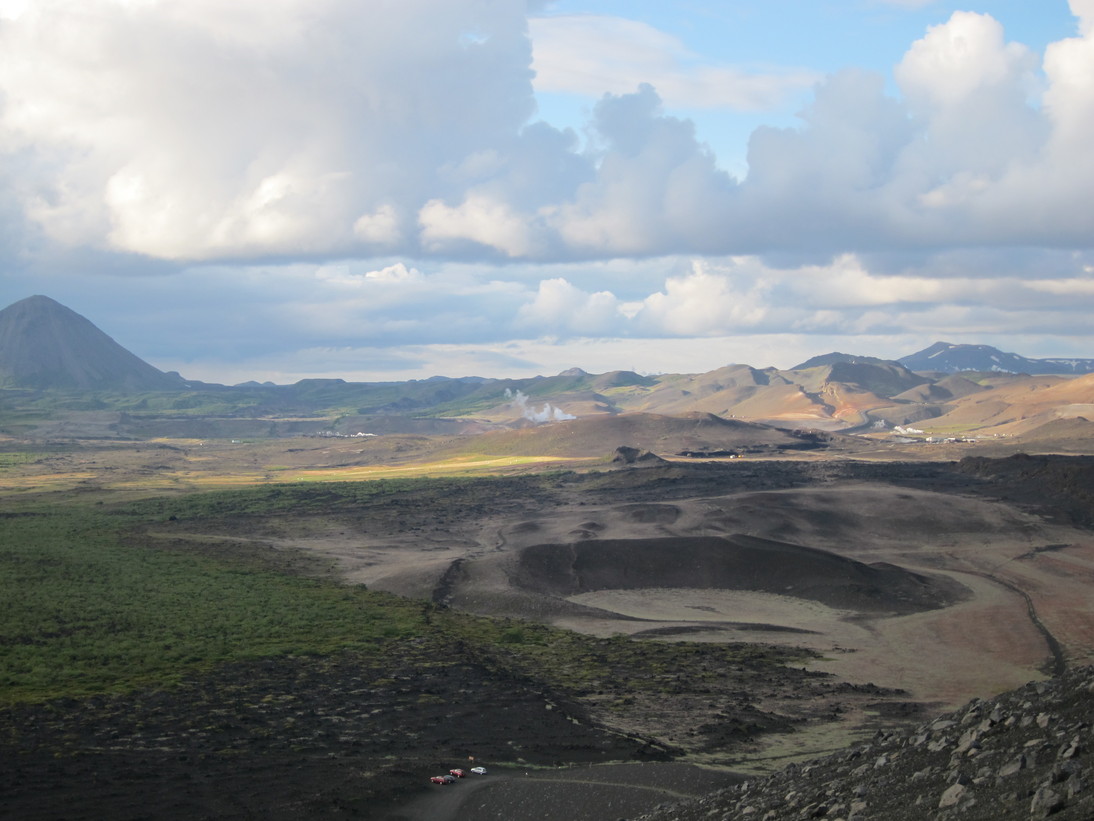
This weeks post in the Iceland road trip series comes a little late: Saturday was a relaxation day, and Sunday I posted about how relaxing Saturday felt. As such, I didn't put the time to typeset this post until Friday was looming! I think I got a little out of hand adding pictures to this post... But the Mývatn area is impressive and I wanted to show it here.
Shopping in Egilsstaðir
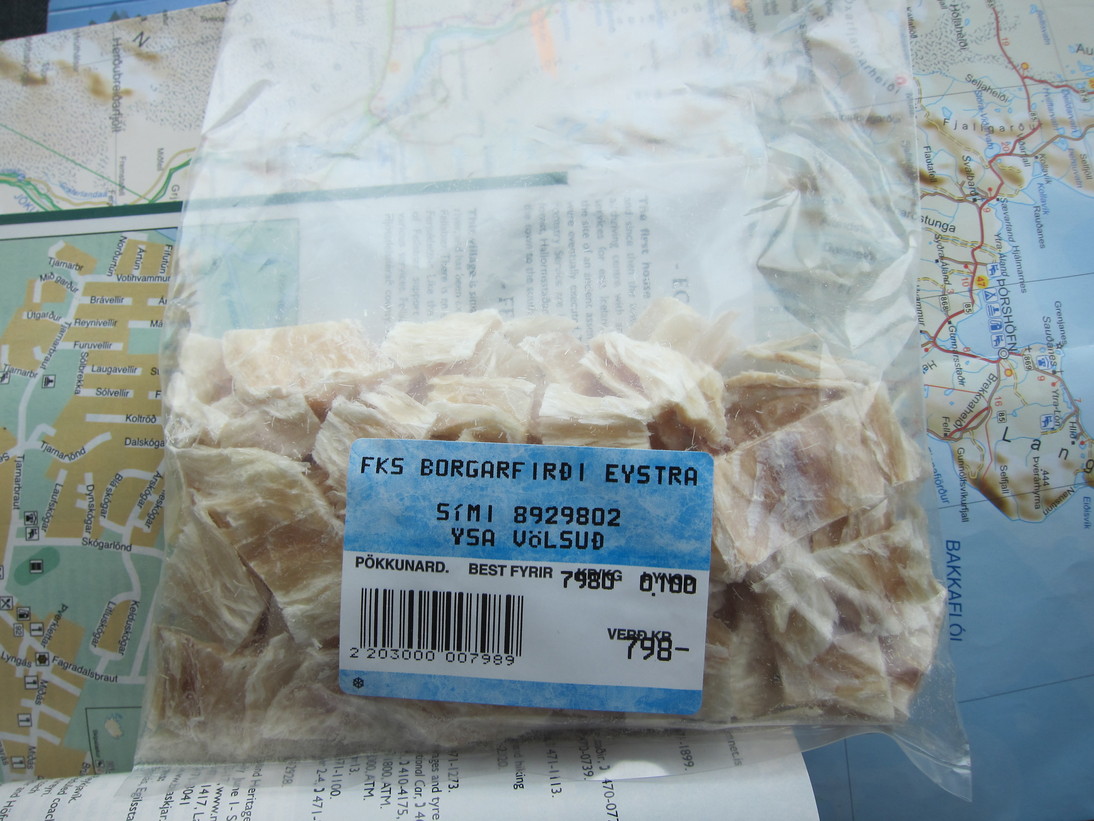
As usual, we got up pretty early, had a good breakfast and headed for the next gas station, which was in front of a local supermarket. Laia got into a wool shopping spree.. Now I have a very nice scarf and half another one in the works. I also bought dried fish, which is (supposedly) a common treat while on the road. It tastes ok, I would have liked it more salty.
Close to the supermarket we found a small and cute handcraft store, where we bought several souvenirs for the family and ourselves, made of fish scales (I have a very nice lox keychain) and two leather satchels. A very good place.
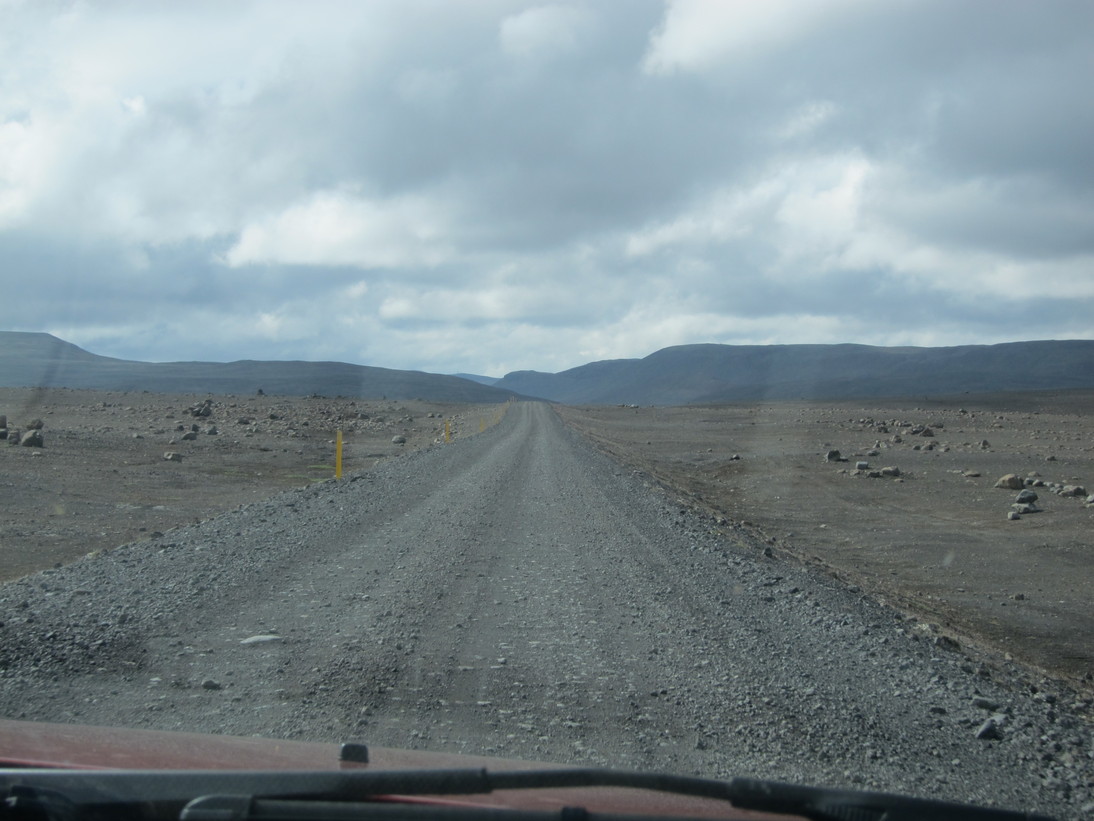
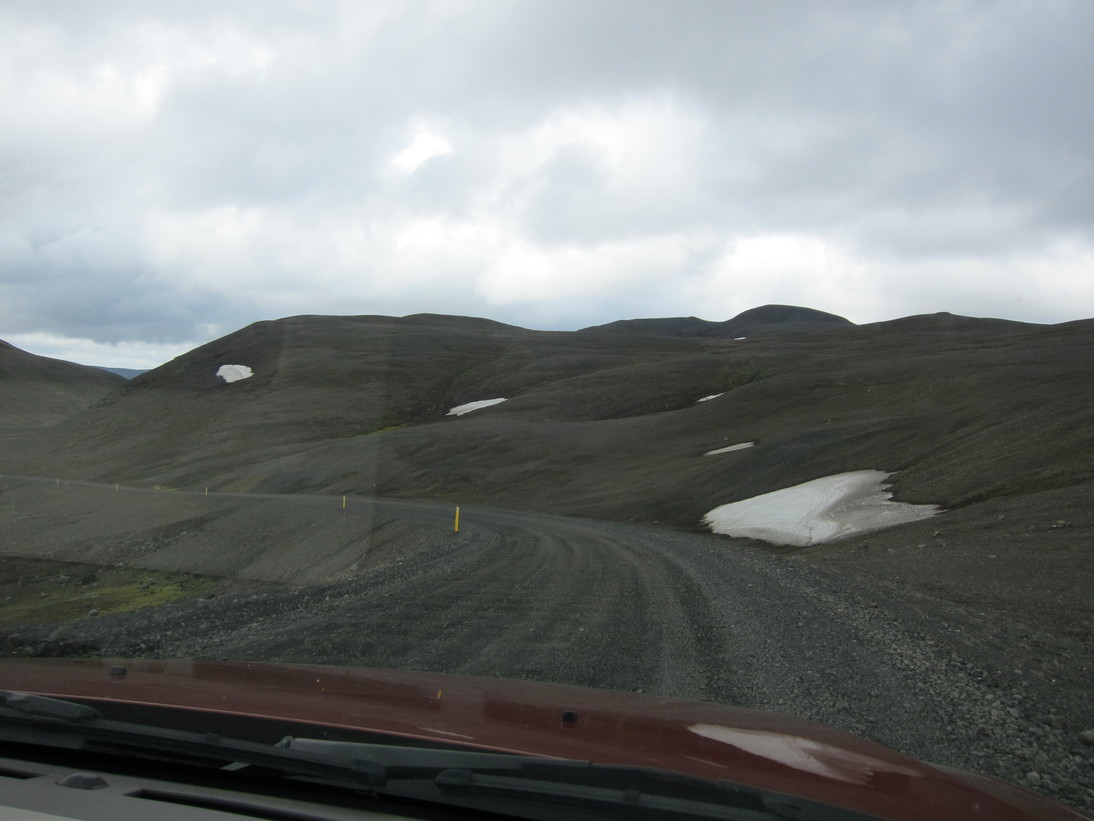
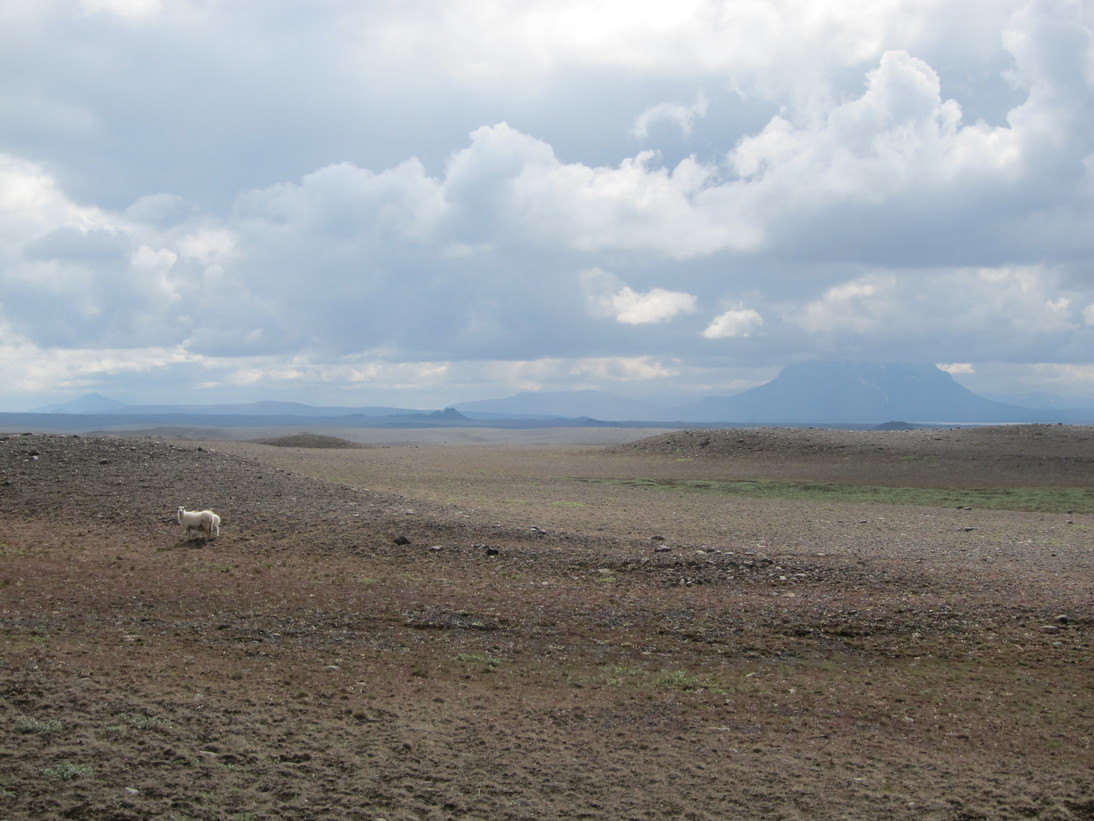
On our way to Mývatn: Sænautasel and Modrudalur
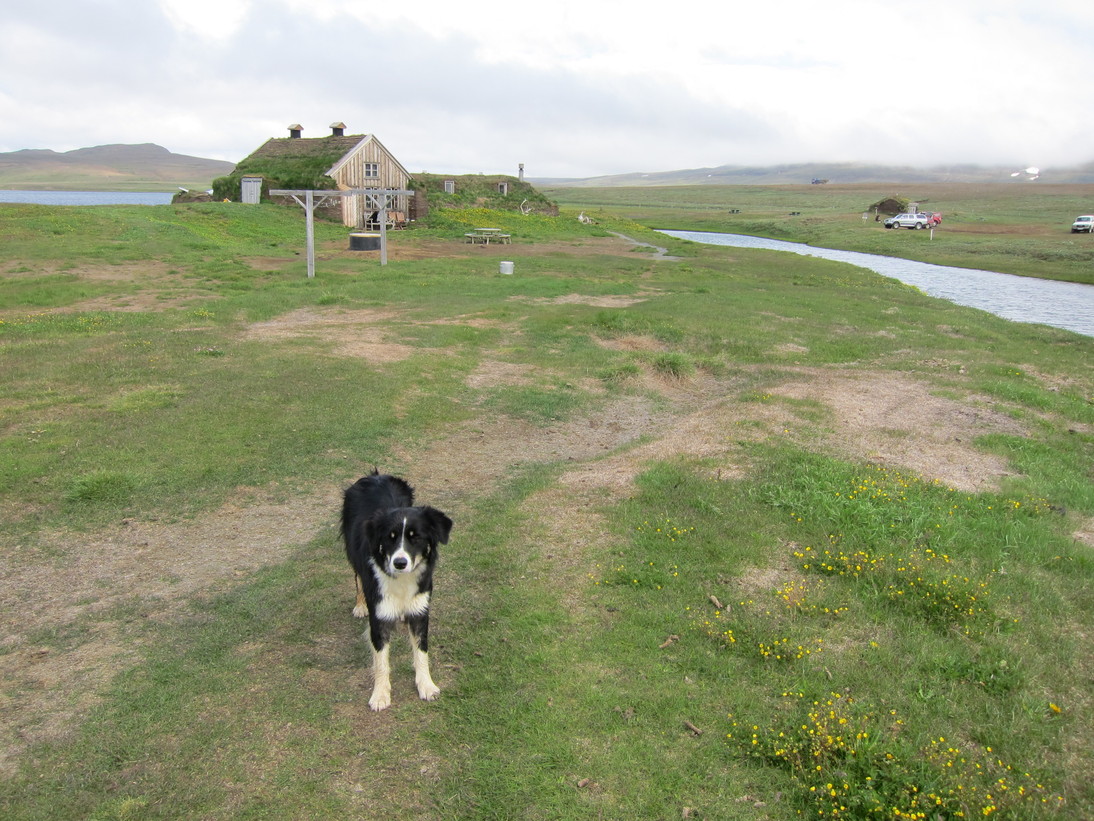
According to the road map prepared by the lovely people at Nordic Visitor, we should stop midway to visit Sænautasel. Sænautasel is an abandoned farm, rebuilt in 1992. It sprouted into fame with Halldór Laxness' (Icelandic writer, Nobel prize in 1955 – remember this kind of things by reading How to remember facts: associative mental chains) novel A midwinter night on Jökuldalsheiði Moor. When we arrived, it was closed under reforms. We walked around a little, enjoying the fact that it was a mildly sunny day and took the road again.
Our next stop was Mödruðalur. A small settlement in the middle of nowhere, has a coffee place and a church built by a local farmer (Jón Stefánsson) in memory of his wife. He is also known for playing Bach in the church's organ... backwards. By the way, have you kept an account of how many coffee places I have talked about?
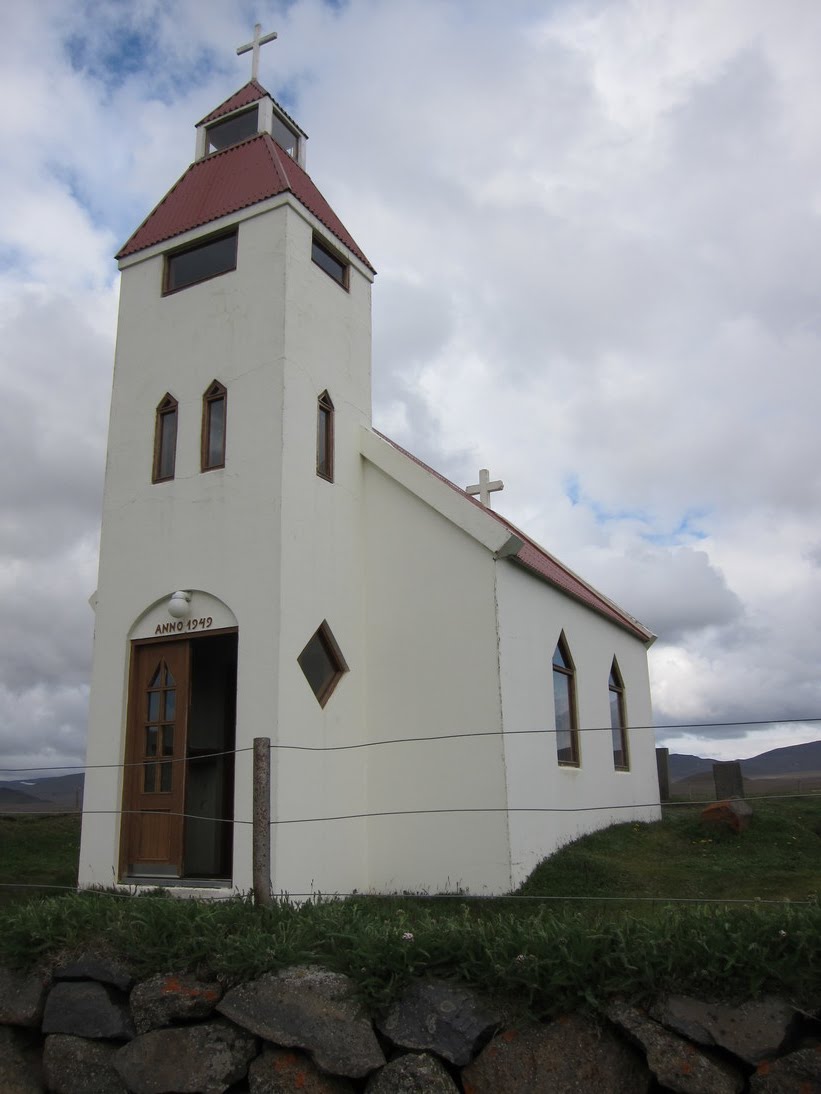
Right: Modruðalur's church
Hverir
A small gateway to hell (in Icelandic, hell is viti), Hverir is a must-see place, with hot boiling mud and fume escapes, it looks taken from a B-movie showing an alien planet. But it is not. Cover your mouth, the smell can be pretty strong depending on the wind.
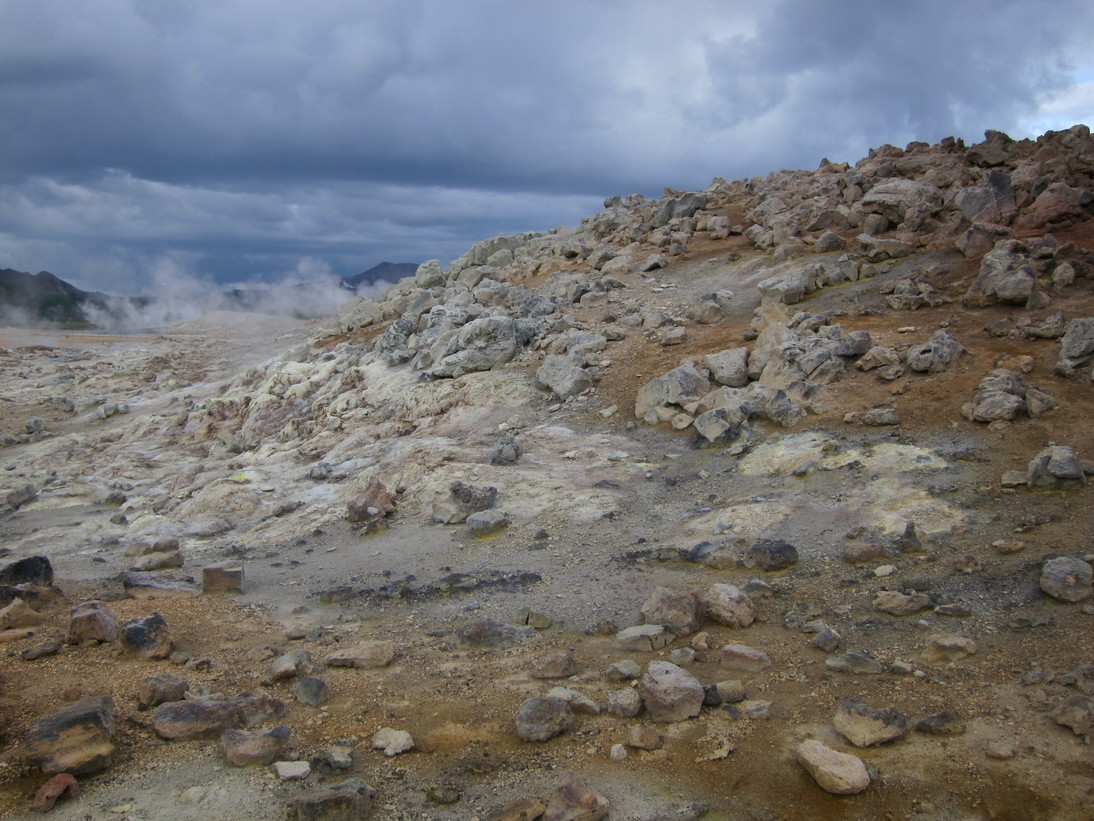
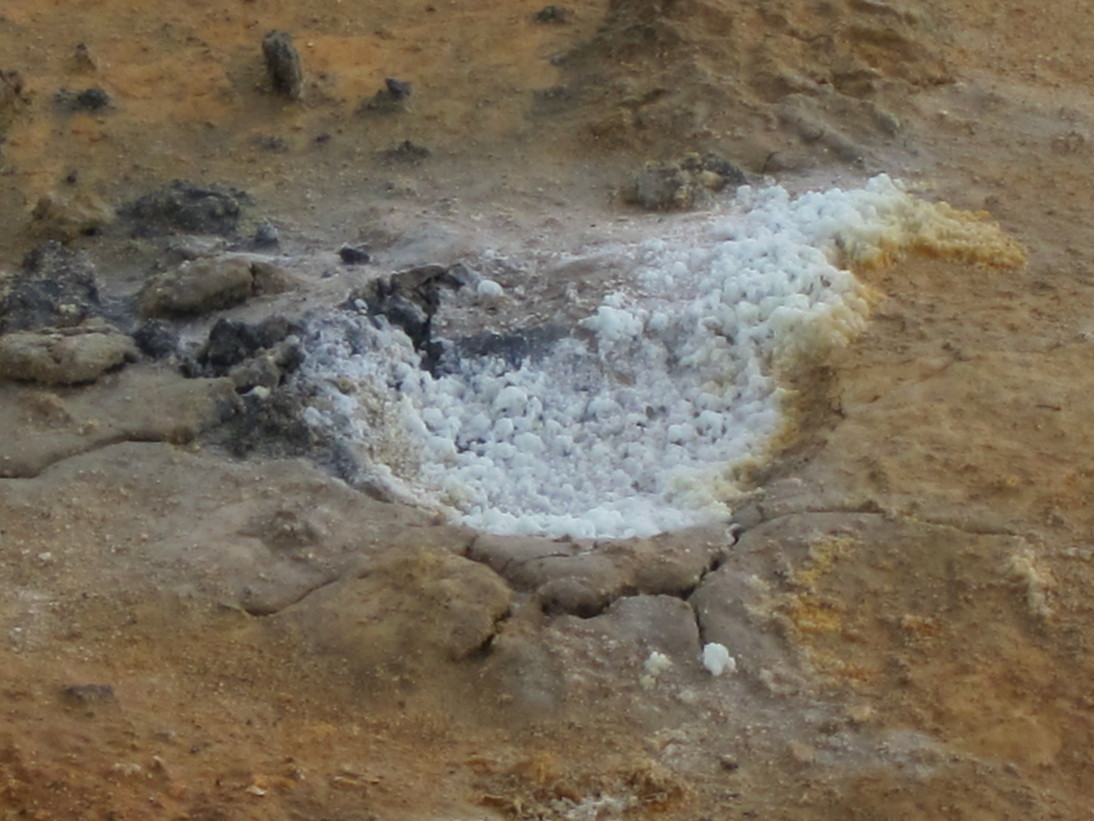
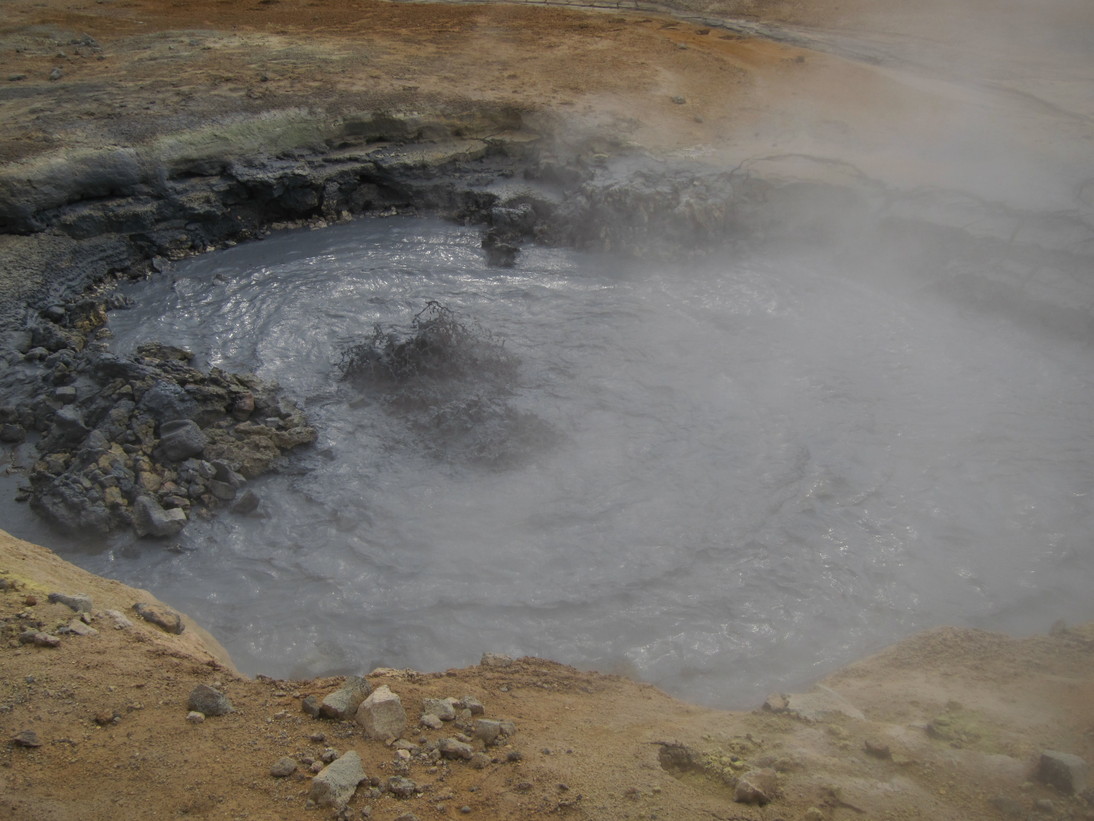
Views of the boiling mud in Hverir
We arrived to Mývatn shortly, and were impressed again by how open Icelanders are. We arrived to our guesthouse and found the door open. No-one inside, we got out again to get the phone number from our papers, still lying inside the car. Then we saw a paper attached to the front door: Mr. Berenguel, your room is Number 4 and you'll find the keys in the door. Amazing!
Hverfjall
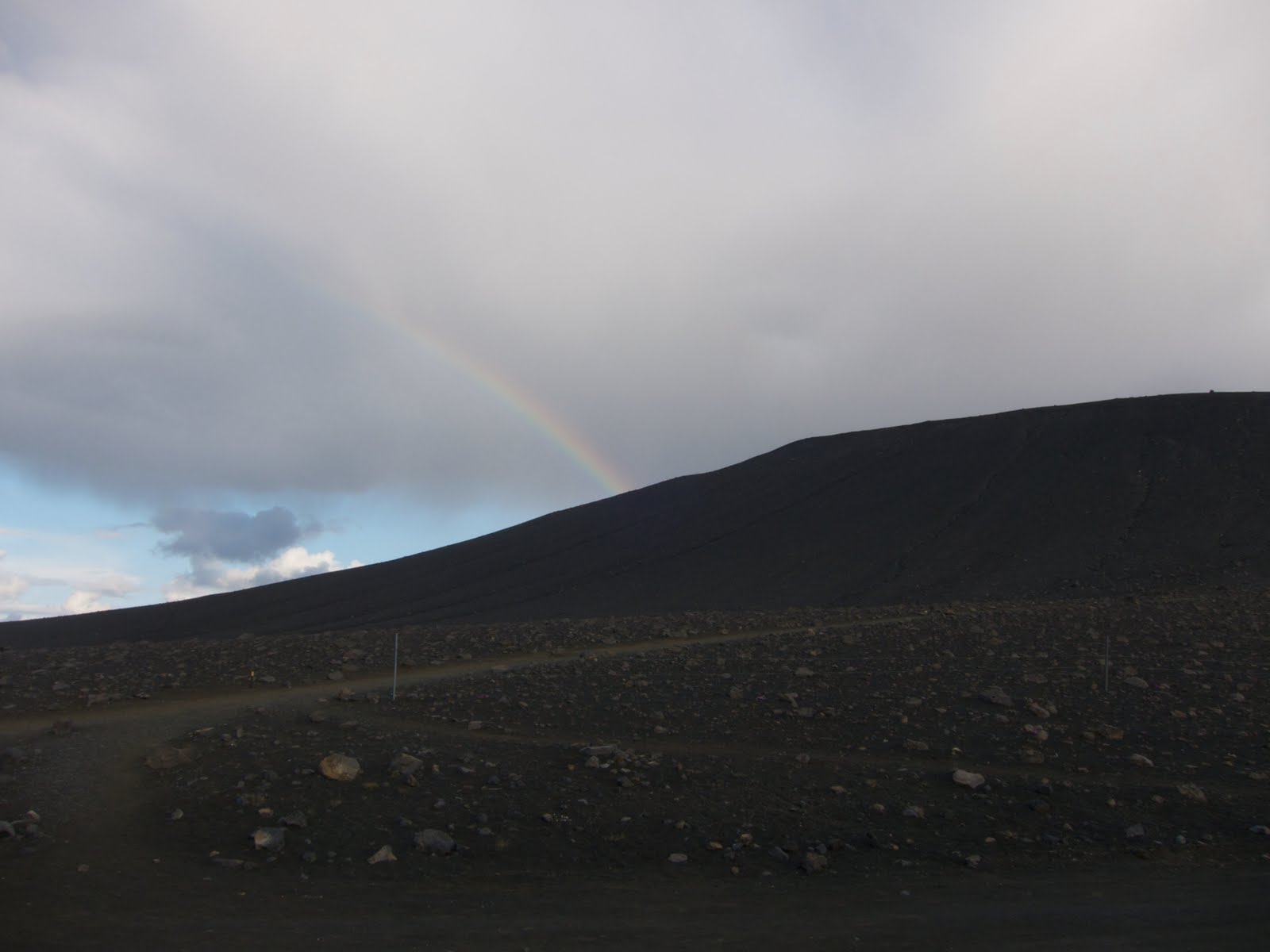
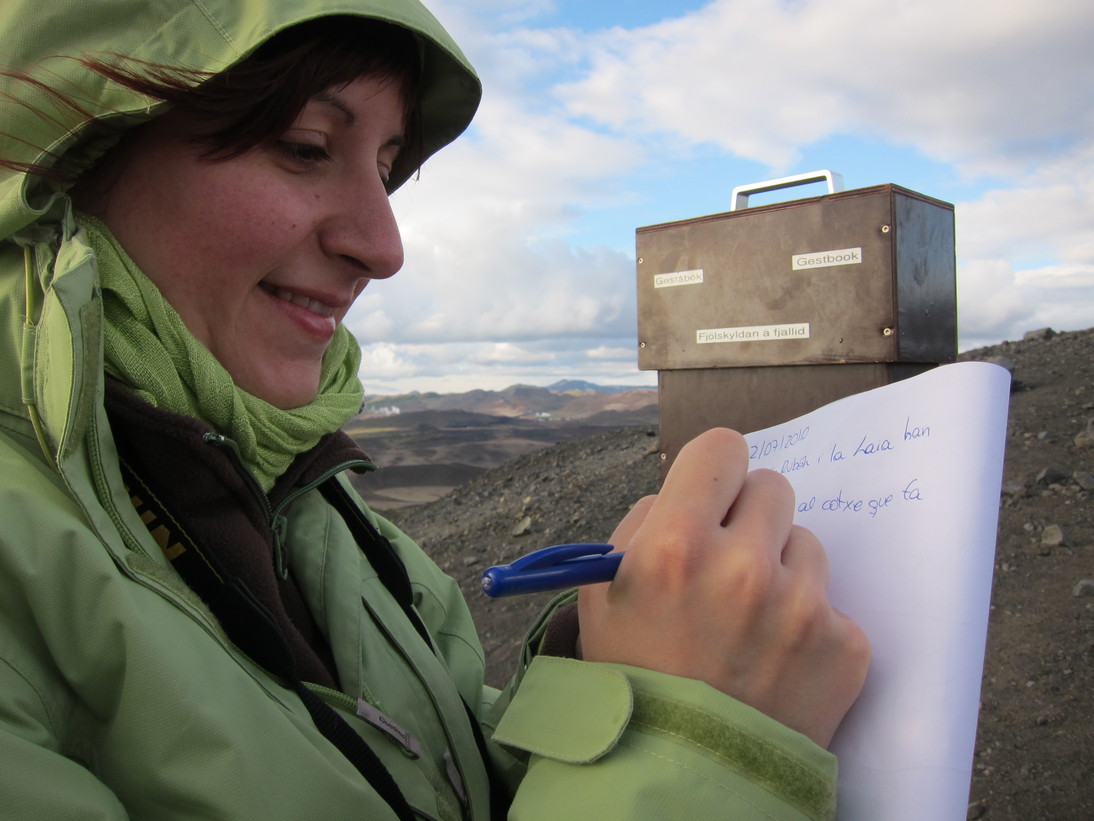
Hverfjall is a 312 metres high roundish crater, around 1 km in diameter. And a perfect hiking place. There is an easy trail leading you to the top of the crater and you can then circle it. We did not circle it because it was a windy day and we still wanted to walk a little around Mývatn. What we did was signing the guest book... on top of the crater! Unmissable and unforgettable.
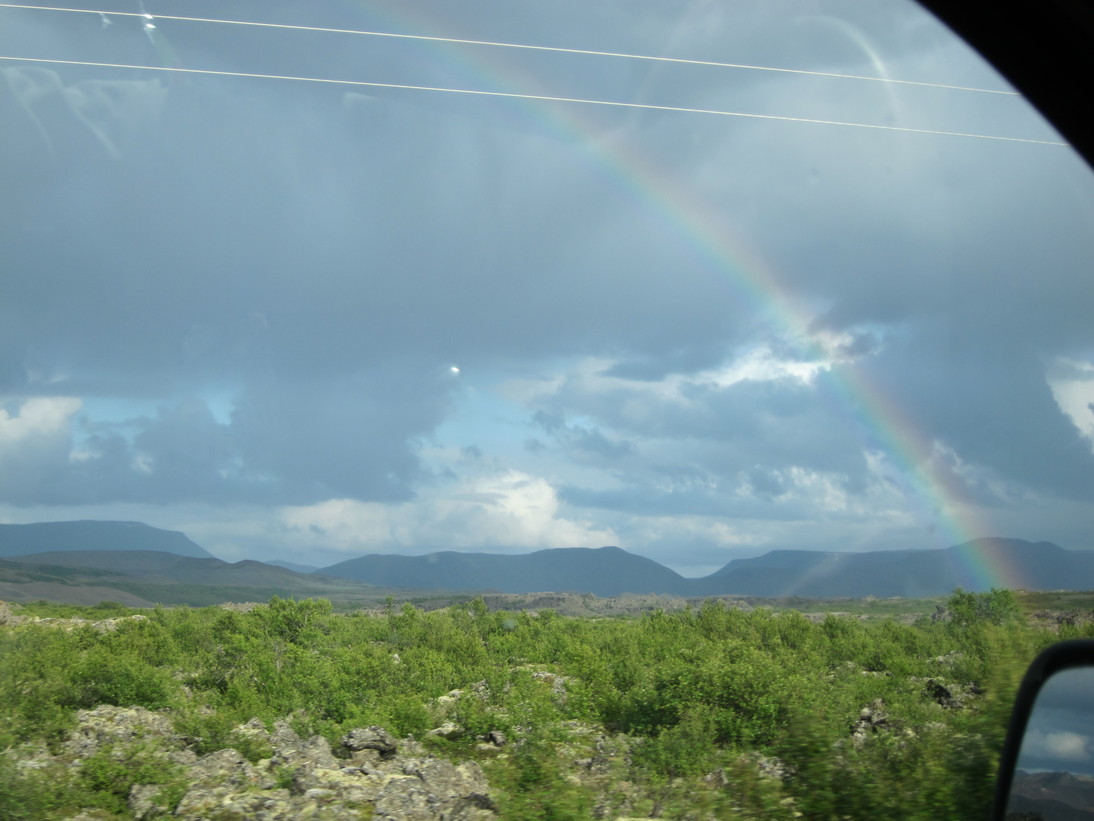
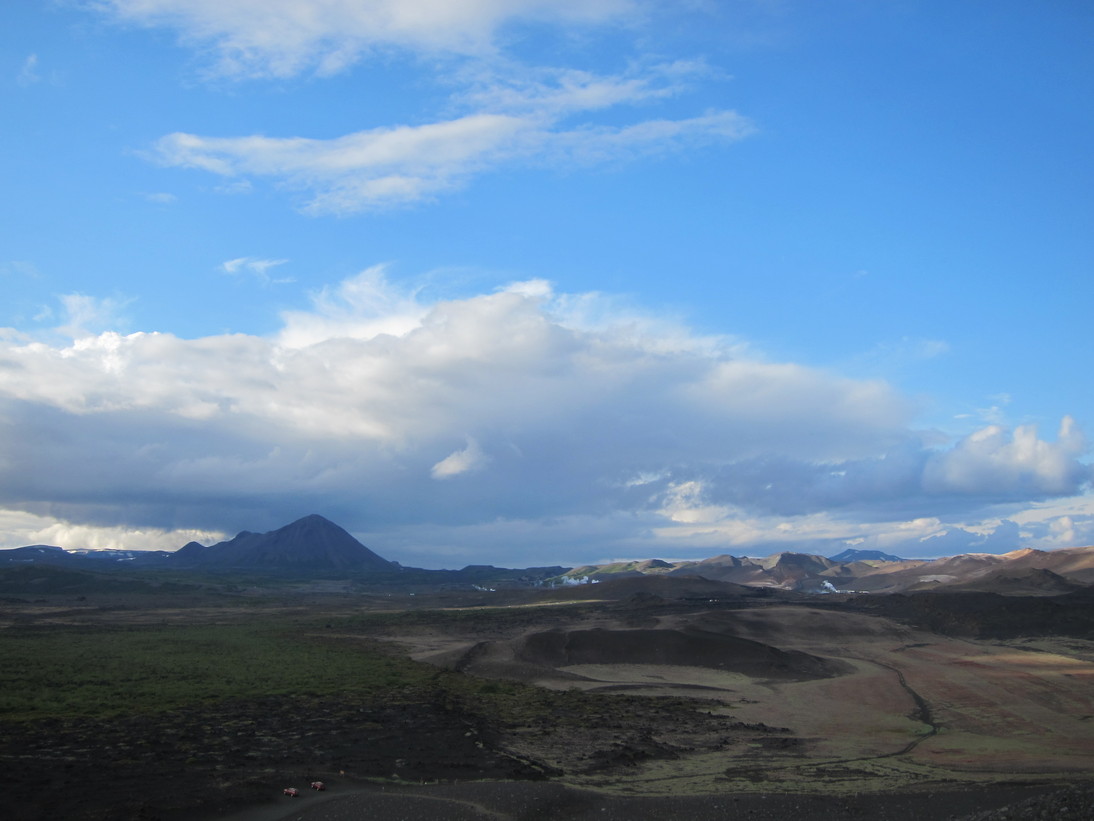
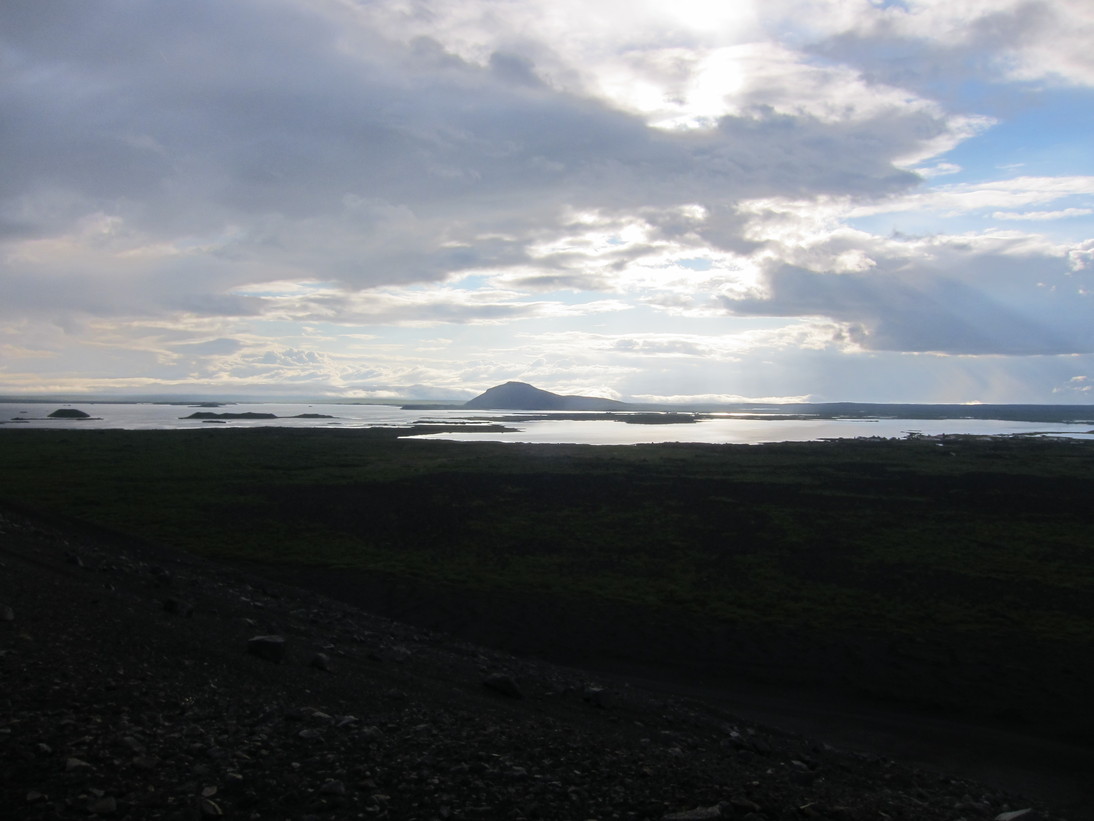
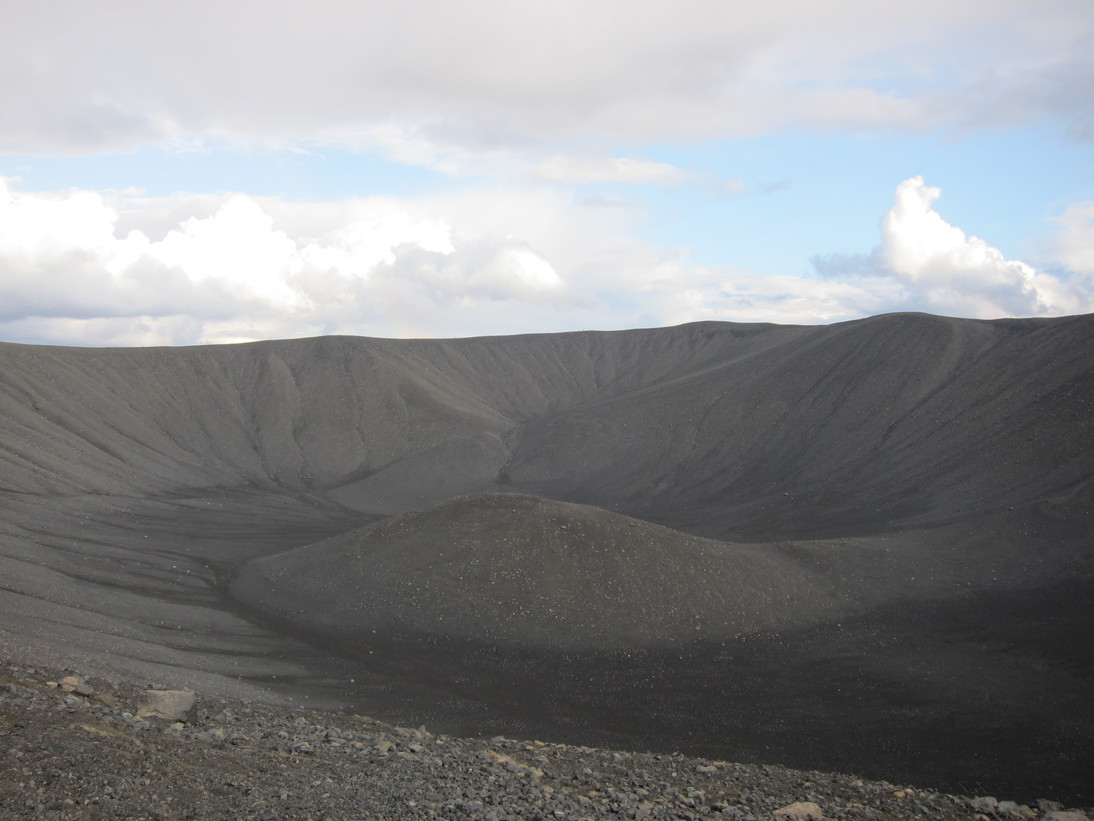
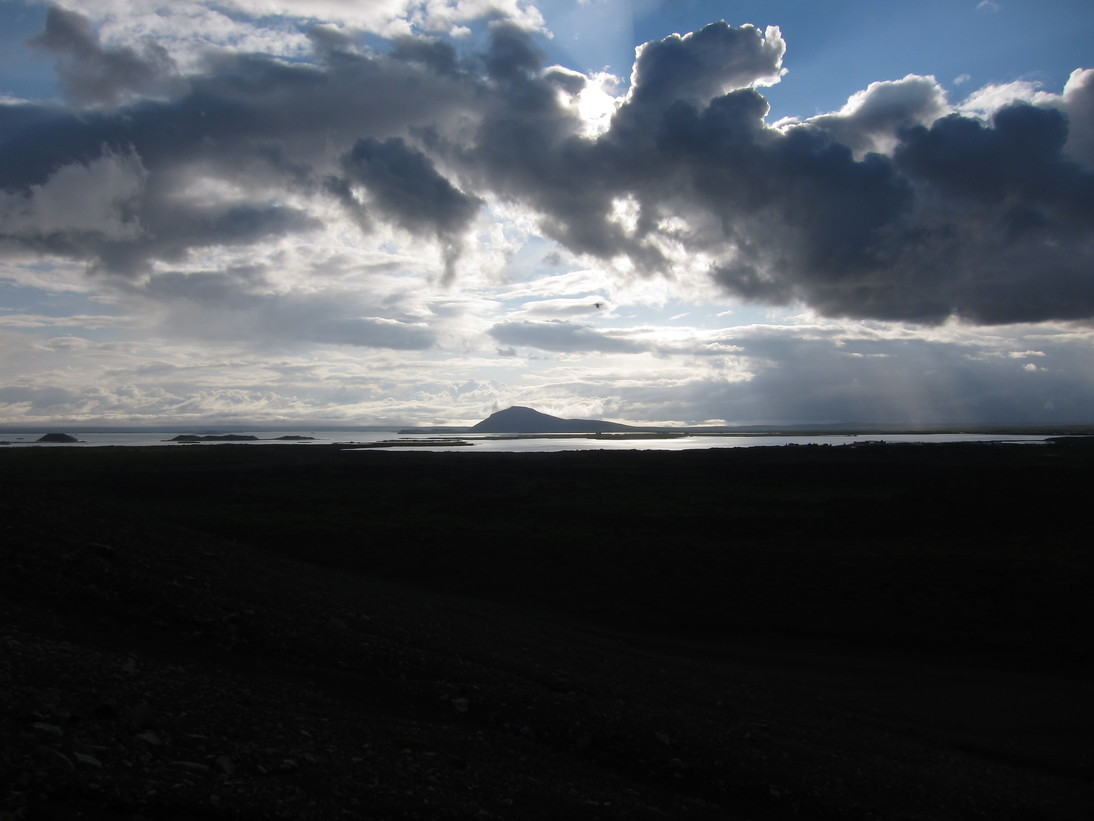
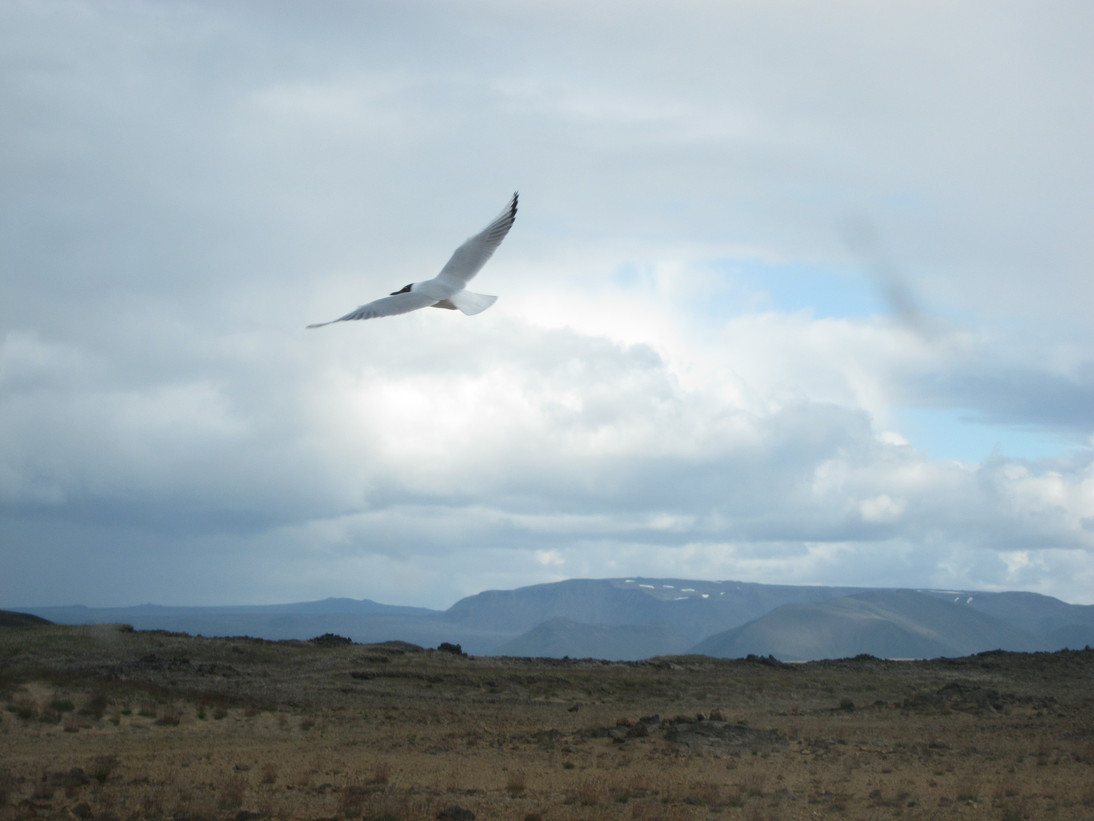
Mývatn and the pseudo-craters of Skutustaðir
Mývatn means "lake of the flies" and as such, it is choking full of tiny flying insects. They don't bite (if I remember correctly, there are no blood sucking insects in Iceland), but they get in your eyes, ears and everywhere. I recommend that you buy somewhere a net to put in your head, or at least take a big translucent handkerchief. You will need it if you get close to the lake.
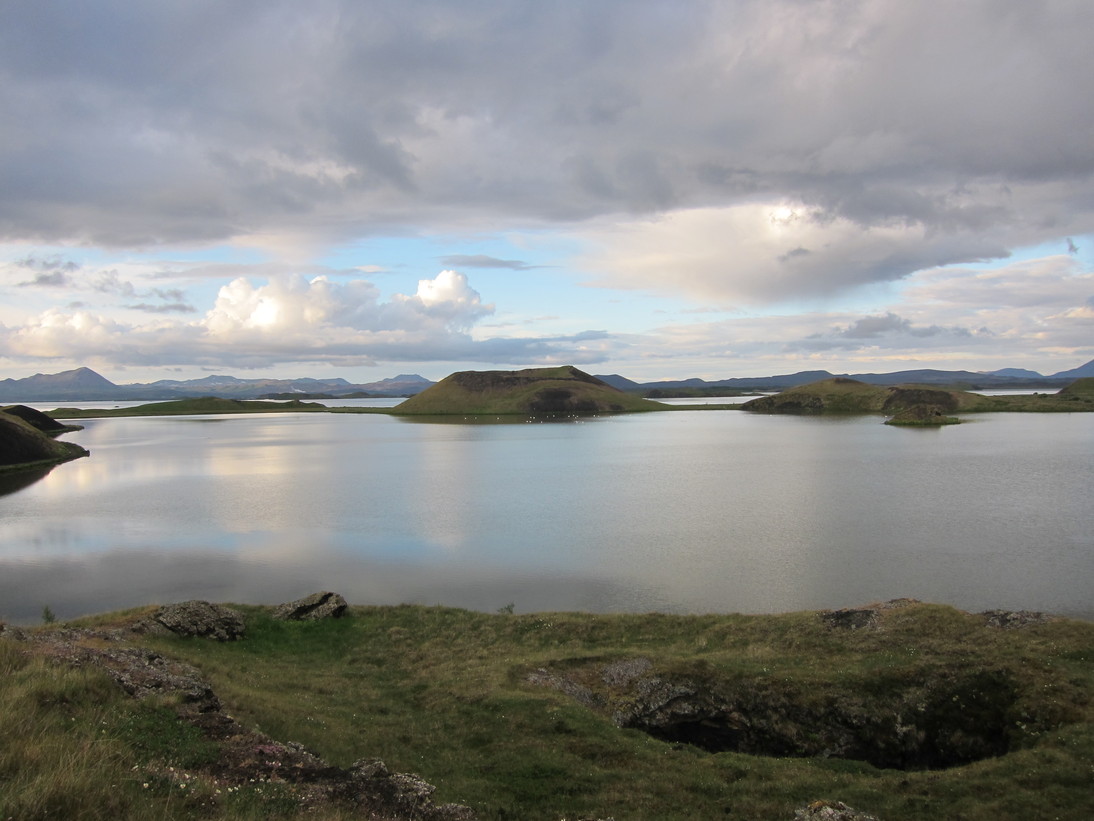
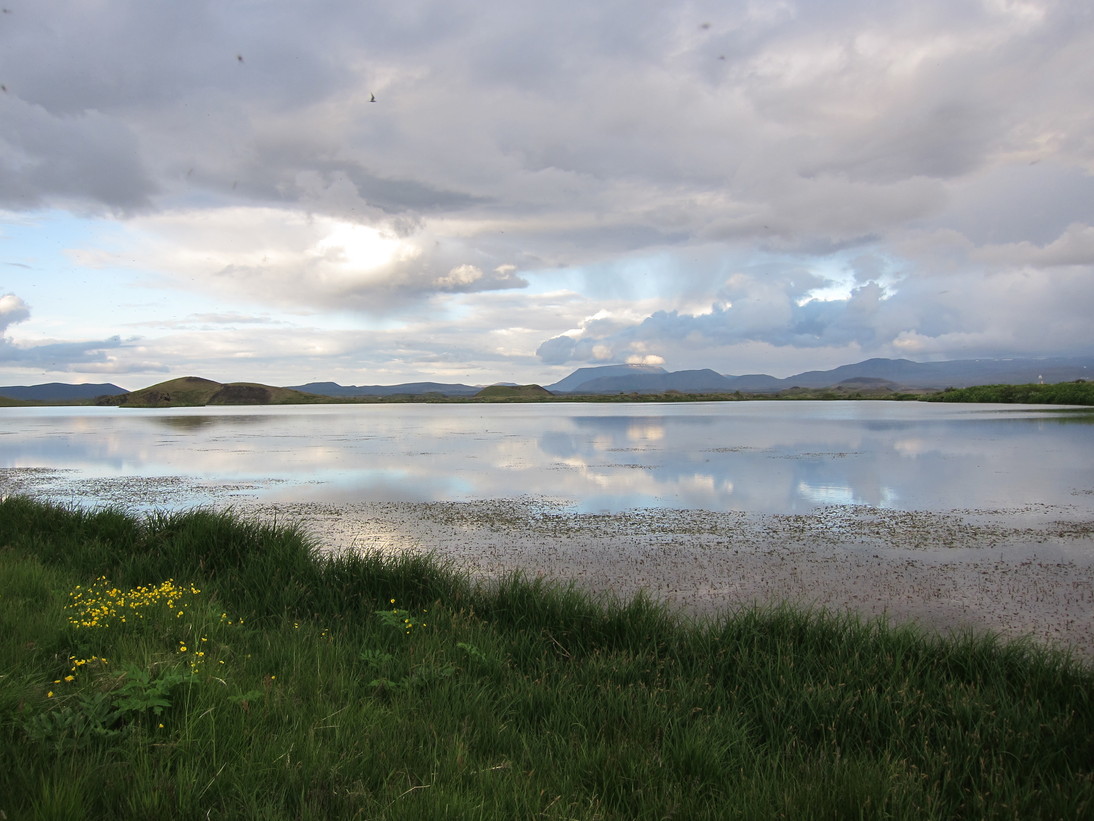
Circling the lake you get views on odd-shaped hills, called pseudo-craters. They look like craters... but they are not. They were formed by water trapped by overflowing magma, when the water passed boiling point, the traps exploded forming craters. As a crater is only so when it is formed by volcanic flow or meteorite impact... they are called pseudo-craters.
Mývatn Nature Baths
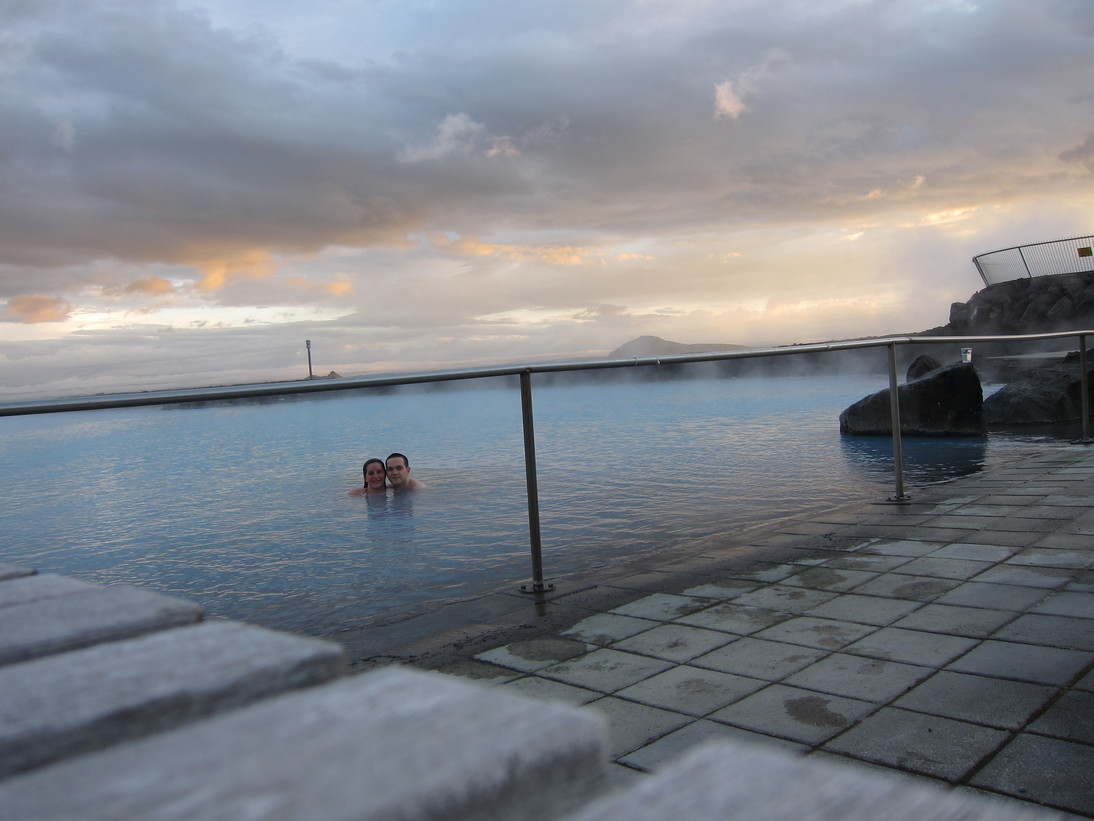
Do you remember that we could not make it to the Blue Lagoon (Blaá Lónið) near Reykjavik? Well, Jose back in Hoffell told us not to despair and rush the last day, and go to Mývatn Nature Baths instead. In broad terms, it is exactly the same. The escape water of a geothermal power station collect a lot of sillica and an odd-blue alga that it is pretty good for your skin. And you can go there and enjoy a hot smooth bath in the middle of a volcanic desert. It is truly an amazing experience, I don't know about the Blue Lagoon, but we can truly recommend Mývatn Nature Baths. The visit is only 2500 ISK.
And today.... Record day if I'm not mistaken: 1541 km!

02/04/2011 - Road Trip Through Iceland: Day 6 - East Fjords, Egilsstaðir and Borgarfjörður
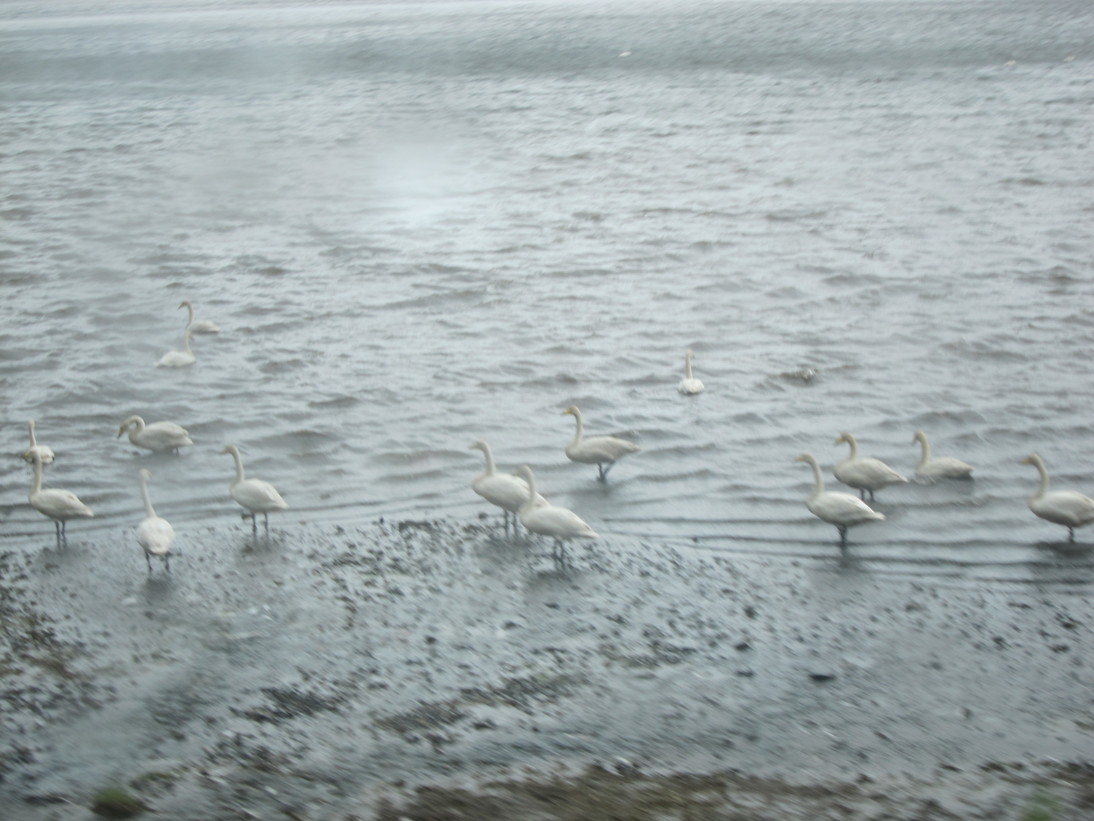
In the last 2 weeks I've had a big surge of visits and new subscribers, following the rise in HackerNews of my old post Timeboxing: You Will Work Like Never Before and of my newer post Learn to Remember Everything: The Memory Palace Technique. To put in situation, last July my girlfriend and me made a road trip around Iceland, and I wrote everything we did each day. Since then, I've written a series of posts named Things You Should Read Before Travelling to Iceland about food, shopping and related stuff, and also the ongoing series Road Trip Around Iceland. This is the 6th post in this series, you can navigate to the previous either through the previous link or in the navigation links at the end of this post. I hope you enjoy reading what I write from now on (but pardon me if this specific post is not great: it was not a fantastic day back in our trip!).
Today was our first fjord day (fjorðdagur?). We routed from Höfn to Egilsstaðir, but we could not make it beside the coast: the fog was too thick. Instead, we followed a mountain pass. Recommendation: if you don't like heights, skip mountain passes. If you don't like rain and wind, skip Iceland (just joking, I don't like them and love the place).
Today was our first fjord day (fjorðdagur?). We routed from Höfn to Egilsstaðir, but we could not make it beside the coast: the fog was too thick. Instead, we followed a mountain pass. Recommendation: if you don't like heights, skip mountain passes. If you don't like rain and wind, skip Iceland (just joking, I don't like them and love the place).
Höfn-Egilsstaðir
We parted from Hofell early in the morning. Our route today would be pretty long, leading us to the capital of East Iceland, Egilsstaðir. Preparing for a long drive with not that many gas stations around, we fueled before arriving to Höfn. By the way, höfn means harbour, as you may guess this town is just beside the coast. After a while we started to admire some fjords, around Álftafjörður and Hámarsfjörður, our first sight of them. We also saw the day was cloudier above the fjords than around the flat coast. It has something to do with dominant winds, the gulf current and sudden straight walls of land (i.e. fjords).
The wind was very strong, blowing over the sea and against the shore. As I have previously said, in Iceland when the wind is strong, it is really strong. The kind of wind that makes your 2.5 ton car wobble a little when you are against a cliff and wobble quite a lot when you reach a valley and it can blow freely. The views were nevertheless impressive, the sea blowing against the sharp cut cliffs like steam out of a teapot. Round and round around our first glimpse of Eastern Fjords, we visited Djupivogur and the what one of our guides said it is the oldest shop in Iceland, where we could also take some coffee.
The wind was very strong, blowing over the sea and against the shore. As I have previously said, in Iceland when the wind is strong, it is really strong. The kind of wind that makes your 2.5 ton car wobble a little when you are against a cliff and wobble quite a lot when you reach a valley and it can blow freely. The views were nevertheless impressive, the sea blowing against the sharp cut cliffs like steam out of a teapot. Round and round around our first glimpse of Eastern Fjords, we visited Djupivogur and the what one of our guides said it is the oldest shop in Iceland, where we could also take some coffee.


Our proposed route to Egilsstaðir was nice, along the shore seeing the fjords... But the weather turned on us: windy and foggy. We could not see from one fjord tongue to the next, there was nothing enjoyable about the views. We needed another route, quicker to get to our guest house as soon as possible.
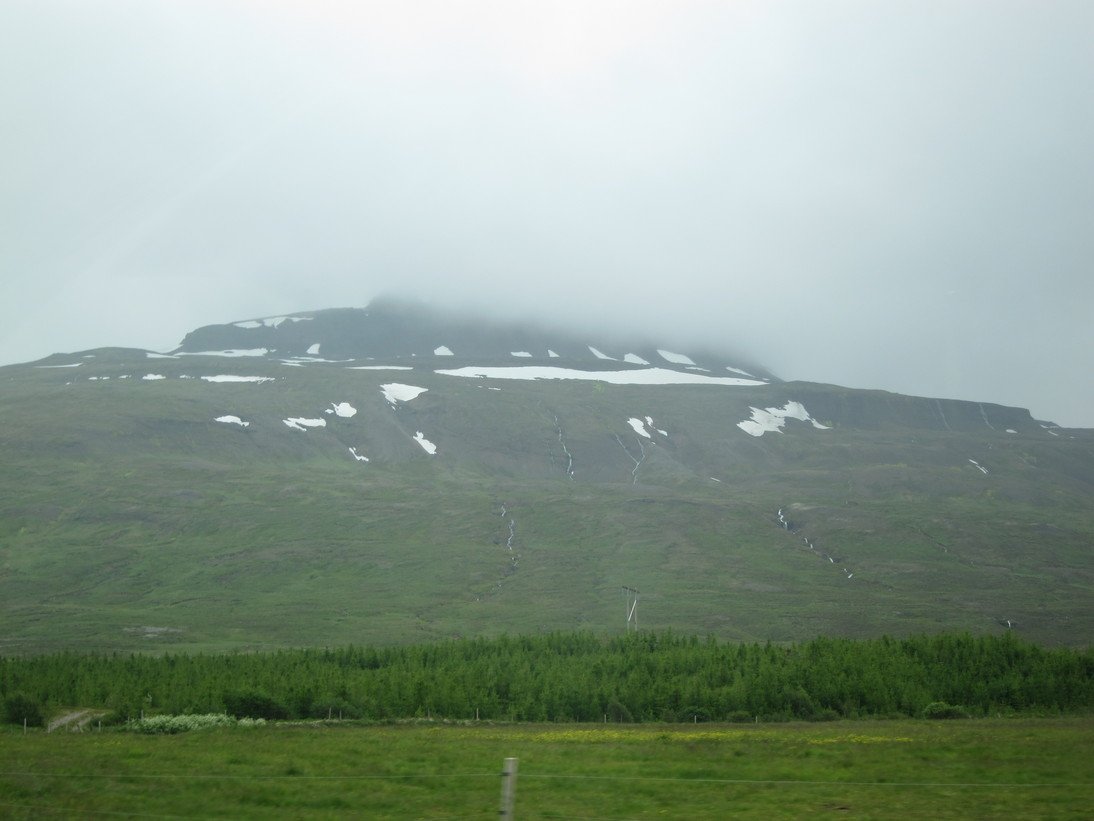
So instead of making it along the fractal coast, we made for the straight line of a mountain pass through road 939, straight from Fóssarfell to Egilstaðir (unless I'm wrong, I can't find my route map and had to rely on another road map I had at home, if I am it was from Breiðdalur to Egilsstaðir). The views up there were astonishing... But for a height-hater like I am, it was quite frightening. The route lasted for around 2 hours, but felt much, much longer. At last, we arrived to the flat area around Lagarfljót, a lake where according to tradition the local "lake worm" Lagarfljótsormur inhabits. The local version of the Loch Ness monster. A little further along the road, Egilsstaðir.
So instead of making it along the fractal coast, we made for the straight line of a mountain pass through road 939, straight from Fóssarfell to Egilstaðir (unless I'm wrong, I can't find my route map and had to rely on another road map I had at home, if I am it was from Breiðdalur to Egilsstaðir). The views up there were astonishing... But for a height-hater like I am, it was quite frightening. The route lasted for around 2 hours, but felt much, much longer. At last, we arrived to the flat area around Lagarfljót, a lake where according to tradition the local "lake worm" Lagarfljótsormur inhabits. The local version of the Loch Ness monster. A little further along the road, Egilsstaðir.

What can I say about this city? The first and foremost thing is that our small and free guide Around Iceland (which you can download for free in Heimur.is or get for free when you get to Iceland) had a map of the city, schematic but useful enough. The city is quite nice, although there is something missing: history. Egilsstaðir was founded in 1944, out of pure economic and logistic interests: there was no big city in the east of Iceland. West we have Reykjavik, south-east we have Selfoss, north we have Akureyri and north-east Isafjorður (a lovely city by the way!). The east area was not as populated and out of need, Egilsstaðir was founded. And it does a good job, being an entry point from the ferries coming from the Faroe, Denmark and Norway (entering through Seyðisfjörður).
This was the first time we arrived with a lot of time ahead to our guest house, a welcoming hostess told us what to visit in the whereabouts. According to her and our route, we set our sights to the puffin viewing area of Bakkagerdi and Borgarfjörður.
This was the first time we arrived with a lot of time ahead to our guest house, a welcoming hostess told us what to visit in the whereabouts. According to her and our route, we set our sights to the puffin viewing area of Bakkagerdi and Borgarfjörður.
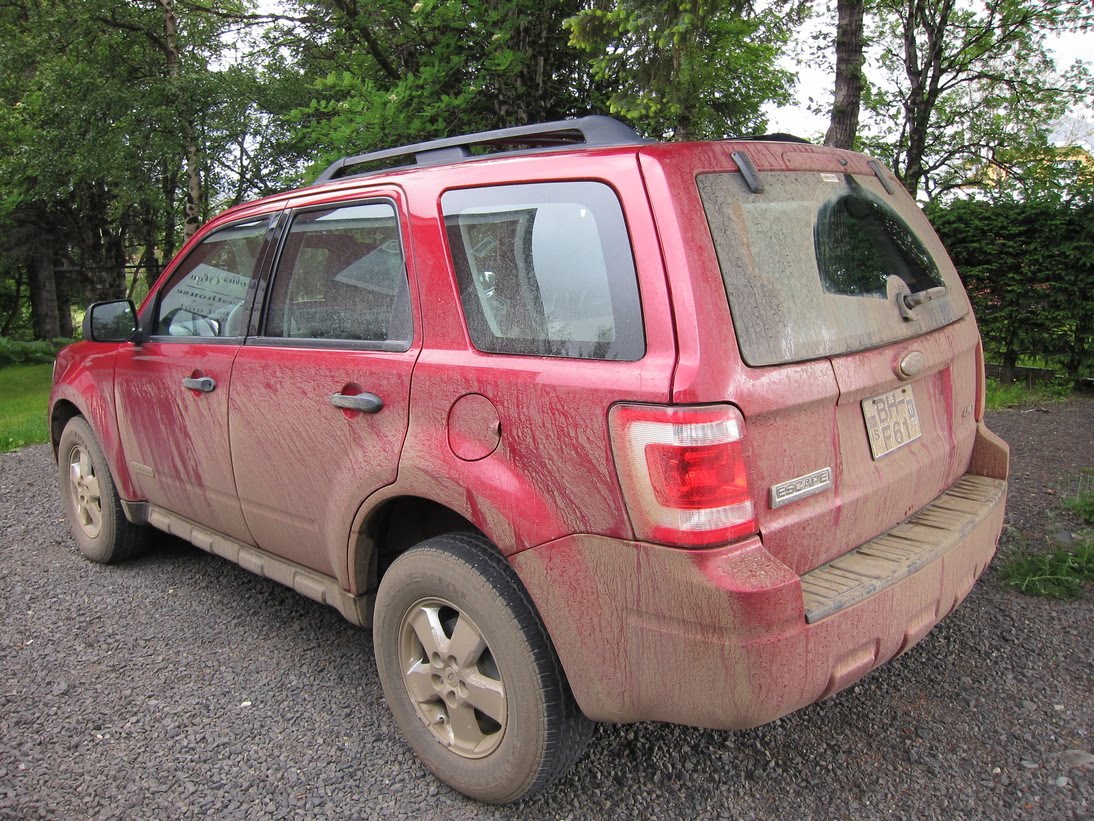
Bakkagerdi and Borgarfjörður
We thought we had seen Icelandic fog back in the south iof the East Fjords. Wrong. Our way to Bakkagerdi and Borgarfjörður was accompanied by thick fog, thick as in you-just-poured-shampoo-over-your-eyes kind of visibility. We could barely see 1.5m ahead of us (5 feet or so).
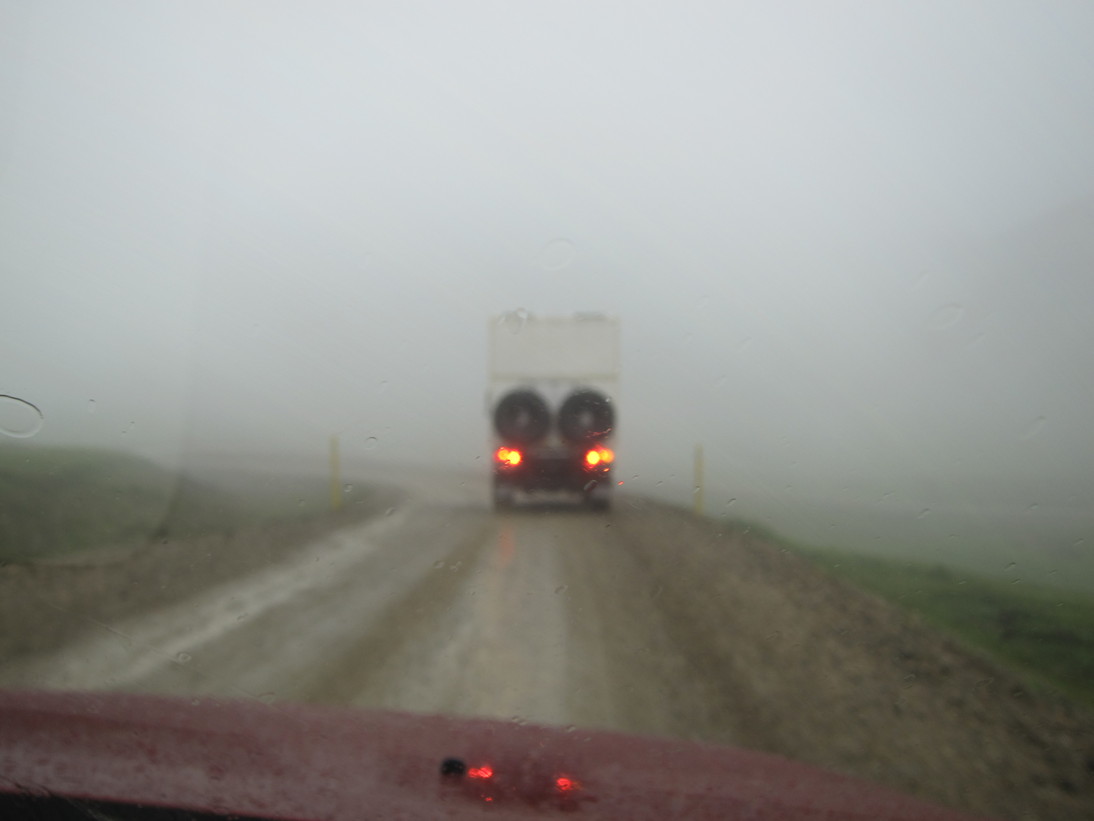
It was also windy, and when we arrived at the fjords, windy as hell. All just to see some puffins!
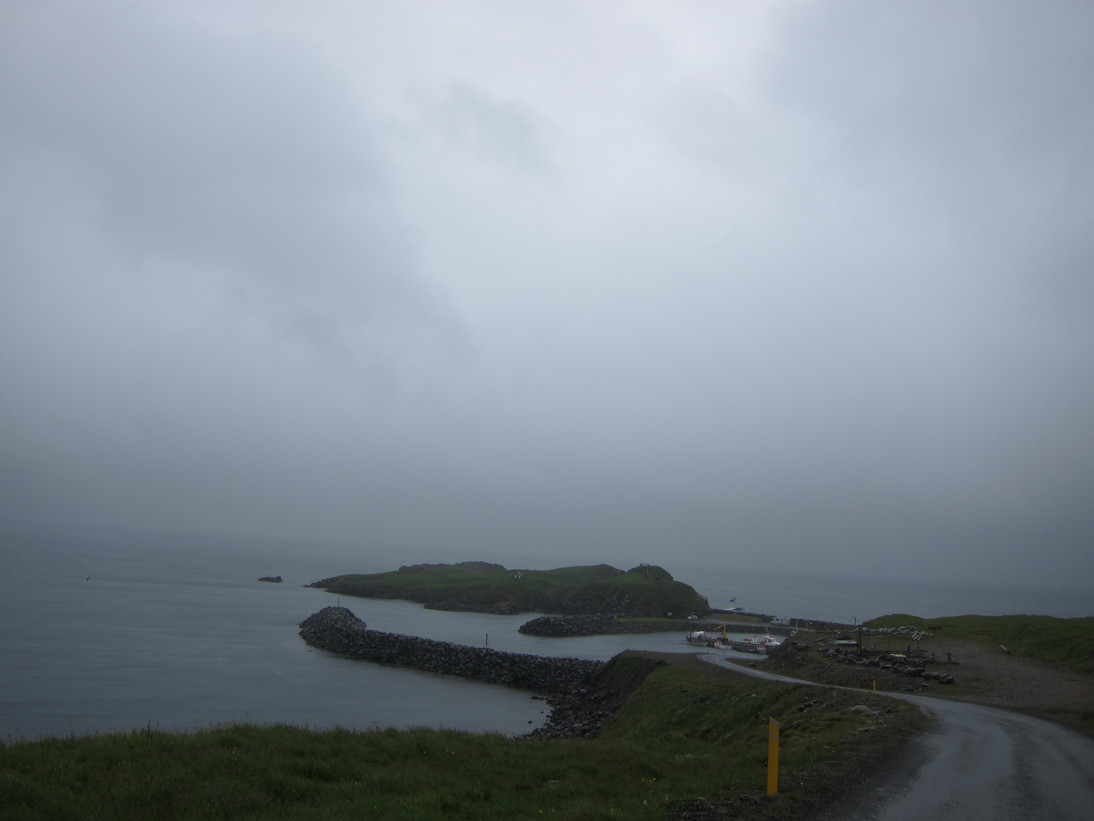
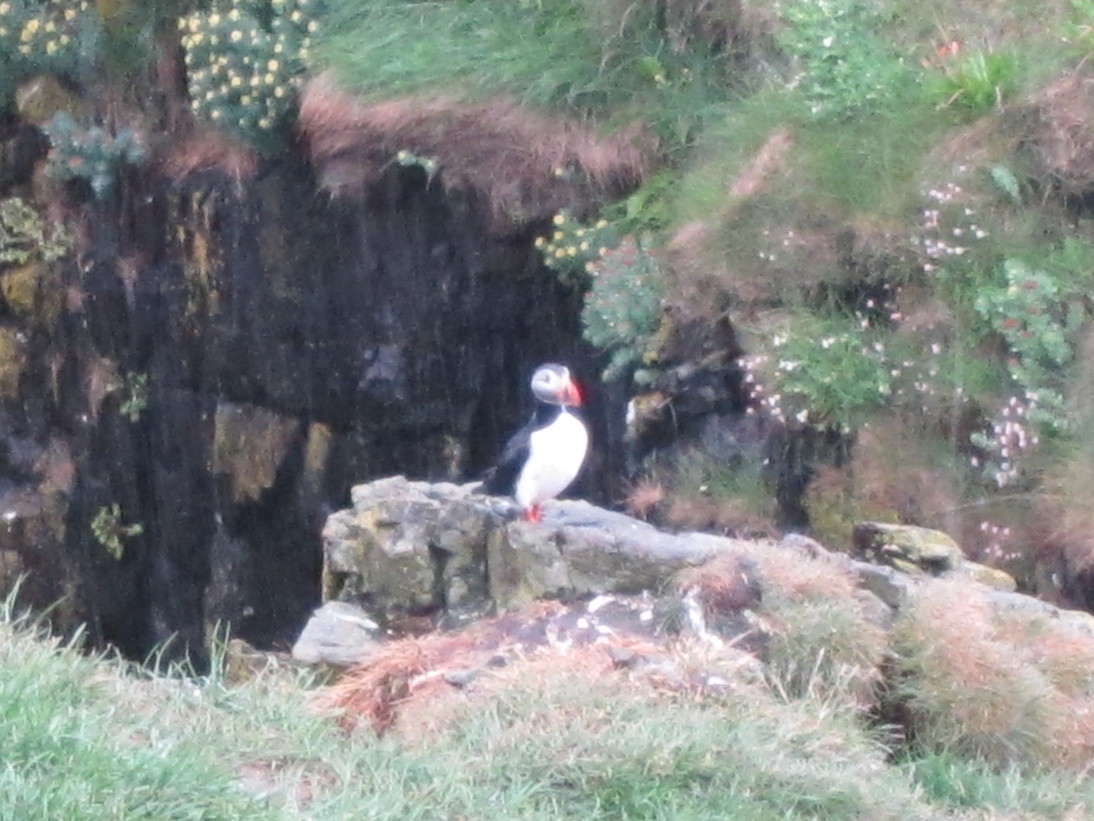
At first, we just had lunch inside the car and saw some puffins flying around: once you see one their flight pattern is clear enough to distinguish from similar birds (i.e. black birds). Finally we decided that we had made quite a long route to see the damn beast, got dressed with raincoats and walked to the viewing area, just 50 meters from us. We made it, you can see the pictures below, but we got soaked, wind and rain (may I say WIND and RAIN) are bound to get you soaked in a place like this.
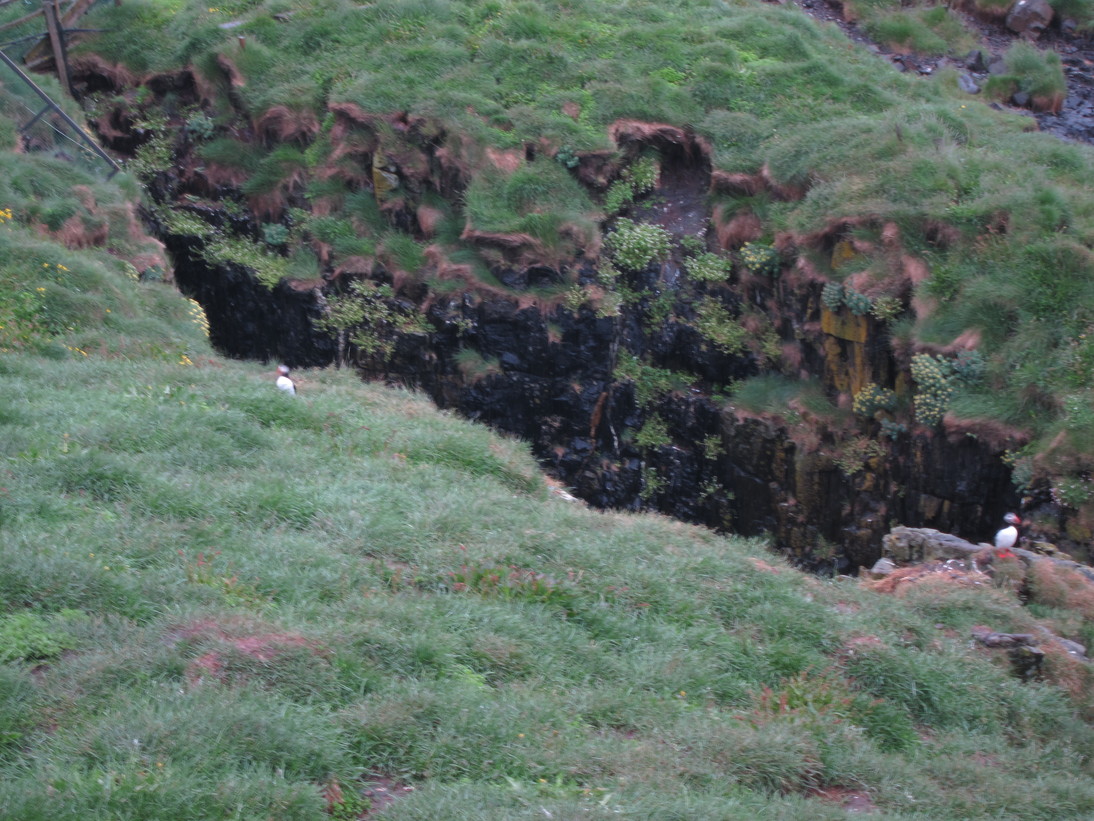
Luckily enough we found a place to eat something (named Alfacafe, go there if you have the chance), we had some hot chocolate which felt perfect after the rain and waited for the rain to come back. It didn't and we just had supper there: I discovered that I like smoked trout, although I don't like smoked salmon, I had the impression they would taste similar.
Headed back to our guest house, feeling really tired. At least we had a glimpse of puffins, but the day was quite disappointing: almost no fjords. Had a shower and had a short wifi spree to check news, mail and post something to our twitter accounts. The following day was bound to be more interesting: we would enter the volcanic areas around Mývatn and Hverir.
« Road Trip Through Iceland: Day 5 - Ingolfshöfði and Jökulsárlón (again)
» [...]
Headed back to our guest house, feeling really tired. At least we had a glimpse of puffins, but the day was quite disappointing: almost no fjords. Had a shower and had a short wifi spree to check news, mail and post something to our twitter accounts. The following day was bound to be more interesting: we would enter the volcanic areas around Mývatn and Hverir.

22/03/2011 - Road Trip Through Iceland: Day 5 - Ingolfshöfði and Jökulsárlón (again)
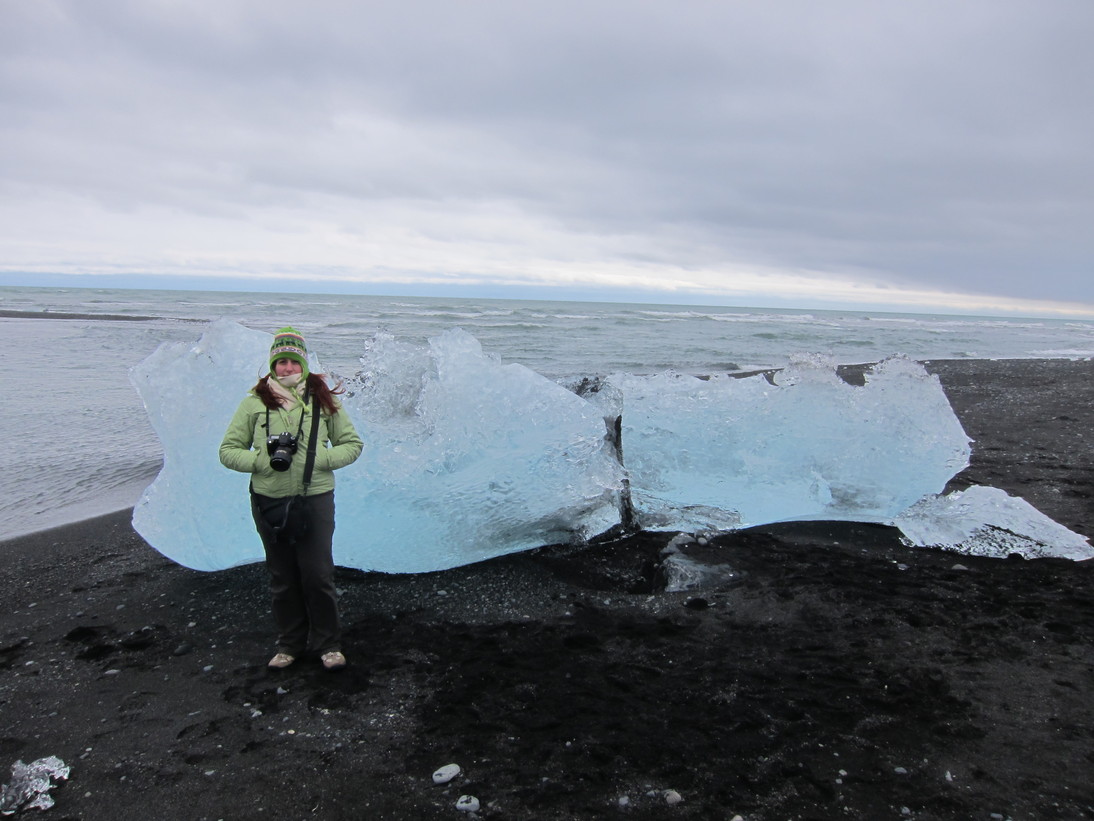
Happy World Water Day! Luckily the post due for today was a lot of water in it, iced water sparkling of thousand years old blue ice. This was supposed to be our puffin visit day... But schedules played badly on us and we could not make it. We just made another round of Jökulsárlón icebergs while collecting shoreside rocks.
Expat tales
While we were having breakfast we saw another guest in the lovely guesthouse at Hofell... and he surprised us by asking if we were Catalans, in Catalan! This is how we met Jose, a cook from Alacant, Spain. He came to Iceland 13 years ago, and has done a range of restaurant related jobs, currently he is working as a cook.
It was fascinating as he explained his feelings and adapting to Iceland. For example, he told us that without Icelandic you don't have access to any good job... But once you pick it up (it took him 8 months) you are done and can rise pretty quickly. He is really happy about being there, only missing a little the standard Mediterranean stuff, like plenty of sunlight.
His view of the supposed big economical crisis of Iceland is amusing, seen from the outside world. What he observed is that people stopped taking vacation 5 times a year and took them 3 times a year instead. I don't know if this is the trend or it is just what happened in the restaurant businesses, but if true would just mean that it wasn't that bad.
It was fascinating as he explained his feelings and adapting to Iceland. For example, he told us that without Icelandic you don't have access to any good job... But once you pick it up (it took him 8 months) you are done and can rise pretty quickly. He is really happy about being there, only missing a little the standard Mediterranean stuff, like plenty of sunlight.
His view of the supposed big economical crisis of Iceland is amusing, seen from the outside world. What he observed is that people stopped taking vacation 5 times a year and took them 3 times a year instead. I don't know if this is the trend or it is just what happened in the restaurant businesses, but if true would just mean that it wasn't that bad.
Ingólfshöfði?
As I said before, our plan for today was to visit Ingólfshöfði, a nature reserve acting as a puffin nesting area. Ingólfshöfði is the place where the first settler of Iceland, Ingólfur Arnason set foot, and named Ingolfur's cape around the year 874.
The visit is done in a trailer pulled by a tractor and takes around 3 hours. What we did not know is that there is only one departure each day, and it is at 12:00 (if I remember correctly, maybe it was at 11:00). The point is we arrived something like 20 minutes late. And the weather was (how may I say it?) pretty Icelandic.
Today was the first time we saw gale winds in Iceland. Really impressing and strong... And cold. We considered walking to catch the tractor but we were freezing after just a few meters. Change of plans needed...
The visit is done in a trailer pulled by a tractor and takes around 3 hours. What we did not know is that there is only one departure each day, and it is at 12:00 (if I remember correctly, maybe it was at 11:00). The point is we arrived something like 20 minutes late. And the weather was (how may I say it?) pretty Icelandic.
Today was the first time we saw gale winds in Iceland. Really impressing and strong... And cold. We considered walking to catch the tractor but we were freezing after just a few meters. Change of plans needed...
Jökulsárlón again
As we had enjoyed a lot yesterday's visit to Jökulsárlón, we decided that our best bet was to head there again. Spent the whole morning walking around the sea shore, picking rocks and taking pictures of big lumps of blue ice. In retrospect, I recommend you plan for a whole day in the Jökulsárlón: half a day for the lagoon and half a day for the sea shore. It is worth the time, you will enjoy it.
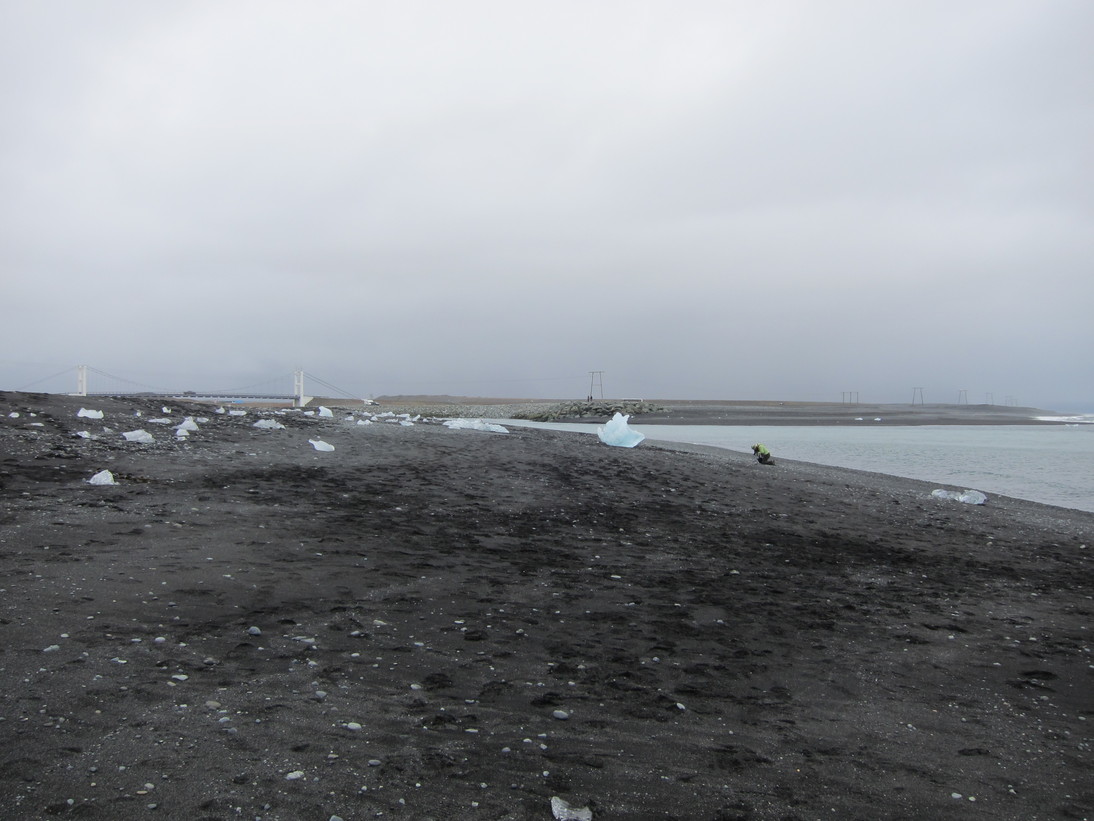

Back to the guest house
After our leisure walks around the Jökulsárlón, we came back to the guest house: it was time to have lunch. We took a long nap and visited again the house's hot pots (pottana in Icelandic) to relax. Our first relax day!
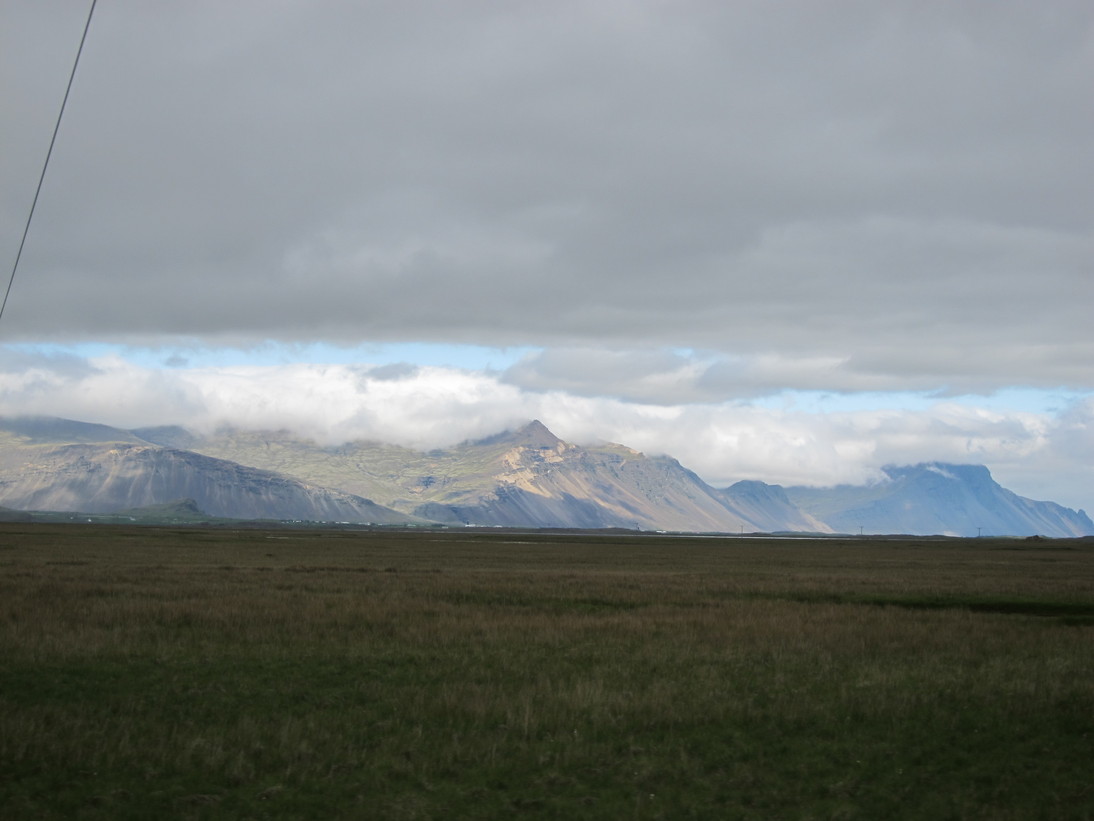
Planning our route for tomorrow and supper... And it was time to sleep again, tiredness was growing again.
In case you are interested, we drove for 943 km today, although it looks like we did nothing at all.
« Road Trip Through Iceland: Day 4 - Two magic places, Svartifoss and Jökulsárlón
» -
In case you are interested, we drove for 943 km today, although it looks like we did nothing at all.

16/03/2011 - Road Trip Through Iceland: Day 4 - Two magic places, Svartifoss and Jökulsárlón
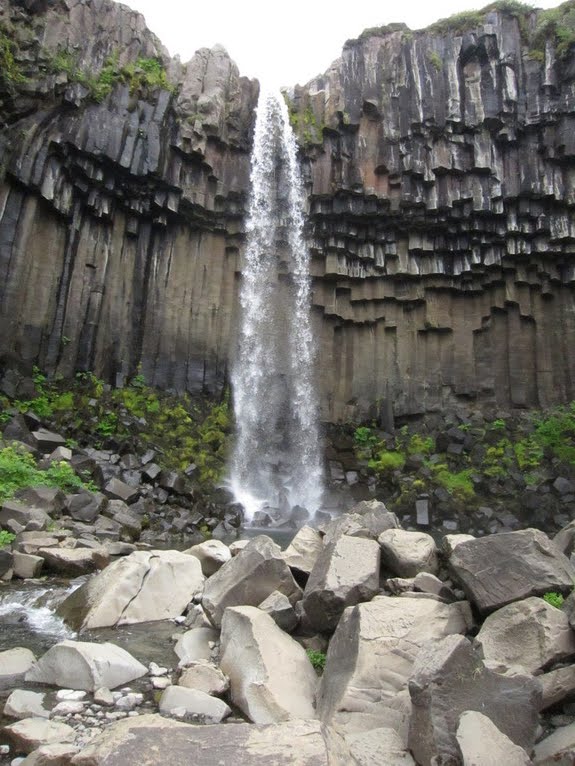
Today (i.e. this day in our trip) was Laia's birthday, and one of our personal landmarks in this trip, as we visited our favourite places: Svartifoss, my special place and Jökulsárlón, a place Laia loves. We spent almost all day in these two places and driving around, but they are probably two of the most remarkable experiences of our road trip in Iceland.
Kirkjugolf and Skaftafell
Today we managed to visit the church's floor, the Kirkjugolf. It is a basalt formation in the ground, and its similitude to a tiled floor gave this name. In 1783 the Laki volcanic area erupted. Its eruption caused 6 million death worldwide, poisoned sheep all around Iceland (due to fluorine intoxication) and the ash cover lowered world temperature, causing crop problems in all Europe and Asia, provoking the worst famine in Japan ever. It is believed that the lowered crops in France the coming years lead to the French Revolution of 1789. The lava started flowing to this place, Kirkjubæjarklaustur and its local pastor gathered his congregation in the church and delivered what would be known as the fiery sermon, Eldmessa in Icelandic, reproaching the crowd for his sins and laziness. Then the lava stopped, just at the edge of the church, and the people at Kirkjubæjarklaustur were spared. To get to the Kirkjugolf you have to take the road 203 and have faith, as there is no clear indication of where it is.

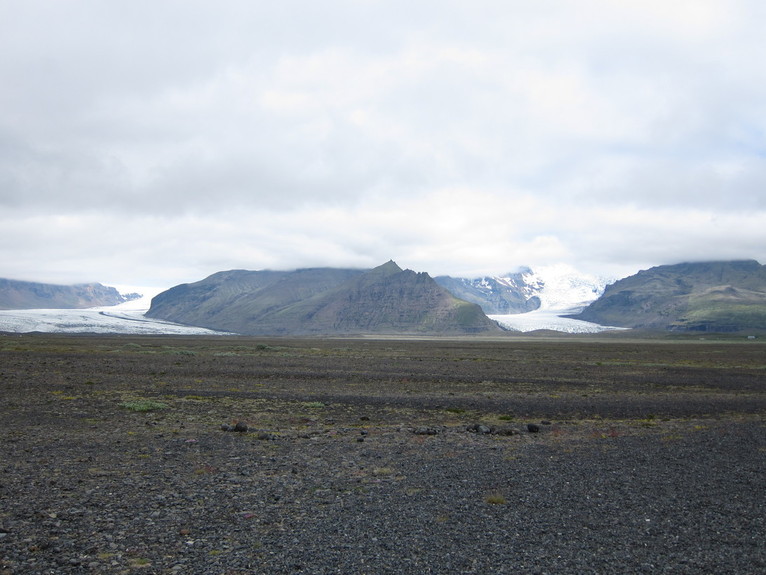
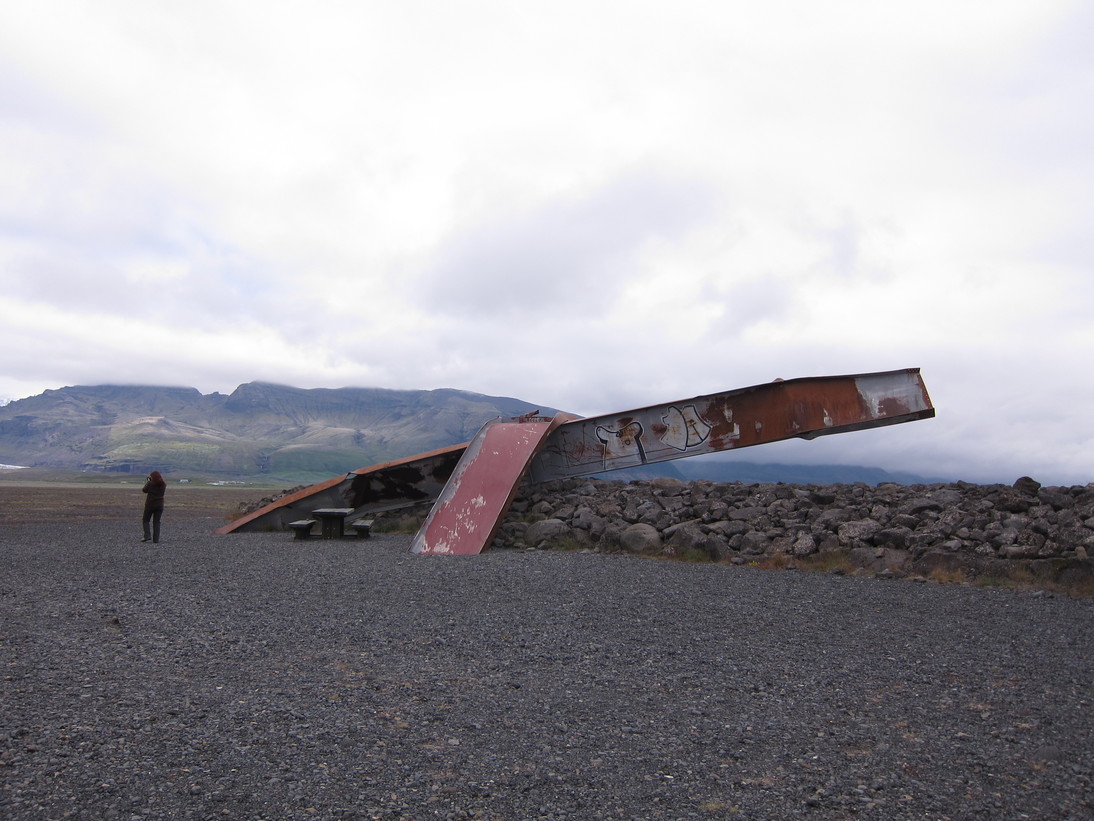
Now a pretty long and boring drive along the Ring Road. There were not a lot of interesting sights on the way, unless you love bridges. We passed a few, and there is even a bridge monument, to a "recently" broken bridge. It forms a stopping area, where you can take a few pictures of the stunning views of the Vatnajökull glacier and the Skaftafell area. A shorter drive by, and you get to the Vatnajökull-Skaftafell parking area, where a short walk leads to the Svartifoss waterfall.
Svartifoss: only in Iceland could you find something as beautiful
Svartifoss is somehow a special place. The Hallgrimskirkja in Reykjavik is inspired by the hexagonal basalt formations of this waterfall, and once you are there you know why it inspired a church. The day was slightly cloudy and chilly, and the walk toward Svartifoss was a meagre 3.5km (approx, I'm talking from memory), and in the middle of the way (roughly 1.5km) you find Hundafoss, the dog's waterfall. Small waterfalls like this start to get unimpressing... although it would be an awesome waterfall anywhere else in the world.
Then after a longer walk you arrive to Svartifoss. It is very odd, that you hear it long before you can see it, as it is hidden behind a sweep of the mountain pass. I'll let the pictures speak by themselves. Maybe they don't look impressive, the lighting was not very good, but I could have spent the day sitting there over a rock watching the landscape and listening to the falling water. It was this kind of special place.
Then after a longer walk you arrive to Svartifoss. It is very odd, that you hear it long before you can see it, as it is hidden behind a sweep of the mountain pass. I'll let the pictures speak by themselves. Maybe they don't look impressive, the lighting was not very good, but I could have spent the day sitting there over a rock watching the landscape and listening to the falling water. It was this kind of special place.
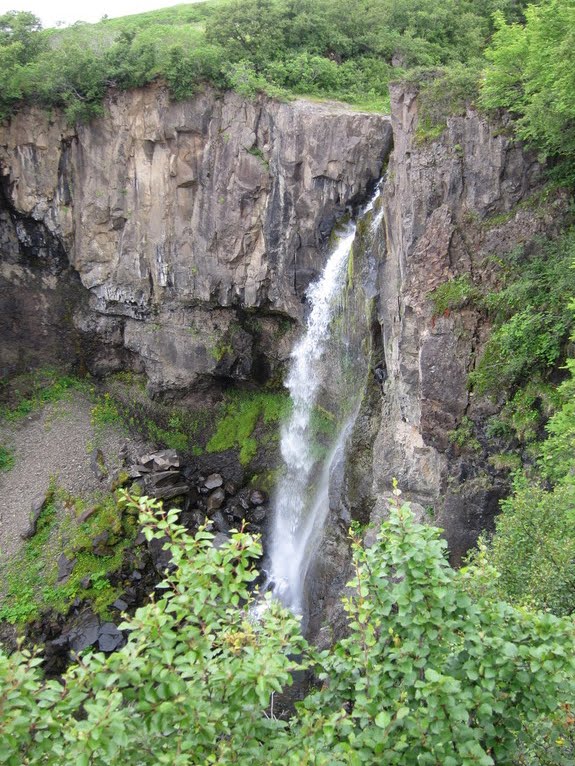

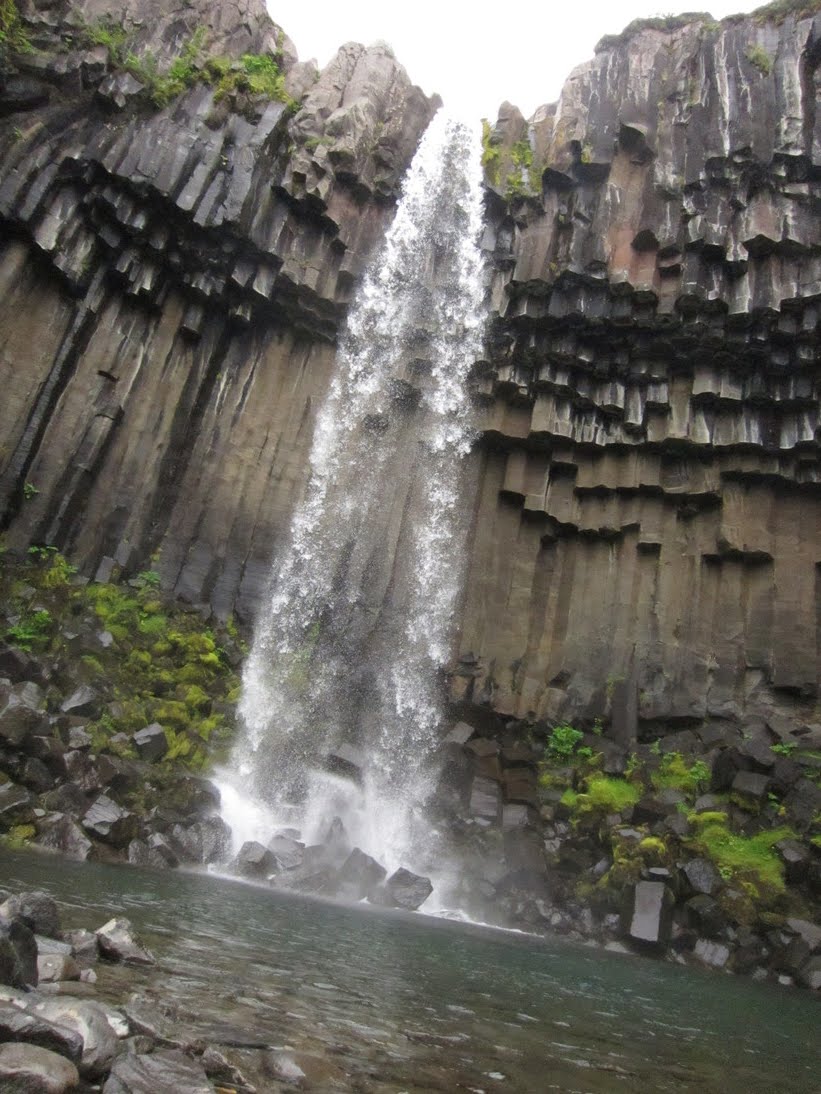
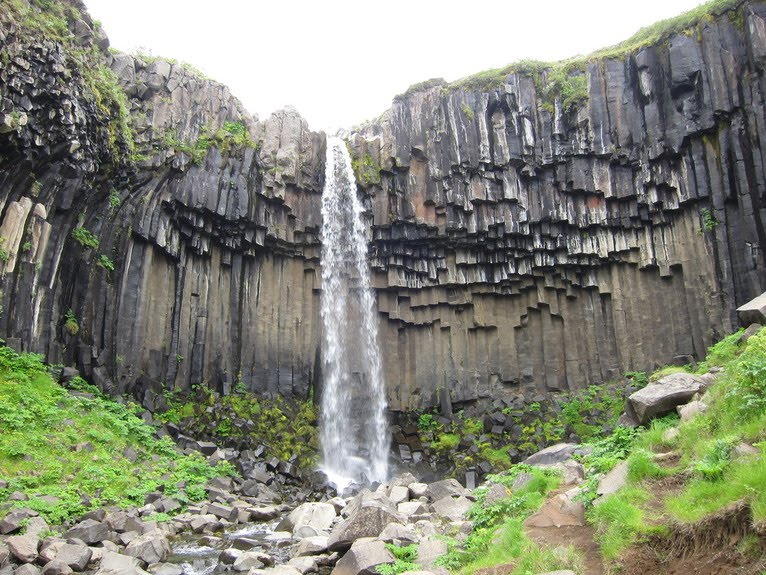
We had lunch in Svartifoss, and I drank a little water from the waterfall. As usual, it tasted wonderful and had a rocky aftertaste. As I have said before, everywhere in Iceland you can go as far as your legs will take you, but here there was a catch: there was a sign asking people to please, don't step over the plants, as they are very delicate. Jumping over rocks you can get only this far, even more when the rocks are wet.
Jökulsárlón: Don't be surprised when you arrive and see it
After we left Svartifoss, we followed along the road. We passed a place we wanted to stop, a puffin watching place. Puffins are typical birds of the area, they look like penguins with coloured beaks. We decided to stop there the day after, as we would spend two nights in the same guest house.
We kept driving and chatting, and it looked as if we were close to the Jökulsárlón, but we didn't see anything. Laia was driving and I was looking around. At our right we had the sea, and in the left part of the road there were small hills (not taller than 5 or 10 meters), suddenly there was a small valley between two and I said Holy shit!. Laia was scared, and we were lucky as we didn't have any other cars near and the road was in very good condition as she steered quickly thinking we were about to hit something. Be prepared, the sudden view of big lumps of blue ice out of nowhere can be really impressive.
We kept driving and chatting, and it looked as if we were close to the Jökulsárlón, but we didn't see anything. Laia was driving and I was looking around. At our right we had the sea, and in the left part of the road there were small hills (not taller than 5 or 10 meters), suddenly there was a small valley between two and I said Holy shit!. Laia was scared, and we were lucky as we didn't have any other cars near and the road was in very good condition as she steered quickly thinking we were about to hit something. Be prepared, the sudden view of big lumps of blue ice out of nowhere can be really impressive.


We spent more than 2 hours in the glacier lagoon. This is the one and only glacier lagoon in Iceland, appearing as one of the smaller tongues of the Vatnajökull glacier is melting against the sea. This is caused by the contact with saline water, in quite few thousand years it will form its own fjord and the lagoon will disappear.
This is a very remarkable place... For example, it appears in James Bond's A View to a Kill and Die Another Day, and also in Batman Begins. For the filming of Die Another Day, the lagoon dam was closed to lower water salinity, and the surface of the lagoon freezed.
This is a very remarkable place... For example, it appears in James Bond's A View to a Kill and Die Another Day, and also in Batman Begins. For the filming of Die Another Day, the lagoon dam was closed to lower water salinity, and the surface of the lagoon freezed.
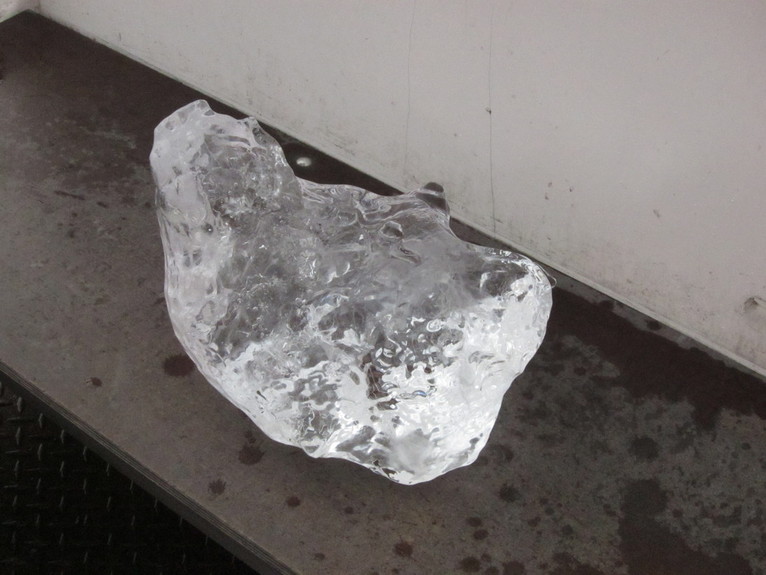
has been under heavy pressure since its formation
There is a car/boat tour of the lagoon: you board a boat with tires, and it crosses the lagoon. In the boat you will eat some glacial ice, which is amazingly clear and obviously cold, and you will see the icebergs from very close. You may also get a glimpse of seals swimming in the lagoon, but this is not guaranted. We saw one, and she kept swimming around while we were hiking around the shore. After this tour ended, we did the freakish thing of the day: there is a live webcam pointing to the parking (from Inspired By Iceland, there is a link named Iceland live). Laia phoned home, and we jumped around until her parents noticed us and wished her happy birthday.
Hofell guest house
We arrived at Hofell, where we had our guest house. It was nice, clean and the host was very kind: they have hot pots of their property 10 minutes away from the home, priced 350 ISK for everyone unless you are a guest, if you are a guest it is free. The views from the hot pots are amazing... You are surrounded by mountains, with views of glaciers and Icelandic mist, and you are covered in warm natural water. A experience you need to live.
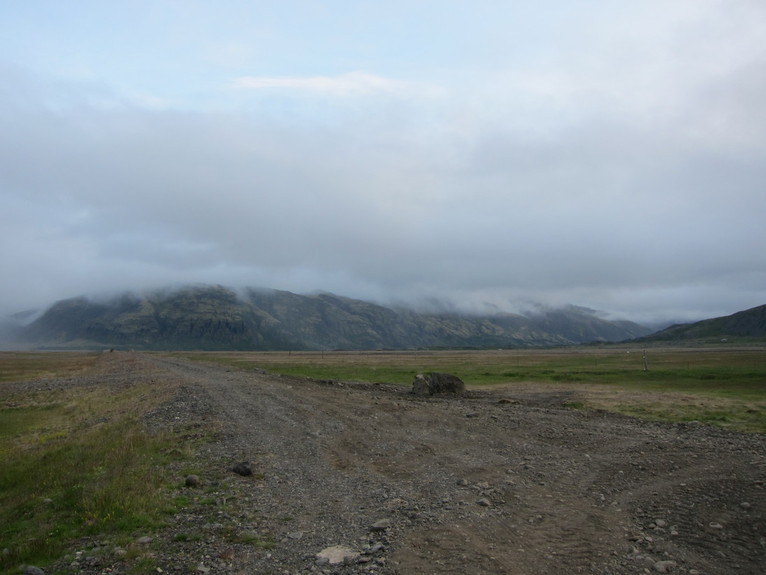
guesthouse where we would spend two nights
In case you are interested, we drove for 733km today.


13/03/2011 - Road Trip Around Iceland: The Index

This is the journal of our road trip around Iceland, what we did each day as we circled the island through the Ring Road. This series of posts started on February 2011, and is so far ongoing, posting once a week from our annotations and pictures. Bookmark this page if you want to come back to see what's new.
Road Trip Around Iceland, Day 1: Reykjavik - the city I'd like to live
Road Trip Around Iceland: Day 2 - The Golden Circle (Thingvellir, Geysir and Gullfoss)
Road Trip Around Iceland: Day 3 - Waterfalls and Glaciers
[... more to come ...]
The "Related posts" method I use involves Javascript, thus it doesn't work in the RSS feed. To view related posts, please refer to the original article. Thanks!
09/03/2011 - Road Trip Through Iceland: Day 3 - Waterfalls and Glaciers
After visiting the wonders of the Golden Circle, we kept driving eastward getting into the region of waterfalls and glaciers. The day began with 2000 Icelandic krónur of fuel, that for 1/4 of the tank. Expensive, but not as expensive as one may guess, from prices in Spain. It continued with the first sighting of lambs in the middle of the road... Get used to that, it is very common!
Seldjalandsfoss
Our first landmark for the day was the wonderful, and sadly very touristic waterfall Seldjalandsfoss. It is a crowded place (by Icelandic standards, meaning there were around 50 people around), basically because it is very close to the Golden Circle and whereabouts of Reykjavik.
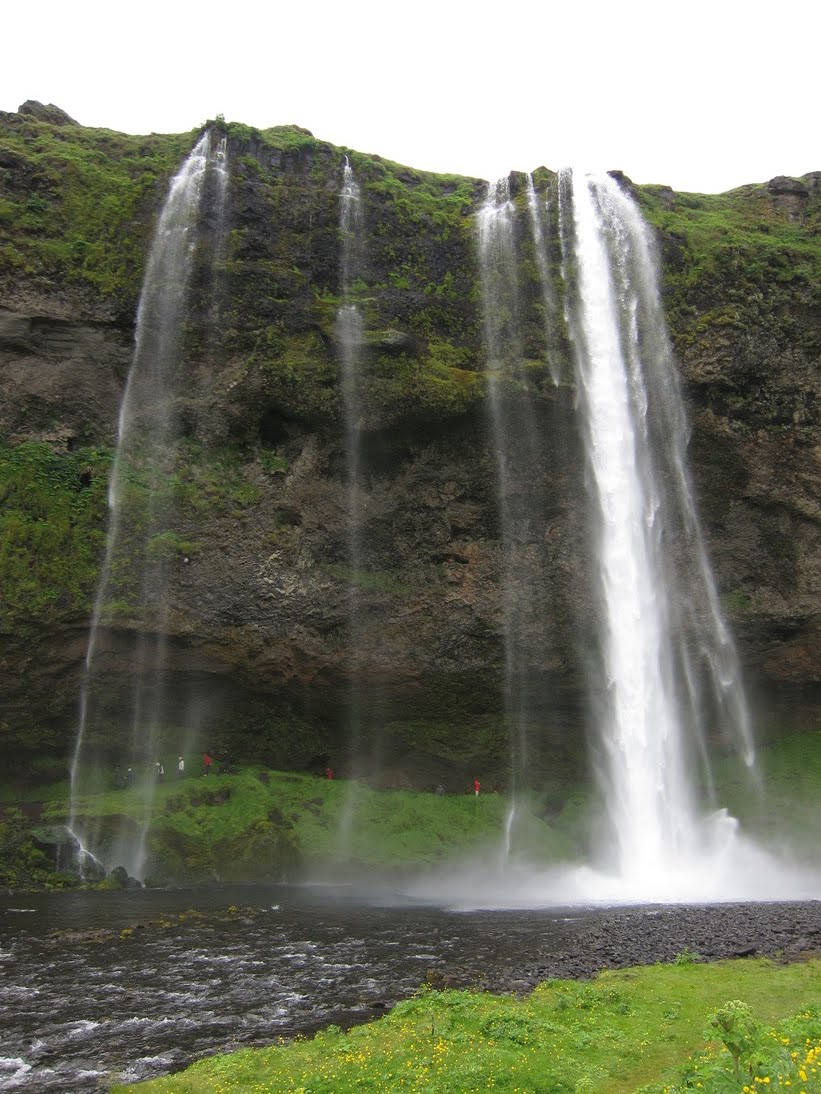
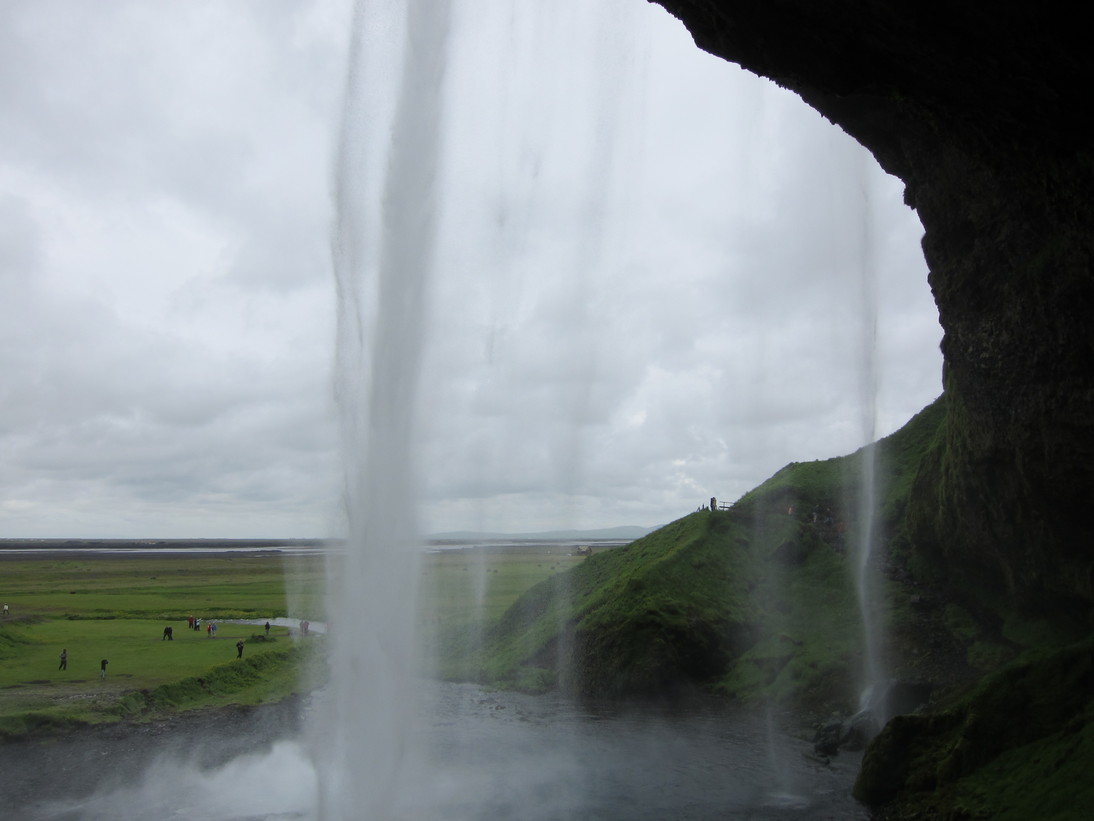
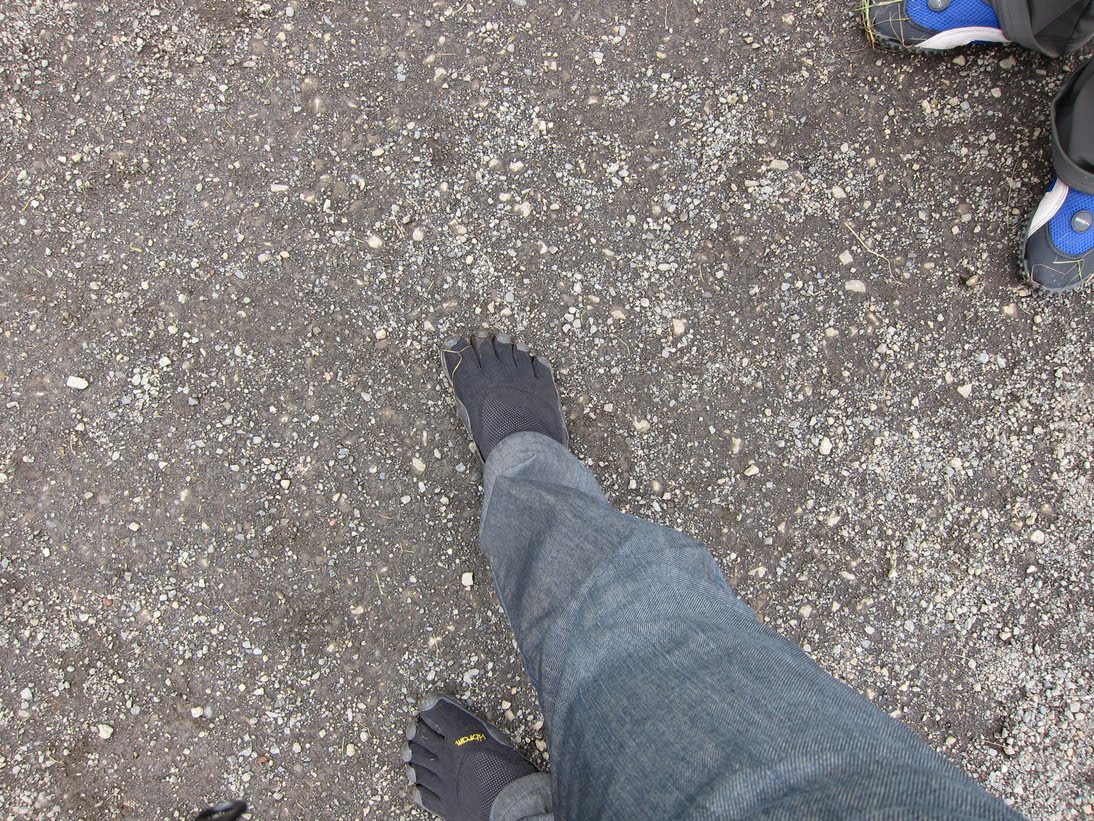
Its main selling point is the fact that you can walk behind the waterfall along a slimy path. You will need a raincoat to do so (you are not forced to use it, but you'll get soaked), don't forget to bring one. An odd remark I got from this place: the FiveFinger KSO, as good as they are for running in warm climates are really horrible for cold and wet places. I put them for this walk, and would not do it again for the entire trip...
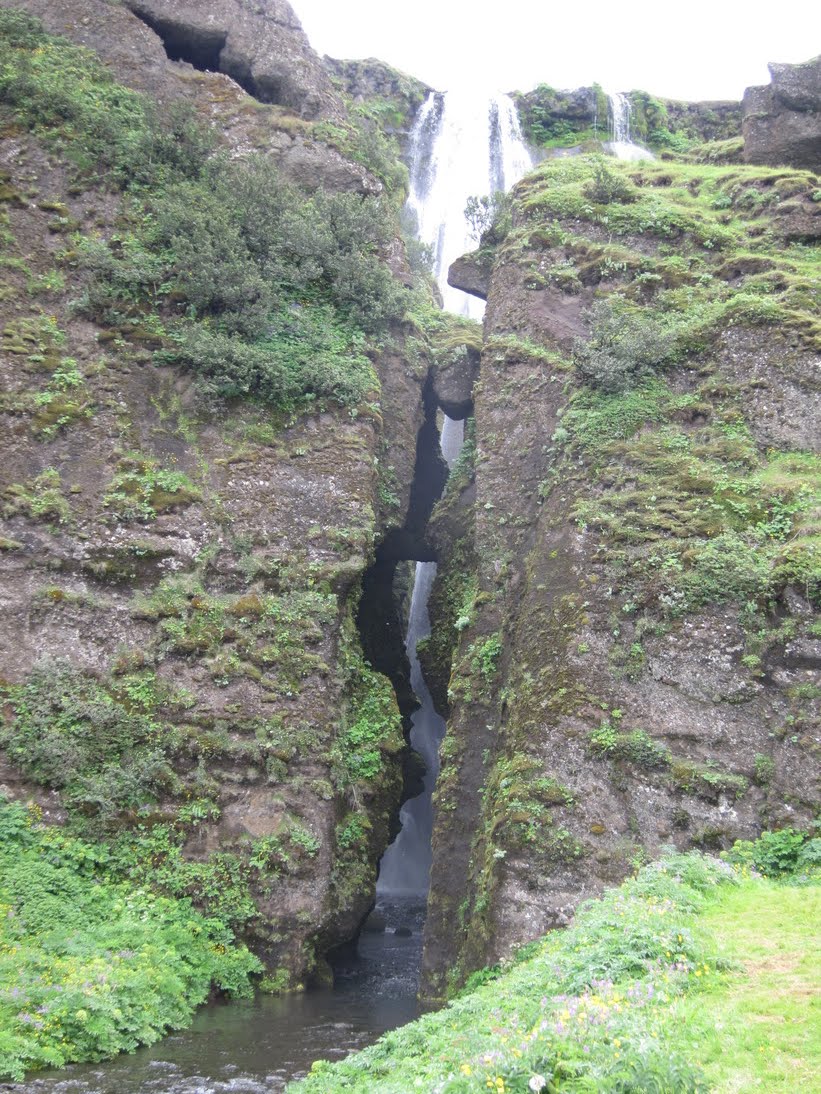
If you happen to visit Seldjalandsfoss, don't miss the small, unnamed waterfall to the left of it. Follow the path along the mountain and you will find a fissure in the middle of it, with a shiny waterfall. Laia went inside this one until almost knee depth to take a picture. You can bet, the water was extremely cold.
Our next stop should have been Seldjavallalaug, a hot water pool somewhere. We just didn't find it and kept en route. Icelandic language fact: Laug means bath or bathing, Saturday is Laugardagur: the day of the bathing.
Our next stop should have been Seldjavallalaug, a hot water pool somewhere. We just didn't find it and kept en route. Icelandic language fact: Laug means bath or bathing, Saturday is Laugardagur: the day of the bathing.
Skogafoss
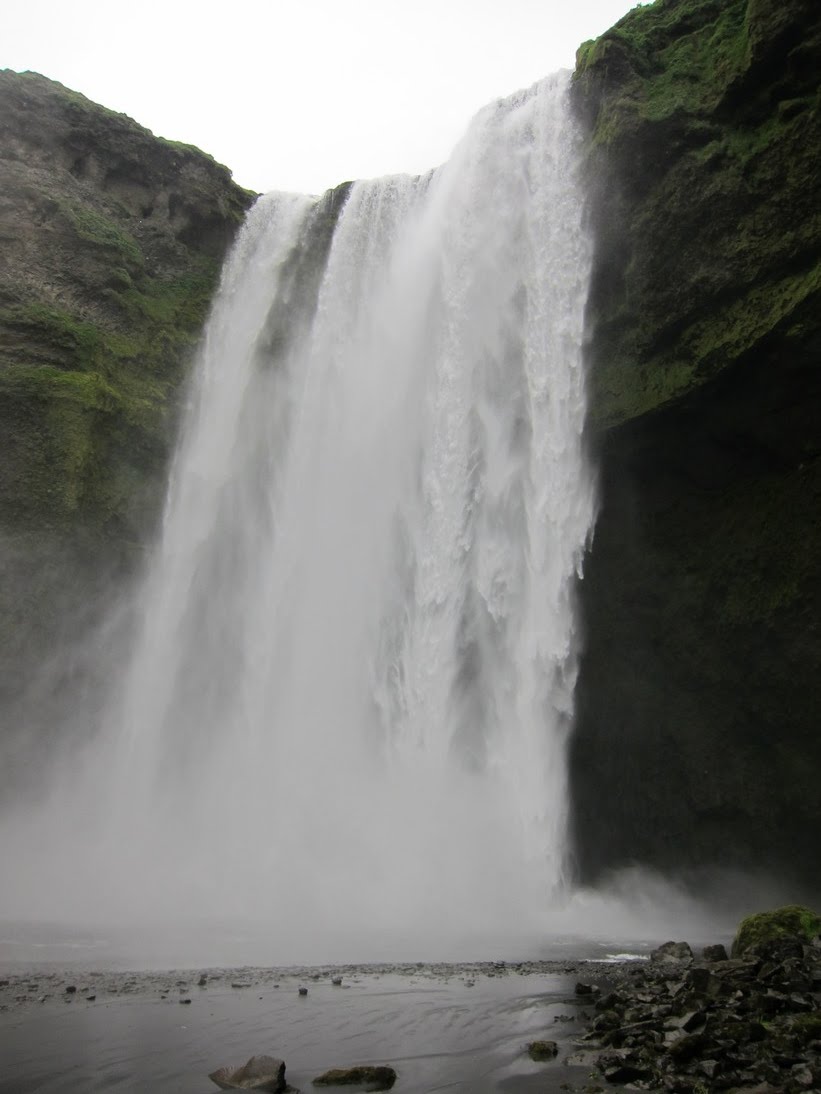
Next landmark: the second biggest waterfall so far, Skogafoss. Not as majestic as Gullfoss or as entertaining as Seldjalandsfoss when we arrived, but it was one of the most interesting, now you'll know why.
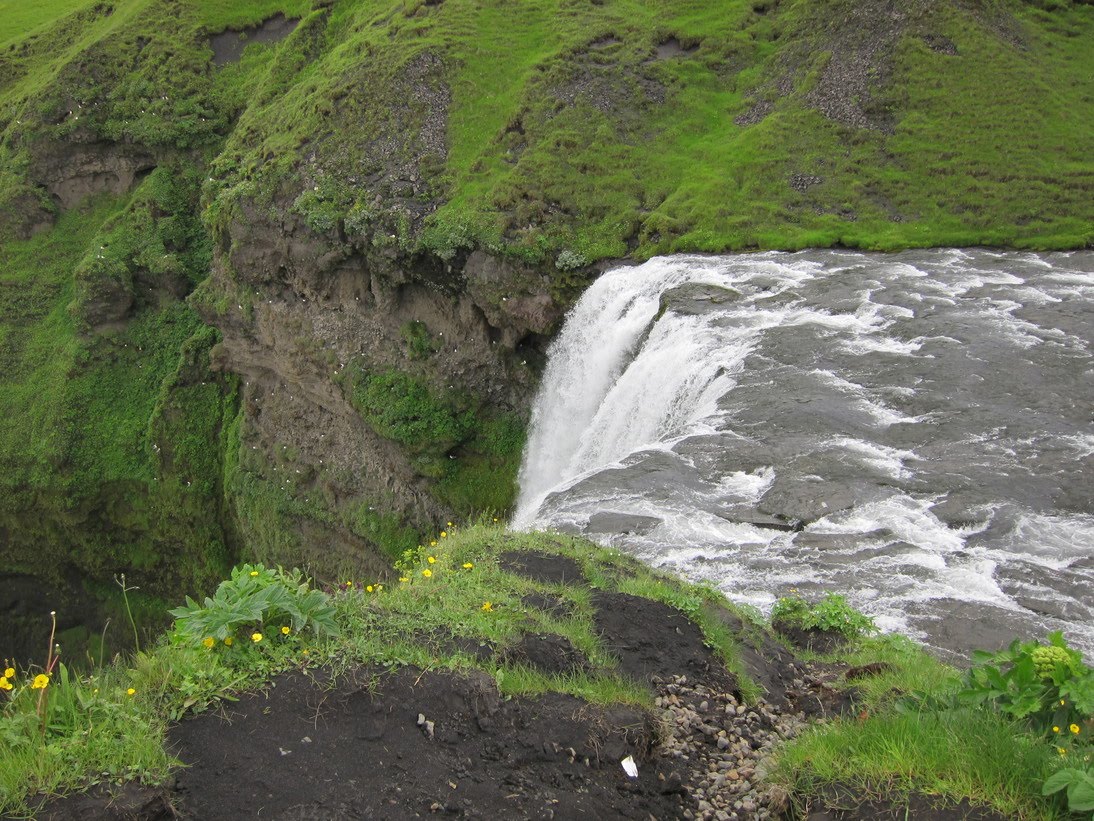
First we went up the waterfall along a wooden stairway to see the views from the top. They were not that nice: the day was cloudy and very windy. On our way down we could stand upright just by the wind strength. Also of note is the recommendation to open the car doors carefully. A wind gush could easily tear the hinges.
We went down, and the waterfall was mostly deserted... And we took advantage of the Icelandic mentality: walk wherever you want, at our own risk. There are no red velvet lines anywhere, and we walked just below the waterfall and took some pictures. There was a lot of drizzling in the zone, so if you want to do the same, be prepared and bring a raincoat (as I said before) and if you have a point-and-click camera, some kind of lens protection to keep it from getting wet.
We went down, and the waterfall was mostly deserted... And we took advantage of the Icelandic mentality: walk wherever you want, at our own risk. There are no red velvet lines anywhere, and we walked just below the waterfall and took some pictures. There was a lot of drizzling in the zone, so if you want to do the same, be prepared and bring a raincoat (as I said before) and if you have a point-and-click camera, some kind of lens protection to keep it from getting wet.
Solheimajökull
Do you remember Eyjafjallajökull? Yes, that volcano that covered half Europe in ash. Solheimajökull is a glacier just beside it. Its Icelandic name means The home of the Sun glacier... But the ash cloud turned it pretty darkish.
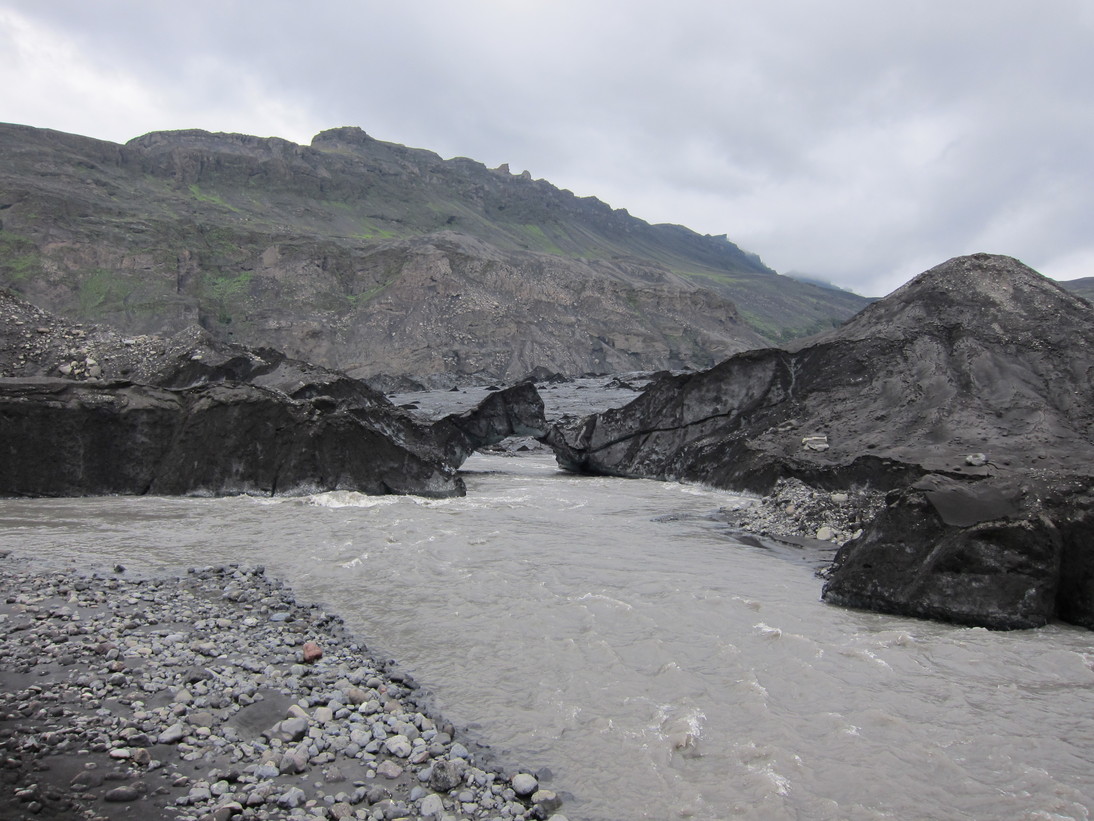
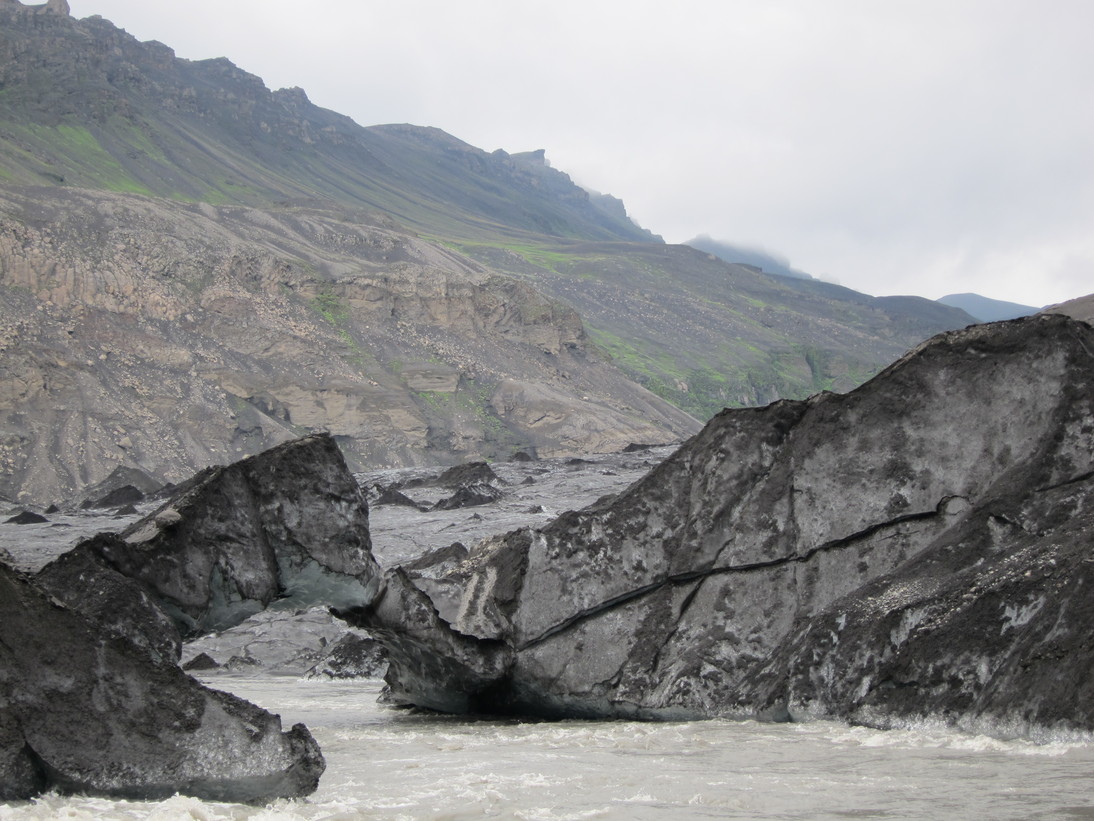
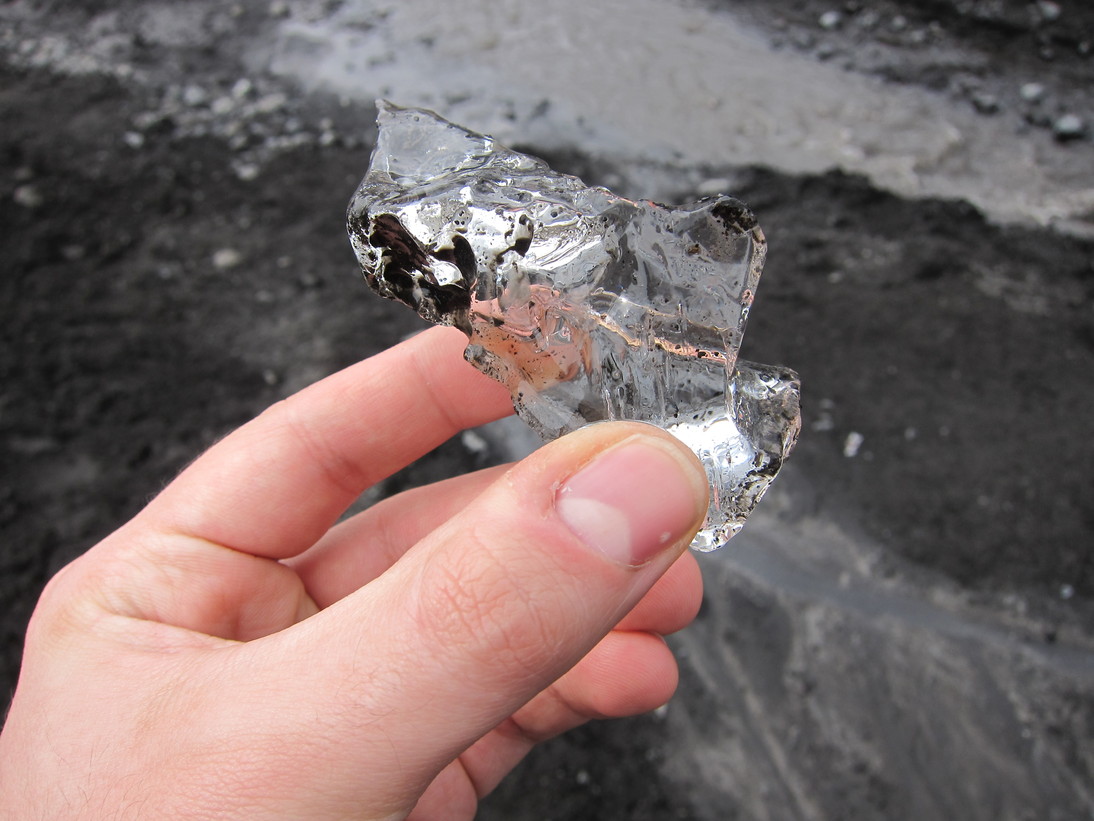
This glacier has a relatively good road leading to it, and can be visited and walked around. With relatively good I mean that we made it, but there were some moments when we were not as sure. Anyway, we saw cheap class A cars and tourist buses doing it, so don't be afraid. But be sure of knowing how to change a flat tire.
We walked around a lot, collecting rocks, volcanic ash and admiring the landscape. We had our first glimpse of clear glacier ice, below the volcanic dust. We walked a little over the ice of the glacier, but it was clear that mountain boots were not enough and we went back to the car. We were hungry...
We walked around a lot, collecting rocks, volcanic ash and admiring the landscape. We had our first glimpse of clear glacier ice, below the volcanic dust. We walked a little over the ice of the glacier, but it was clear that mountain boots were not enough and we went back to the car. We were hungry...
Dyrholaey and Reynirsfjara
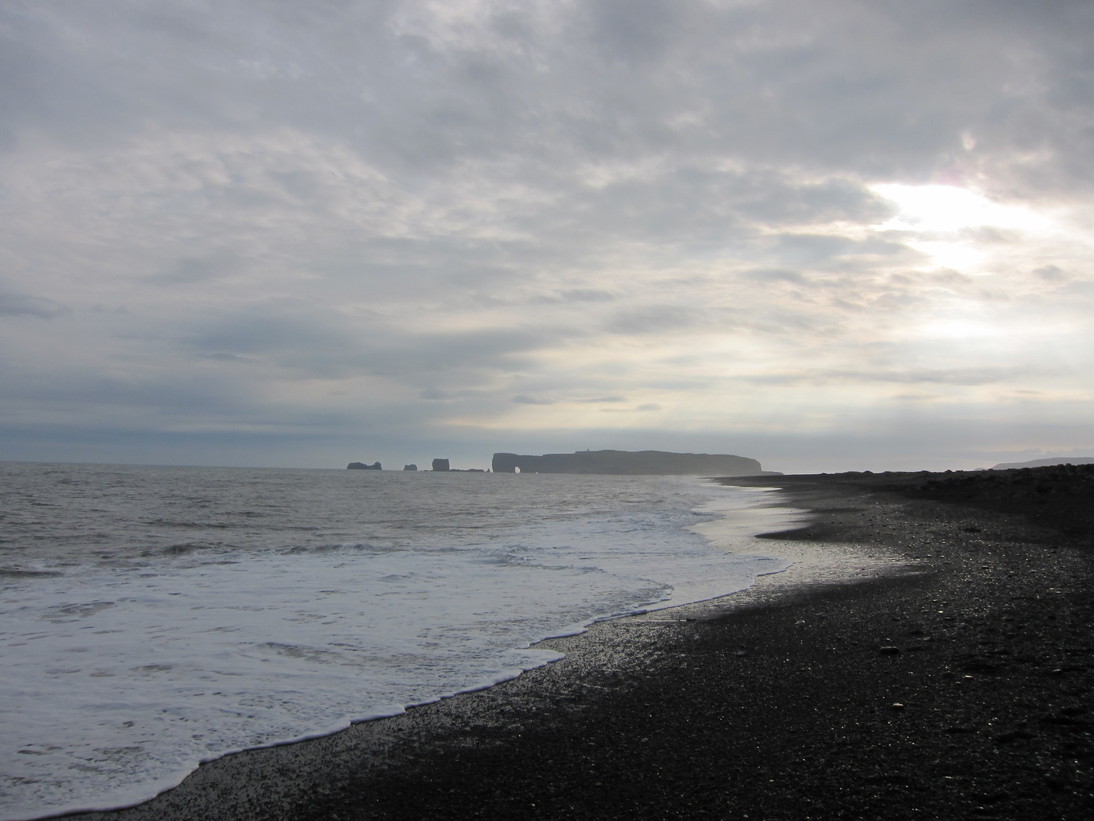
Dyrholaey is a wonderful volcanic cape, overlooking black volcanic beaches. The road was very rough, with a cliff just 50cm from my window, but the views were worth it. Going straight you can see a full 360º view of black beach and a cut down cliff, just beside Dyrholaey lighthouse. Be prepared to an incredibly strong wind.

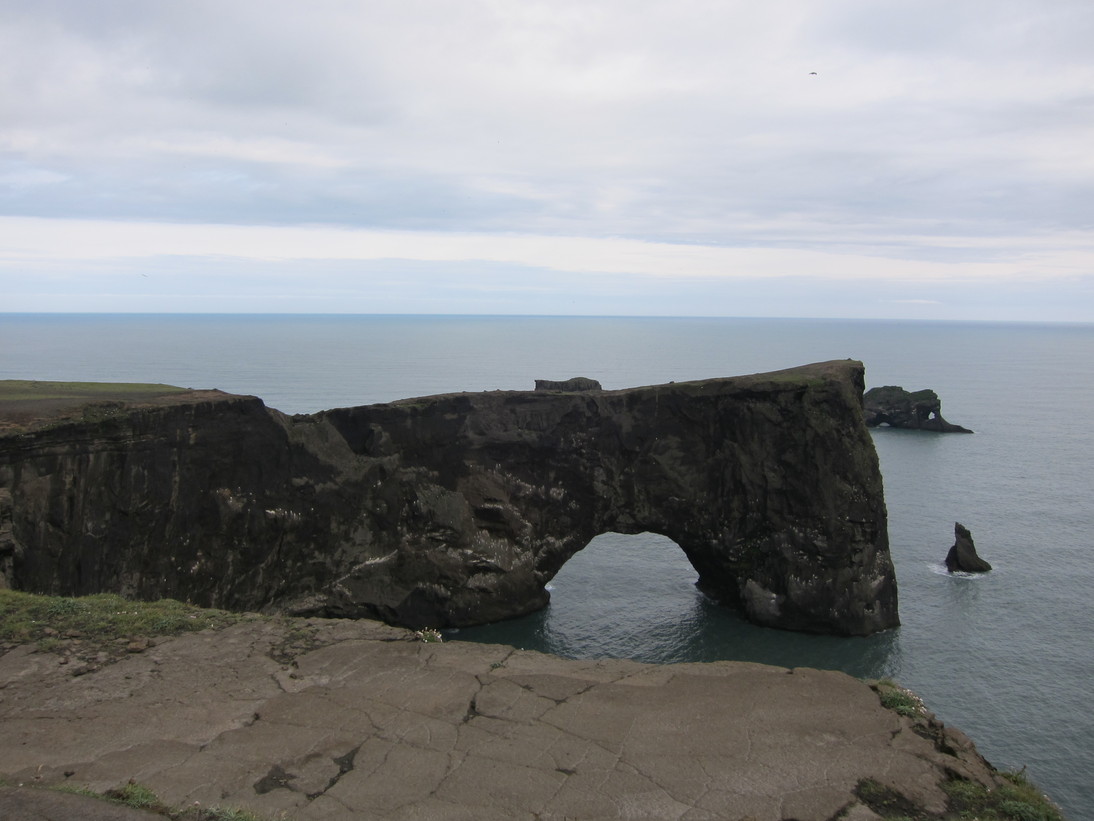
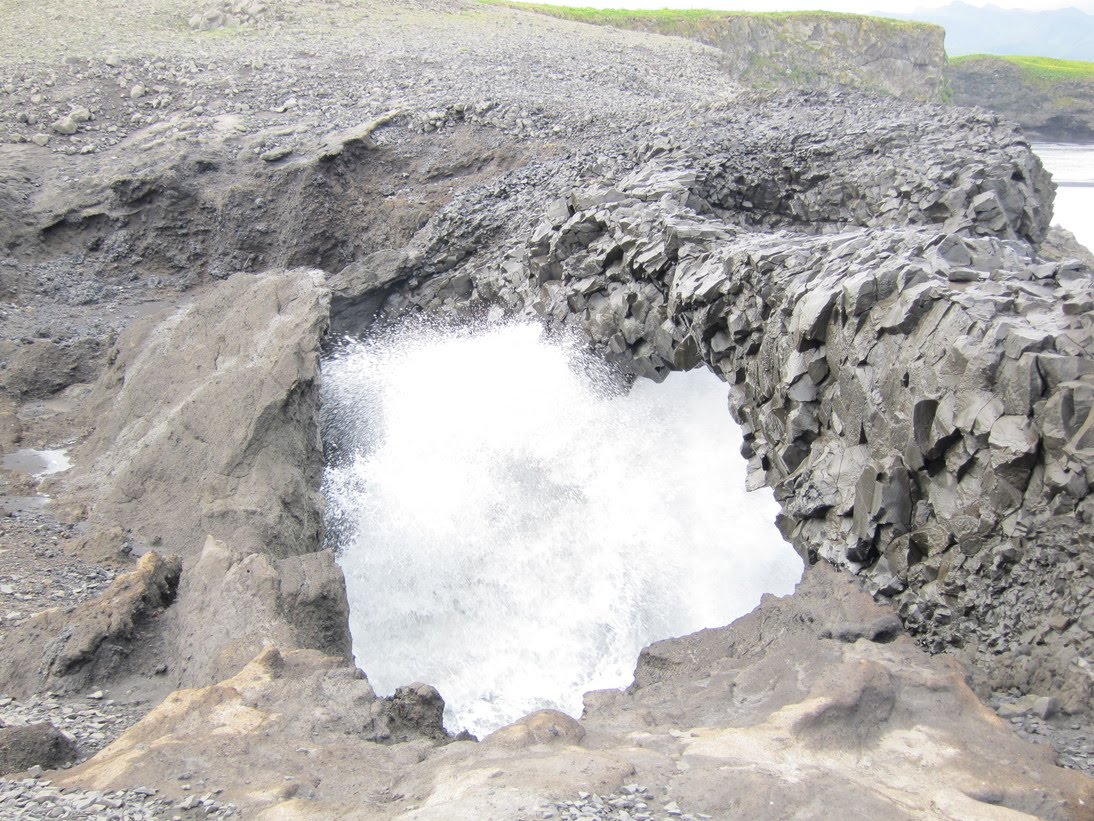
Going to the left of the road you get to the other side of Dyrholaey, another small cape with very interesting views and an odd phenomenon: a sea geiser. When the strong wind, sea level and the rock formation coincide, they just form sea water gushes into the air. We were there at around 6pm, and it looked like a very good time to see that happen. Below you can see several shots of this event.
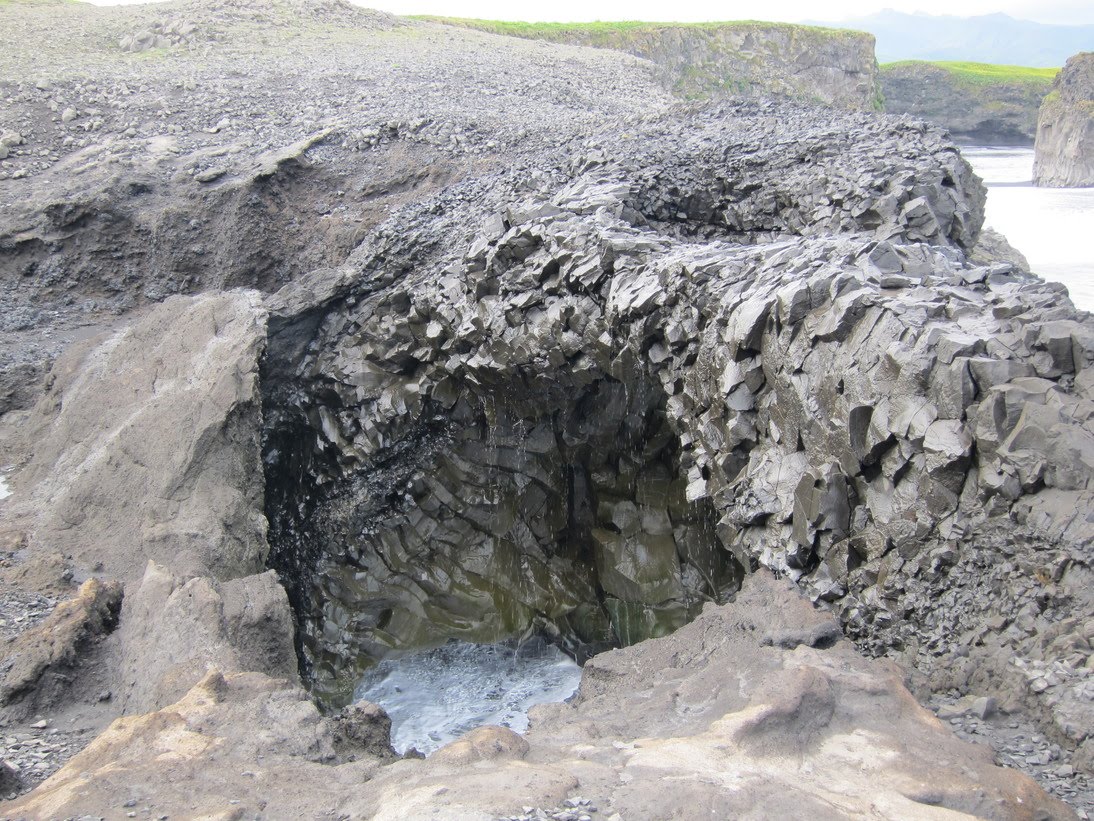
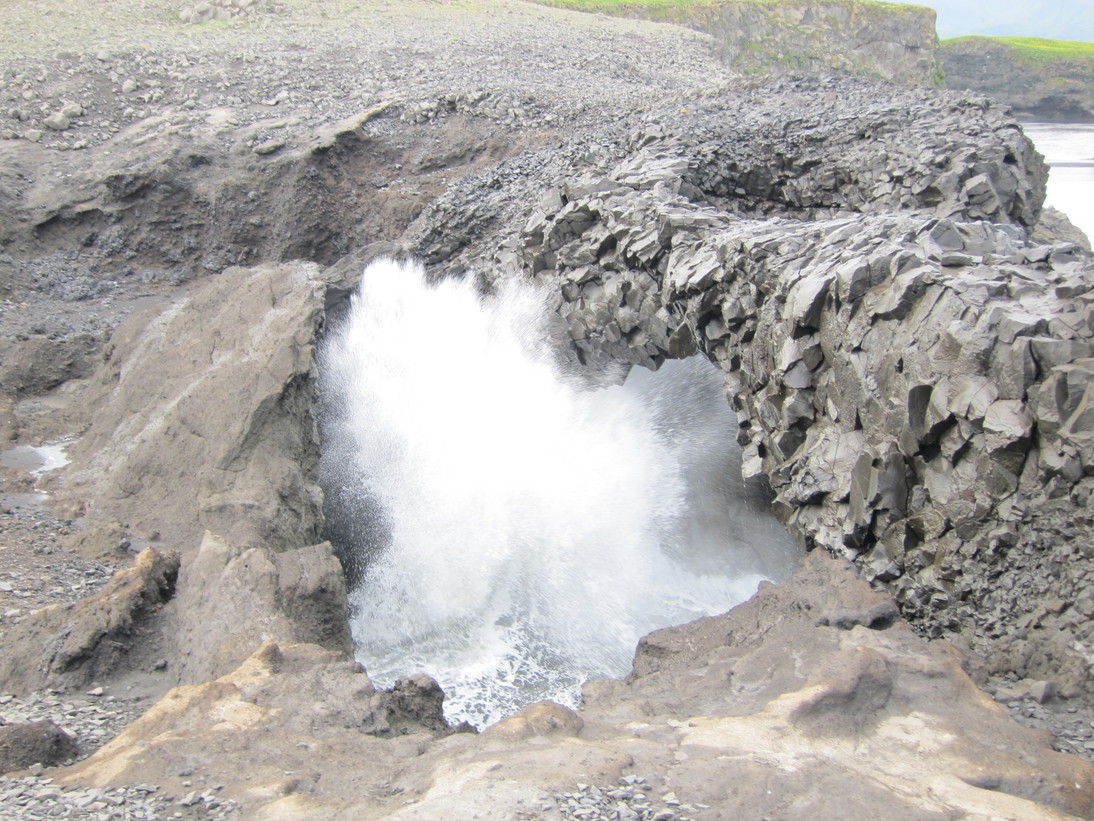

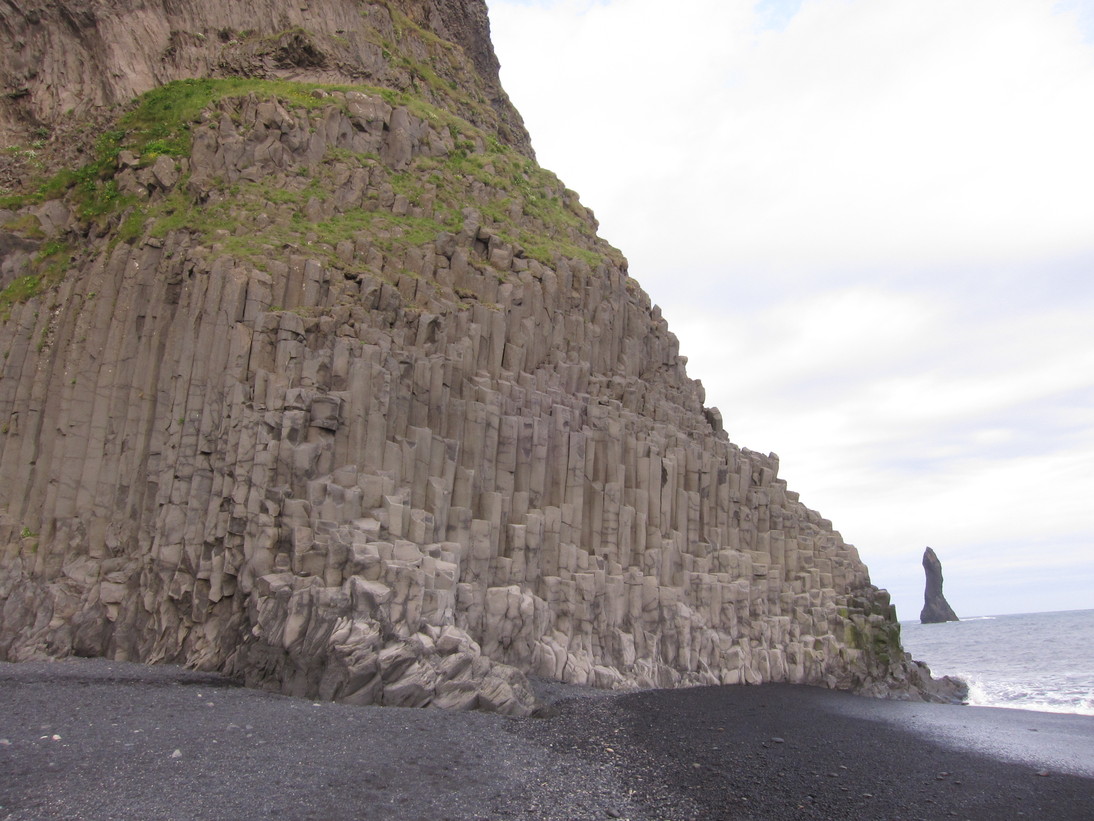
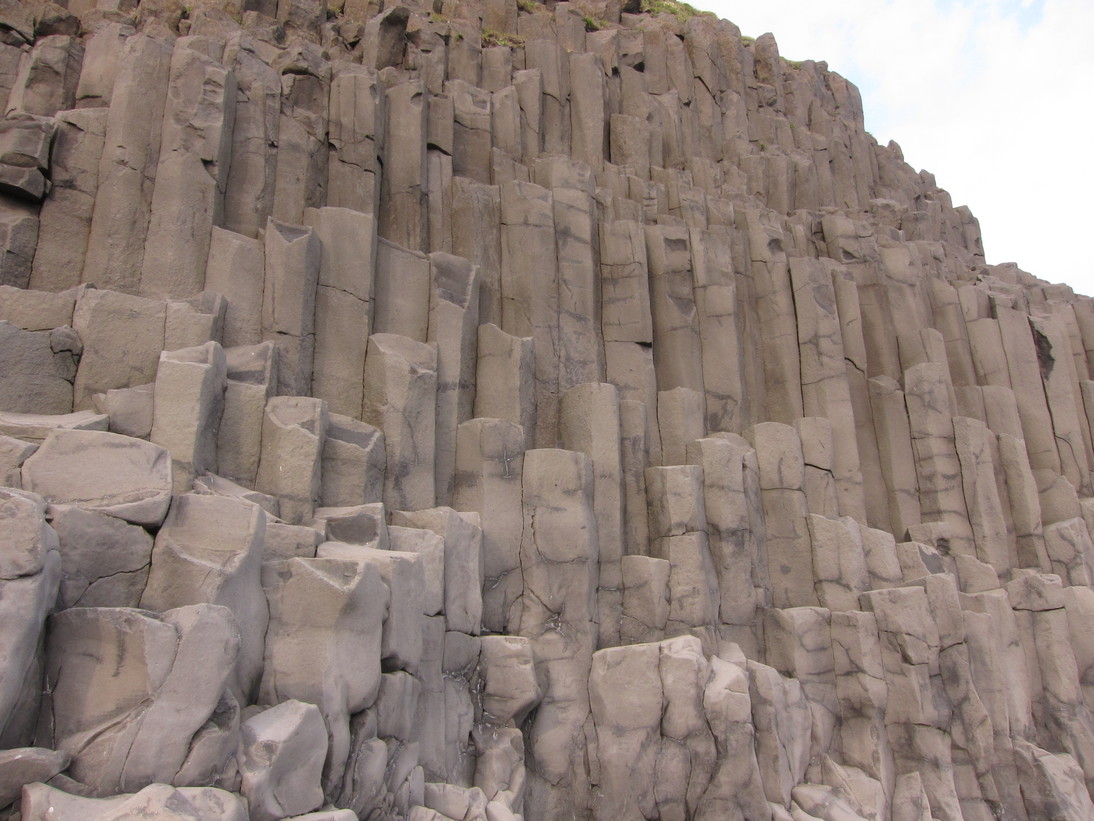
The final highlight of the day were the basalt columns in the beach at Reynirsfjara. They were nice, but after everything we saw this day, a little lame. We would see similar formations in Stykkisholmur a week or so after. We walked around the beach and collected rocks, as we have been doing for all the trip. If you also enjoy collecting sea shells, in Iceland there are not that many. Don't be disappointed. Icelandic language factoid: fjara means beach.
Finishing the day: Supper and the lava field of Ehldraun
We stopped at Vik to have something hot to eat, and phoned our hotel saying we would be arriving late (the wonderful thing of a prepaid Icelandic phone is that you can do this). Had a wonderful hot soup, awesome after a very cold day.
We drove along Ehldraun, which is a generic term in Iceland for lava field. It looks like a desert with very big rocks covered in Icelandic moss, very very thick. We saw Kirkjubæjarklaustur's church and drove for a while looking for the Kirkjugólf, a basalt formation named the church's floor. We didn't find it, but the next day we would make it. Drove to our hotel, which although was under remodelation, was pretty nice... and had free wifi!
In case you are interested, we drove for 534 km today. A long day, indeed!
We drove along Ehldraun, which is a generic term in Iceland for lava field. It looks like a desert with very big rocks covered in Icelandic moss, very very thick. We saw Kirkjubæjarklaustur's church and drove for a while looking for the Kirkjugólf, a basalt formation named the church's floor. We didn't find it, but the next day we would make it. Drove to our hotel, which although was under remodelation, was pretty nice... and had free wifi!
In case you are interested, we drove for 534 km today. A long day, indeed!
Related Posts:

The "Related posts" method I use involves Javascript, thus it doesn't work in the RSS feed. To view related posts, please refer to the original article. Thanks!
28/02/2011 - Road Trip Through Iceland: Day 2 - The Golden Circle (Thingvellir, Geysir and Gullfoss)
This was the official first day. We did a quick packing and preparing in our room and headed downstairs. Breakfast time, and we were amused to find a bunch of Spanish hiking tourists, with a Spanish guide. Had a wonderful breakfast with some tips from the guide: Beware of falling over the side of the road. Why? Because you can be easily distracted by the landscape! And we felt like this when we passed the Jokulsarlon in our 4th (I think) day. A small van picked us in our guest house and drove to the car dealer where we had our car waiting. One small disappointment: we had to pay 40€ to get a second driver. No big deal, but we thought it was included. I thought I may drive a little... but Icelandic roads would prove me wrong. We turned down on the scratch insurance. Unless you scratch it really badly, they won't complain: Icelandic roads are expected to scratch your car a little.
As we started to get out of the outskirts of Reykjavik we realised that a lot of Icelandic cars were "one eyed". One of their headlights was significantly dimmer than the other. We thought it had something to do with gravel smashing the glass. But we didn't really find out. Any ideas?
According to our road guide and what we saw yesterday, we decided to visit Mosfellsbær to buy a blanket, a small town north of Reykjavik where they have the best wool. Sadly, we got lost and then we realised it was Sunday. No point in looking for a shop that would probably be closed.
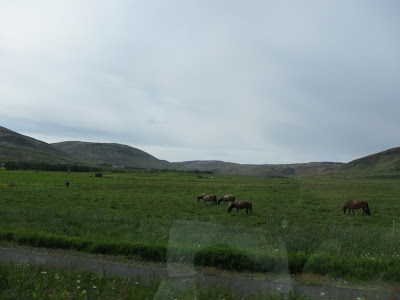
On our way, we passed by the Laxness farm, where the Hálldor Laxness museum is located. Hálldor Laxness was an Icelandic writer, Nobel prize in literature in 1955. We saw from afar Laxness' white Rolls Royce parked in front of it. En route, we saw lots of horses and lambs in farms. It was nothing for what we would see in our remaining weeks.
Also of note is the lack of trees. It is a very odd feeling, because everything is really green, but without trees. It turns out that in the settlement times, Iceland was green and Greenland was ice. The island was covered with trees, but it was deforested to use as fuel and timber, but trees grew very slowly in this volcanic soil and didn't take off. Currently there is an ongoing process of reforestation, with mixed feelings from the people in Iceland, because some think it is not the way Iceland is and others think it is what Iceland should be.
According to our road guide and what we saw yesterday, we decided to visit Mosfellsbær to buy a blanket, a small town north of Reykjavik where they have the best wool. Sadly, we got lost and then we realised it was Sunday. No point in looking for a shop that would probably be closed.
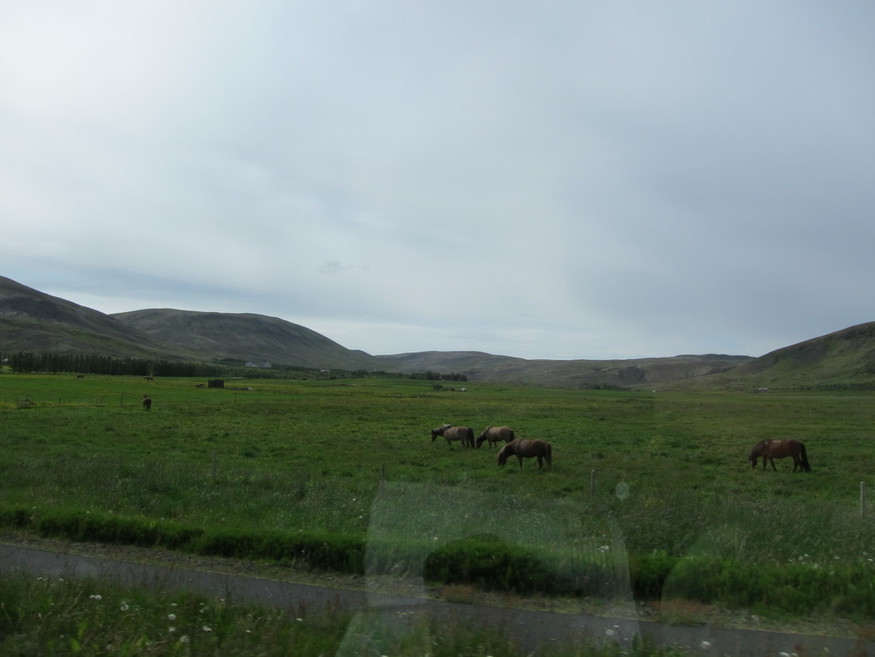
Also of note is the lack of trees. It is a very odd feeling, because everything is really green, but without trees. It turns out that in the settlement times, Iceland was green and Greenland was ice. The island was covered with trees, but it was deforested to use as fuel and timber, but trees grew very slowly in this volcanic soil and didn't take off. Currently there is an ongoing process of reforestation, with mixed feelings from the people in Iceland, because some think it is not the way Iceland is and others think it is what Iceland should be.
First stop: Thingvellir (Þingvellir)
Thingvellir is the place where the government of Iceland started, where the chieftains of the island started to meet, starting 930AC. The government took the name AlÞingi. A very special place, in short. Our first stop was a plain filled with small stone statues.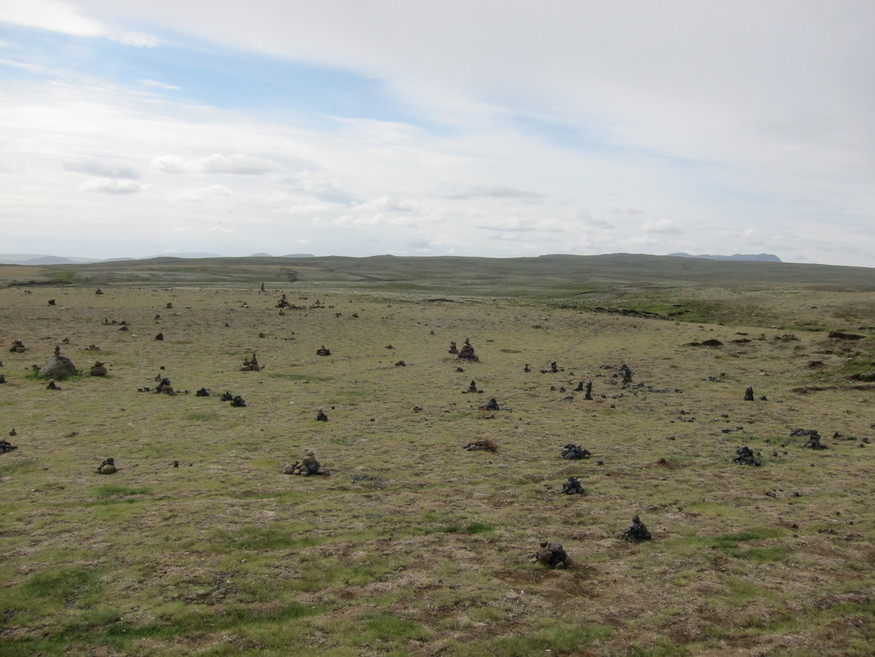
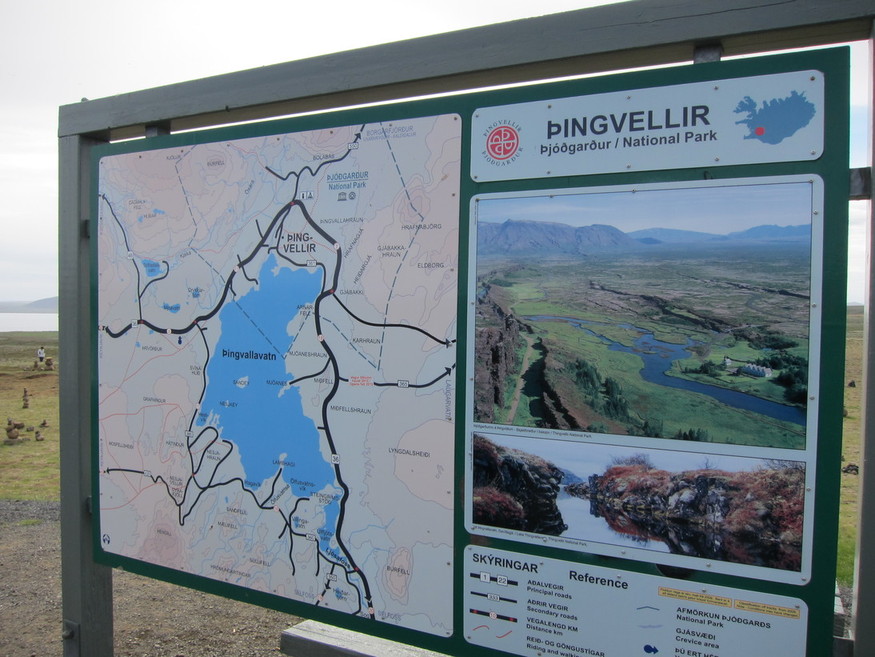
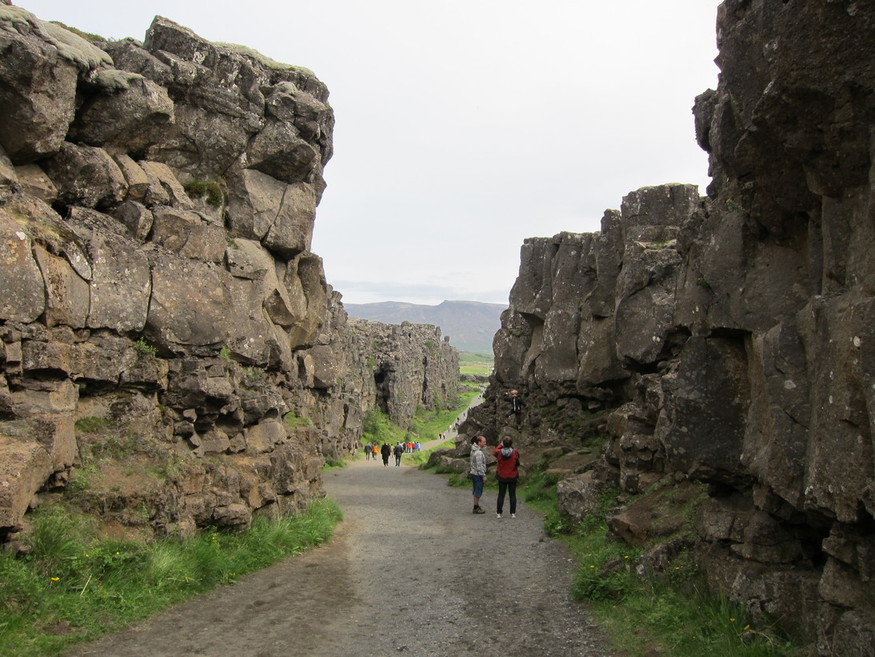
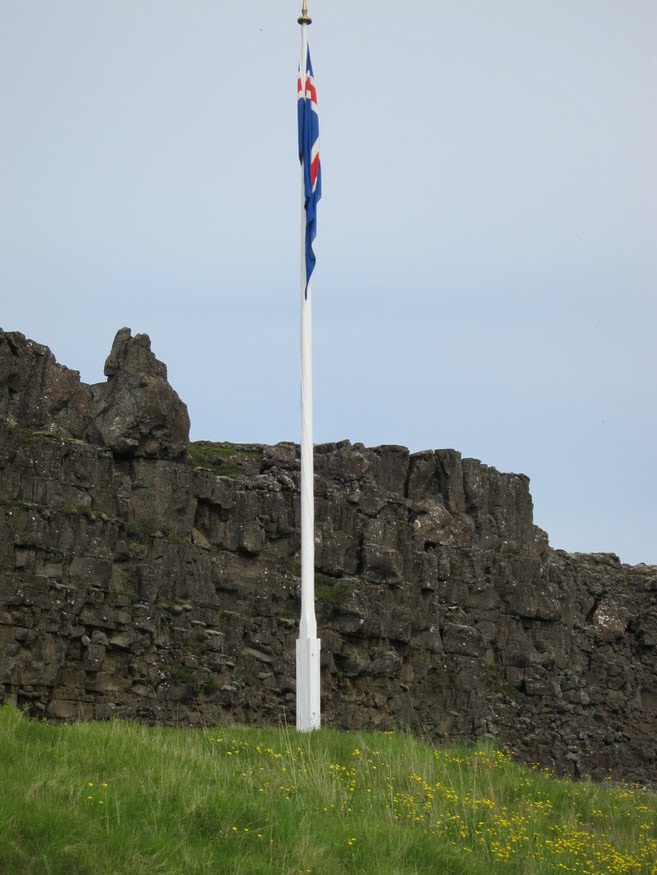
Then we headed toward the real place, where we took some pictures. Also of importance, the Þingvellir area is where the tectonic plates of America and Europe are separating, forming some cracks, fissures and even a canyon. We were standing in the middle of two continents!
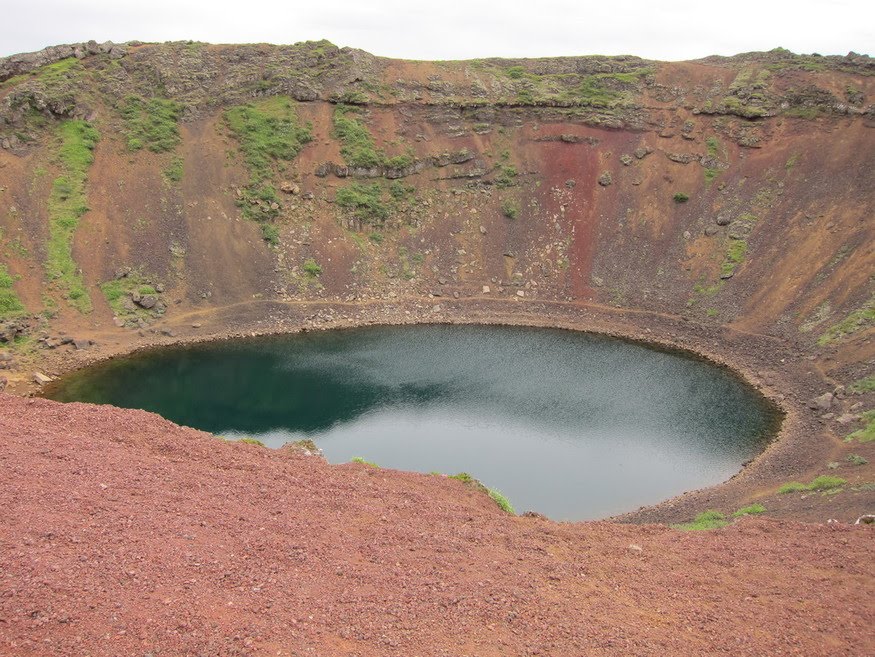
After a leisurely walk, we looked at our map what we would do now. A nice route to follow was through the Kerið crater. It was our first contact with Icelandic volcanoes (and non-mainstream tourist attractions) and it was terrific. There was no-one around, and the outlandish red sands and blue water was mesmerising. We walked to the bottom of the crater (a pretty easy walk) and touched the cold water in the bottom. Also picked a handful of rocks of the region (something which would get increasingly common... we have a lot of Icelandic rocks...).
After a leisurely walk, we looked at our map what we would do now. A nice route to follow was through the Kerið crater. It was our first contact with Icelandic volcanoes (and non-mainstream tourist attractions) and it was terrific. There was no-one around, and the outlandish red sands and blue water was mesmerising. We walked to the bottom of the crater (a pretty easy walk) and touched the cold water in the bottom. Also picked a handful of rocks of the region (something which would get increasingly common... we have a lot of Icelandic rocks...).
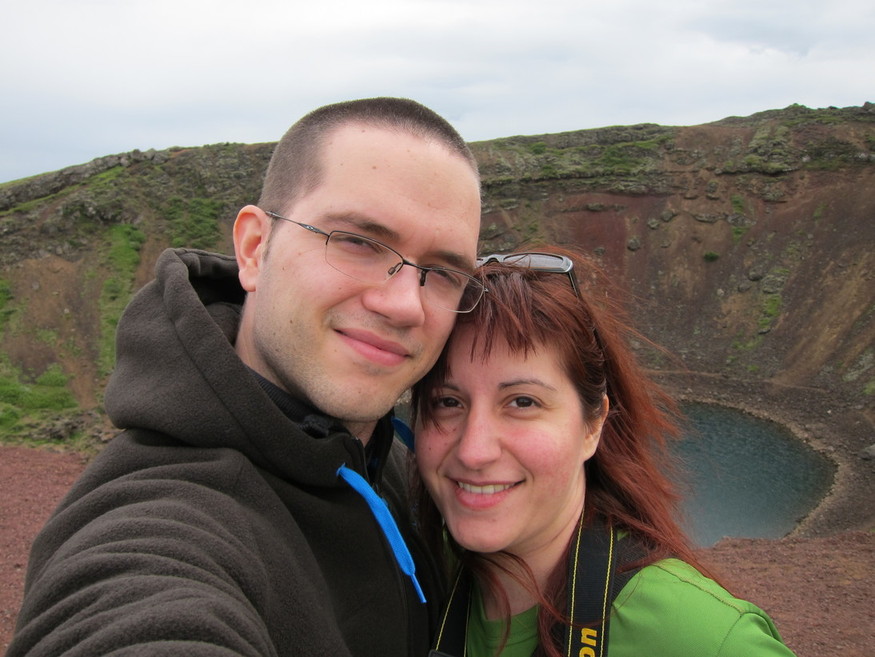

Next stop was expected to be relaxing: baths in Laugarvatn. But the only thing we saw where we could take a bath was a sulfurous kind of sauna, very unnappealing. We gave up and headed for the next stop in The Golden Circle. The Golden Circle is the name of the most famous (and close to Reykjavik) landmarks: Þingvellir, Geysir and Gullfoss.
Second stop: The Great Geyser Area
We saw the first water eruption from afar, and once there, a lot of close ups. The original geiser, which is of course named Geysir (factoid: the word geiser comes from this place, and að geysa, an Icelandic verb, means to gush) is quite inactive, but its close cousin (just something like 15m away), Strokkur, erupts every 6 minutes or so. We could take some pretty good close-ups, sadly the sky was gray and they don't look that good. In person, it was impressive. After enjoying the Geysir area and walking around, we ate a little in the tourist centre in front of it. We were hungry and needed some coffee very badly. A perfect carrot cake, with drykkur (drinkable skyr) and coffee, and a hiatus in our journey. In the gift shop I had my first contact with a game I currently love: hnefatafl (a post about the rules is coming), also known as tablut or generically, tafl. I don't know why it was abandoned in the early 1600, it is a fun game.
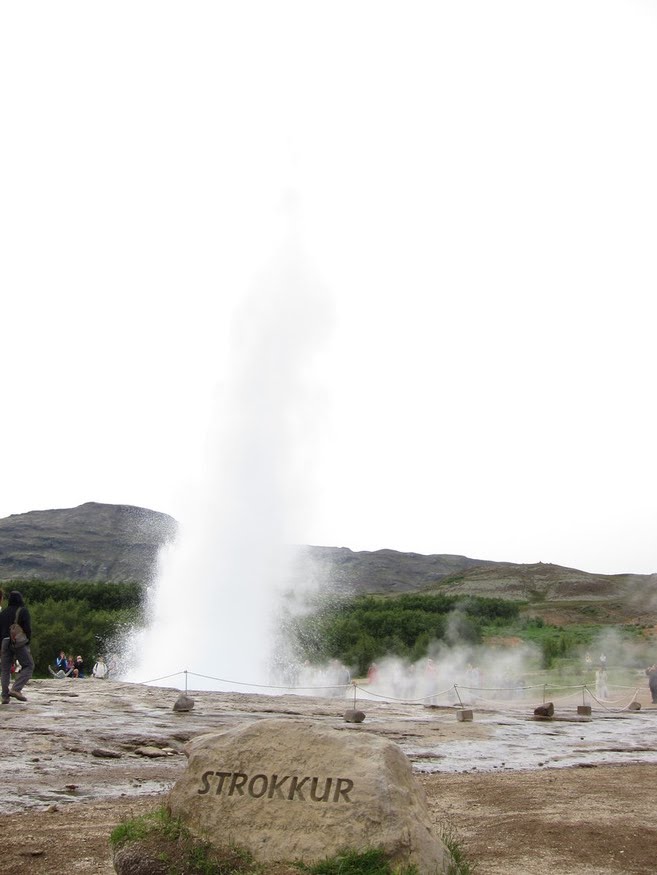
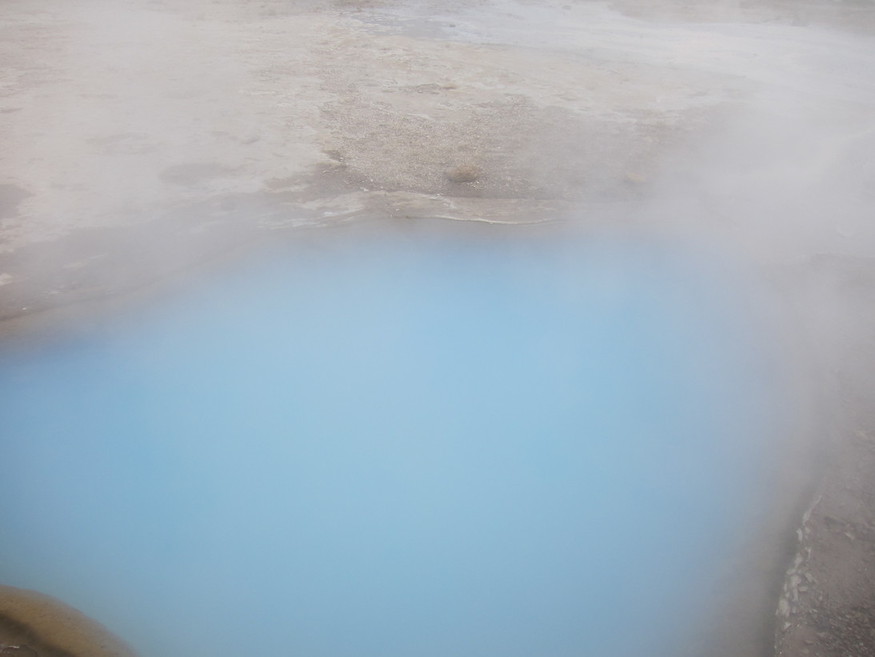
I even took a quick series of 4 pictures of it erupting (but had to move ahead to catch the eruption properly!):


Third stop: Gullfoss
The Gullfoss waterfall is plain impressive (factoid 2: foss is Icelandic for waterfall). The feeling of the thunderous waterfall is like being in a huge, noisy factory where they are building earthquakes. You can feel the ground moving as the water falls. Took a lot of pictures and walked around. There is almost nothing to see except for the waterfall and a hotel. We had a coffee there, and took advantage of the free wifi to check email and this kind of things.
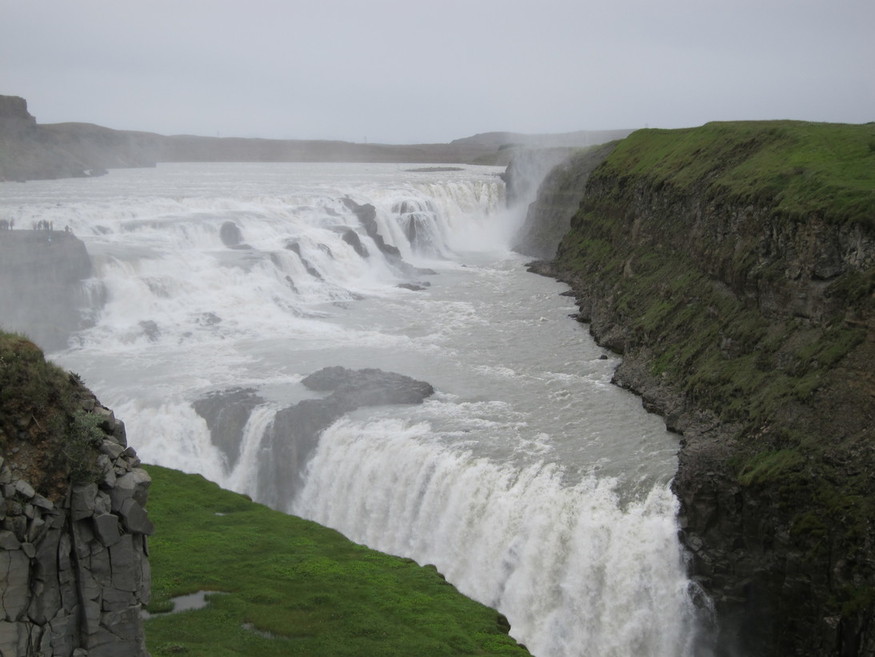
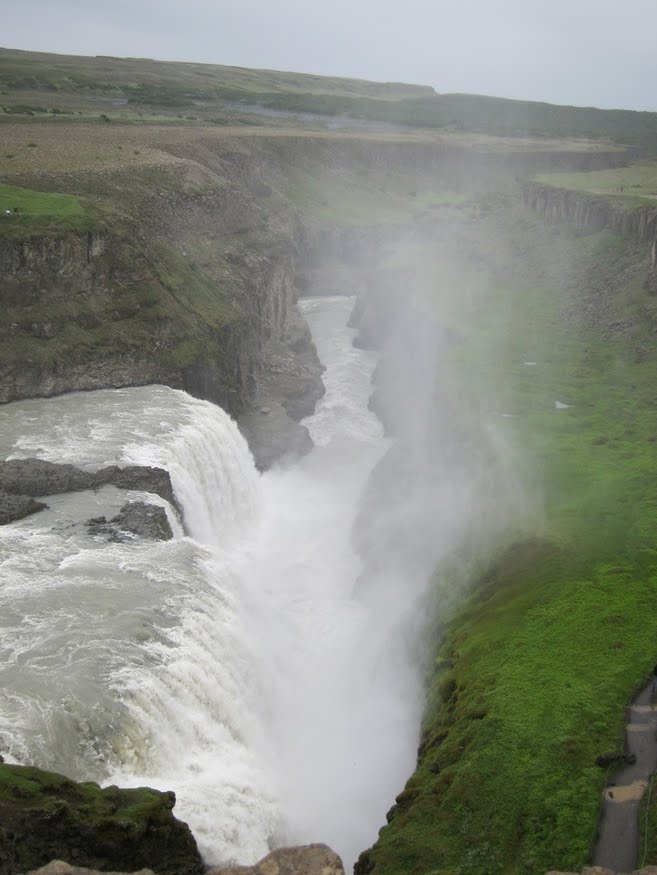
End of the Day: Hotel
On our way to the hotel found a lot of interesting landscapes. Of course, they were interesting then. Now they look almost "normal", after what we saw after this. Our hotel, Leirubakki, was in front of Mt. Hekla (1.491 m), which according to middle age Icelanders is the local hell's entrance. The views were fantastic, and the hotel was the place where an old farm from the Saga's time had been. We had no wifi, but we were to tired to care. We walked a little outside and discovered a very odd bird which made some... well, odd noises. It was almost like an alien invasion.
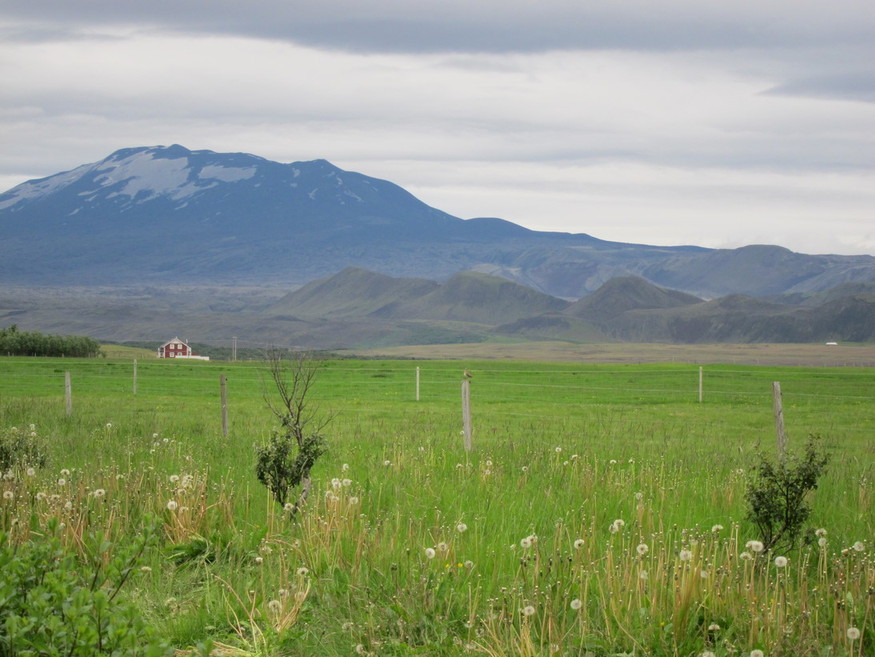
If you are curious, in this first day we drove for 251.3 km.
If you want to keep reading about our trip through Iceland, don't forget to subscribe!
Related Posts:
The "Related posts" method I use involves Javascript, thus it doesn't work in the RSS feed. To view related posts, please refer to the original article. Thanks!
22/02/2011 - Road Trip Through Iceland, Day 1: Reykjavik - the city I'd like to live
We arrived to Keflavík International Airport (its terminal is named Leifur Eiríksson after the European discoverer of North America), really late: our plane needed refueling before departure and it ate quite a lot of time. Anyway, when we arrived a friendly taxi driver with a thick but good English was waiting for us with the cinematographic sign Mr. Berenguel. Our trip from the airport to Reykjavik took another while and we arrived at Aurora guesthouse close to 1 AM, with 2 hours more for us... In short, we were wasted. We quickly checked the bag the driver gave us from Nordic Visitor (detailed road map, road guide, planning, Icelandic prepayed phone and a few more things, all perfect) went for a quick shower and off to sleep. The first surprise was the tap water: the cold one was great: Iceland's tap water is the best water in the world. The hot water smells slightly sulfurous, but you get used to it pretty quick.
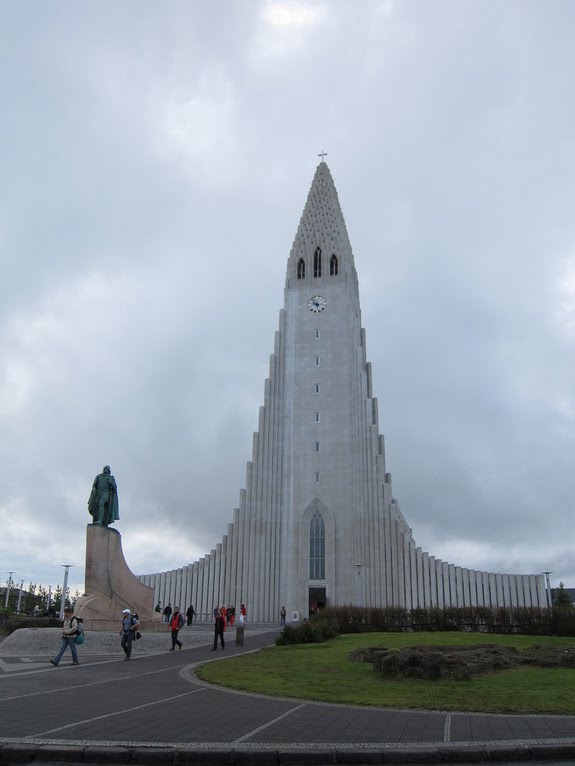
The next and real first day of our trip, we had planned sightseeing the city. We were pretty close to the Hallgrimskirkja, so it was our first stop. It is very new, wih a design based on the basalt columns of the majestic Svartifoss waterfall (we visited it a few days later). Went inside and the interior was interesting with a very nice effect. A big pipe organ was another highlight.
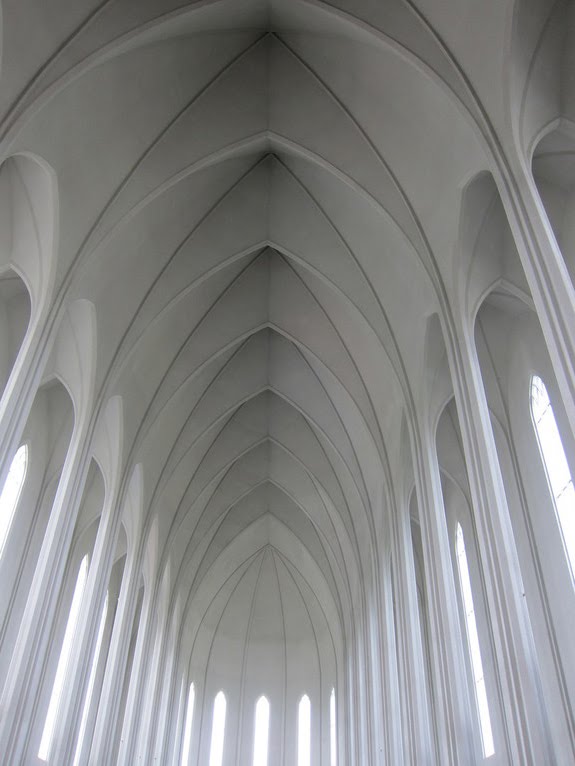
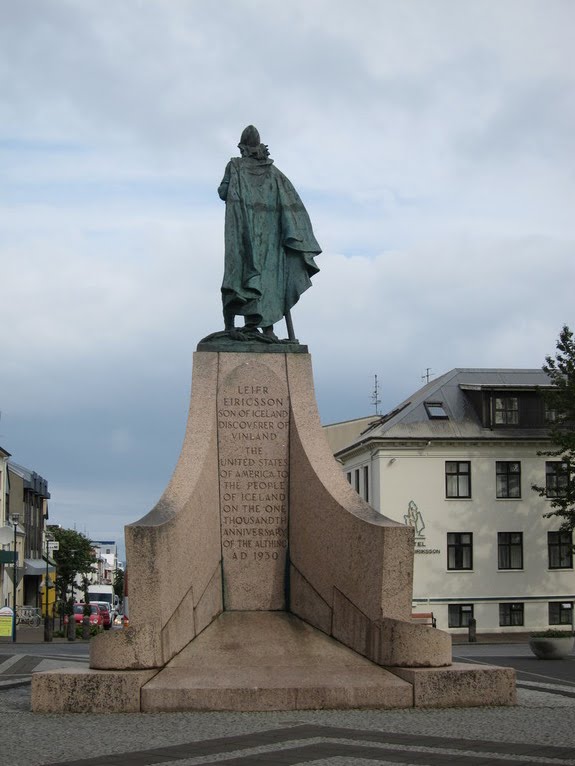
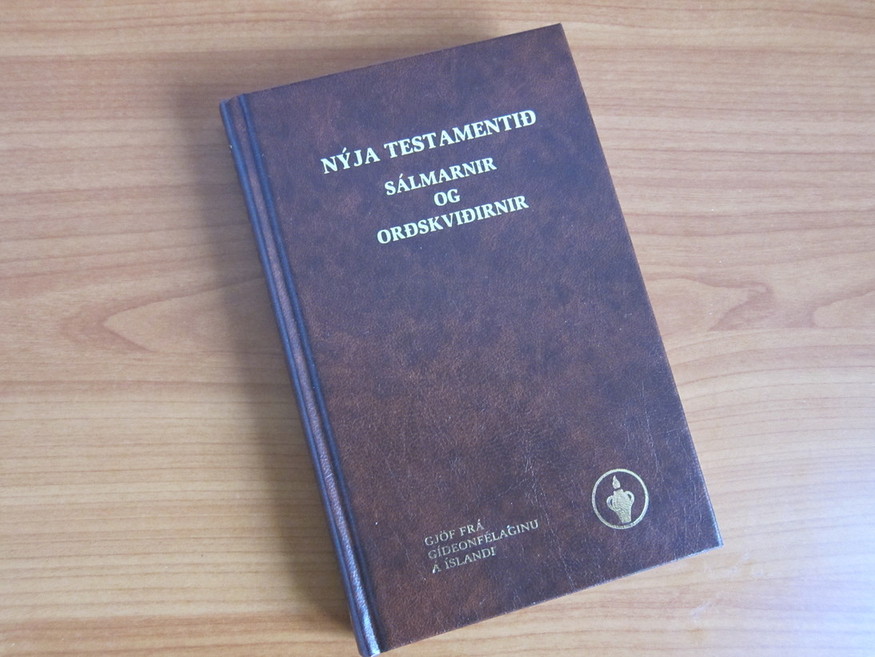
After this cultural visit, we went down until we saw the sea and turned on the main street (Laugarvegur) to do some shopping. In the first shop we went in, Laia bought a scarf and the shopkeeper talked to us in Spanish. She even said goodbye to us in Catalan! We started to love this country. We kept on shopping and walking. Gifts for us and the family, books. I bought myself a copy of The Little Prince in Icelandic (Litli Prinsinn) as part of my Icelandic learning.
When we were tired of so much walking and shopping, we went to a nice kaffihús (coffee house) called Kaffitár. The coffee was really good (and this will be mostly the in the whole country, good coffee or at least decent coffee). The place has free wifi, so we could check our email and post news to twitter. We were puzzled when, among other baristas, one of the barista prizes given to this coffee place was to someone with surname Ferrer, which is a pretty common surname in Catalonia (akin to Smith in English countries)
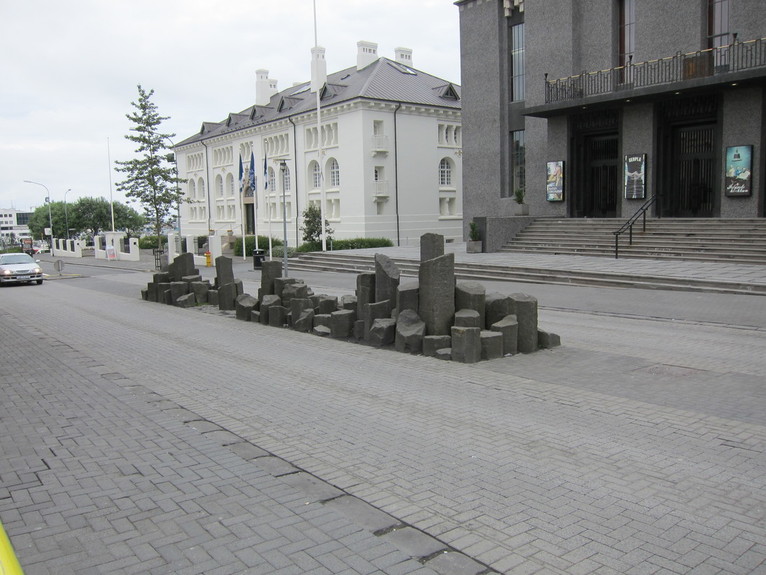
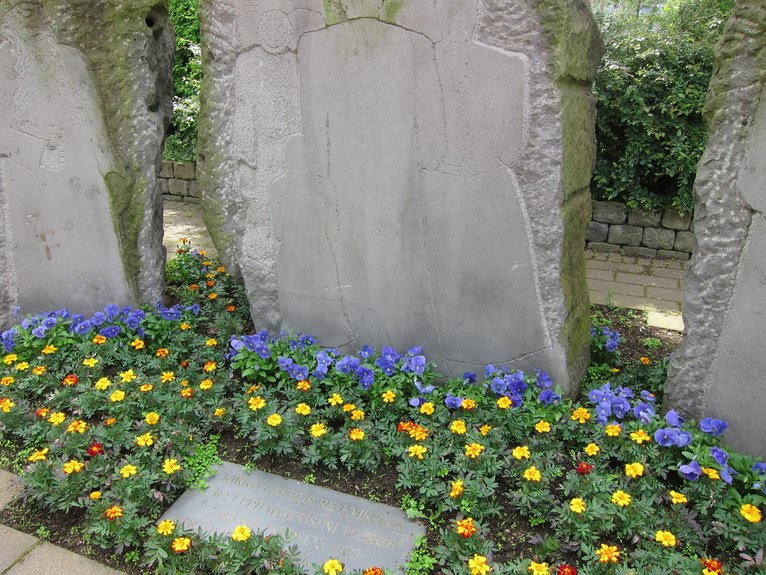
Then we went to see the Parliament house (which we found unappealing) and as some kind of amusement, someone had written a poem in the ground. From there, we went walking towards Adælstræti, the oldest street in Reykjavik and on our way we found some old Viking tombstones in a park. On Adælstræti we shopped a little more (I bought ice cubes made of Icelandic granite!) and got completely lost looking for the bus station: we wanted to spend the afternoon in the Blue Lagoon (we ended up going to a similar place close to Myvatn, the Myvatn Nature Baths a week later).
When we got hungry we went down to the harbour and ate some Icelandic hot dogs called pylsur (read here my recipe for homemade pylsur) in the best and oldest place to eat them, just by the harbour. I have also written a post about Icelandic food for foreigners.
Then we went to see the Parliament house (which we found unappealing) and as some kind of amusement, someone had written a poem in the ground. From there, we went walking towards Adælstræti, the oldest street in Reykjavik and on our way we found some old Viking tombstones in a park. On Adælstræti we shopped a little more (I bought ice cubes made of Icelandic granite!) and got completely lost looking for the bus station: we wanted to spend the afternoon in the Blue Lagoon (we ended up going to a similar place close to Myvatn, the Myvatn Nature Baths a week later).
When we got hungry we went down to the harbour and ate some Icelandic hot dogs called pylsur (read here my recipe for homemade pylsur) in the best and oldest place to eat them, just by the harbour. I have also written a post about Icelandic food for foreigners.
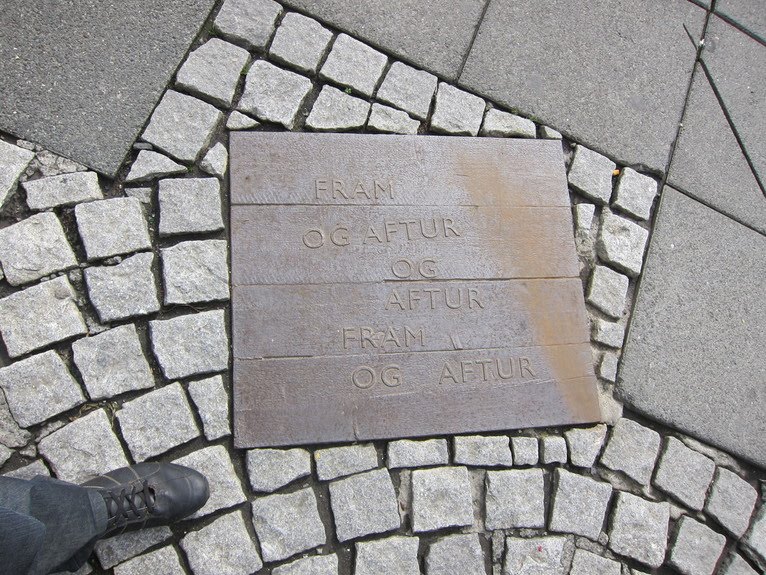
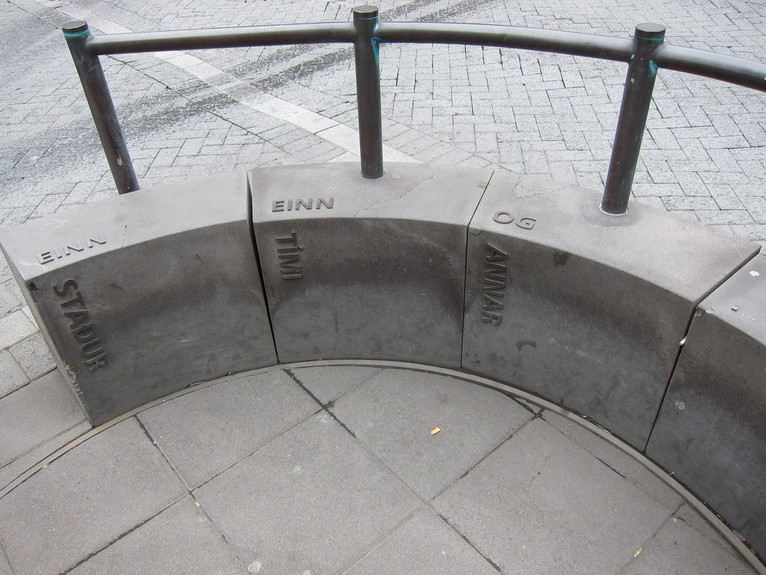
Right: Einn stadur, einn tími og annar (One place, one time and another)
We visited quickly Reykjavik's flea market and got lost again while trying to get to the Viking ship by the sea shore. Finally we made it and took some pictures, although the light was not good enough (just before leaving we took some pretty good pictures again).
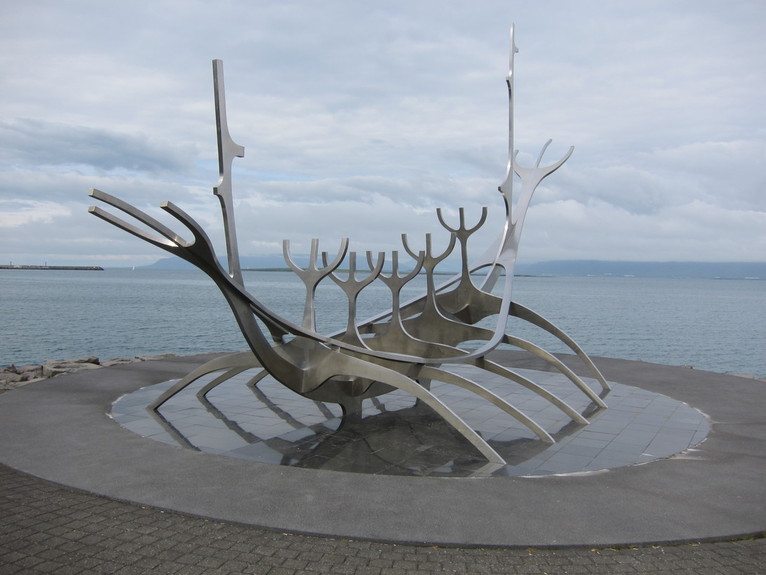
When we found the bus station, we were told that it was just too late to go to the Blue Lagoon (buses finished at around 17 and we could only spend something like an hour there), so we just sat to drink some coffee (and enjoy more wifi time) before going shopping for books about felting: Laia felt in love with what the Icelanders could do with it.

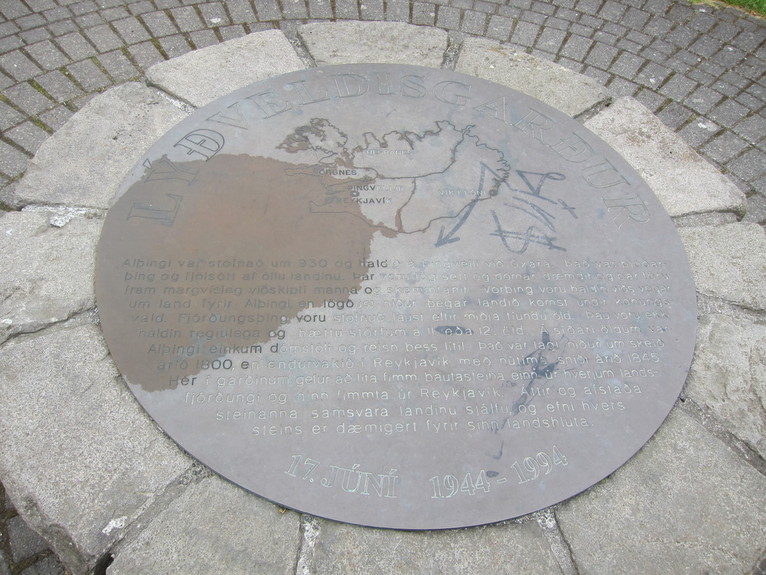
Right: A commemorative sign of Iceland's turn into a republic
We went to the Raðhus, the City Hall, which is in a very nice place with a small pond beside (where a few geese were strolling). At this point we were really tired, and decided to go for a swim in a public swimming pool, which according to our guide should be open. Got to our guesthouse and packed our swimming suits and items. After walking a lot... It was about to close, our guide had an error in the times for this!
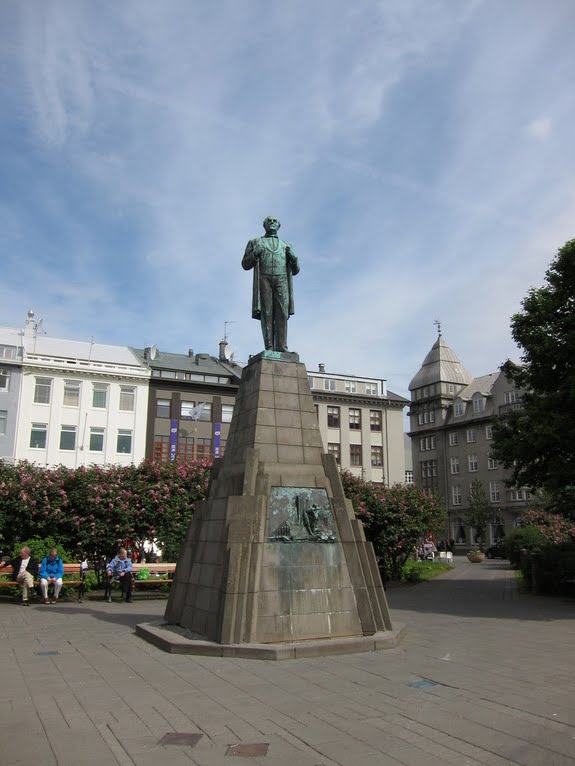
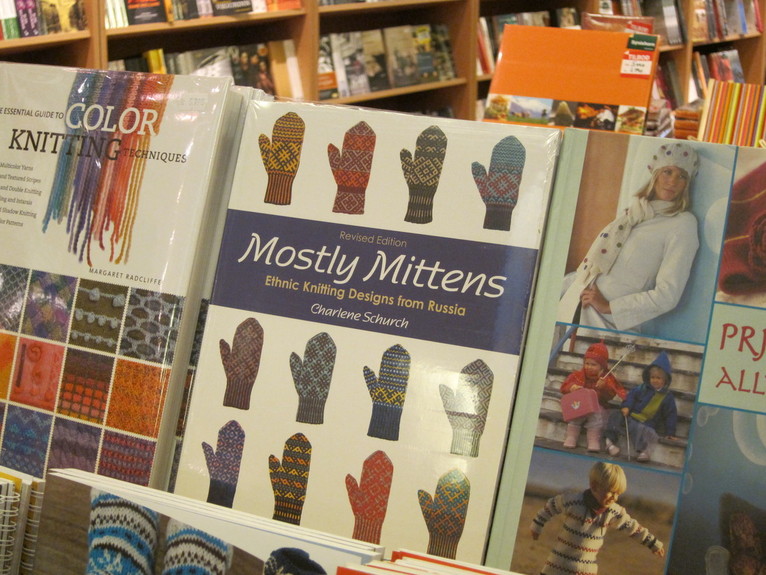
We went back and took a walk in the big gardens named Hljómskálagarðurinn and saw there a statue of Saint George. Had more pylsa for supper and went back to our guesthouse to pack everything and plan the following day. We prepared some pre-made couscous and went to bed. A tiring but very fulfiling day!
If you want to keep reading about our trip through Iceland, don't forget to subscribe!
Related Posts:
The "Related posts" method I use involves Javascript, thus it doesn't work in the RSS feed. To view related posts, please refer to the original article. Thanks!
21/01/2011 - The Language Switch (or how my brain seems to work when learning languages)
I love learning languages. Since I picked my first Teach yourself English (in Spanish) from my grandparents place when I was 10 years old, I have been fascinated by languages and language learning, first human languages and then also by computer languages. Aside from English, Spanish and Catalan I can defend myself in German and French (enough to get directions and keep simple conversations up, although the last time I was in Germany all Germans I talked to said I could keep up pretty well... Sure they are polite!). I have also tried learning Japanese and Russian, but didn't make it really far, but there they are waiting for a chance.
Recently (in broad terms, it was March 2010) I started learning Icelandic, through a book I can fully recommend called Teach Yourself Icelandic (this is the link for the latest edition, I have the previous one), and as of last week I started to use the more advanced Colloquial Icelandic. I'd love to be a Catalan mathematician in Iceland, but chances look pretty dim so far... The only step I can do for sure is learning the language. I have been on and off learning Icelandic since then, and very recently I passed completely what I call the language switch.
When you are starting out a new language, thinking or writing new phrases is usually as follows. You have a thought, you generate a phrase in your mother language (or another language you know well enough) and then you transform the phrase using your current knowledge to translate it, usually word by word and then refining the grammar until you have a phrase in your new language.
At least, this is more or less how it works for me in the first days and weeks (for some people I've known, it is always like this). Maybe months, depends on how much practice I can get by. But then, one day this changes.
One day, the language switch takes over. Your thought goes straight from idea to your new language. For example, the other day I was thinking some test phrases in Icelandic, about how many languages do I speak. I wanted to express this thought, and it just came out: Ég tala spænsku og catalansku (this I guessed from the way language names are build) sem módurmál. Ég tala líka ensku, frönsku og and then here my language switch left me scratching my head, like when you have something in the tip of your tongue but just can't work it out. What I wanted was German language, which then I remembered after thinking about some sample conversations from the book, it is þysku (Germany is Þyskalandi in Icelandic).
The interesting part is that I didn't 'know' what líka meant intellectually, out of the box. I wanted to express the concept of also, and my language switch knew líka from the examples I had read. When I had the phrase done, I had to think about it to remember that líka meant 'also'. This felt like one step closer to reading Egils Saga in Icelandic, my reading is better as I only need to decode, not encode. My language switch is starting to get Icelandic in.
This example also show how I practise new languages. Trying phrases in my head is one of the ways. When I'm walking on the street, I try to 'think' in my target language (like Ég er að fara vinna — I'm going to work) or name objects I see and can name (bíll — car, kona — woman, kaffihús — coffee place). What kind of tricks do you use in your everyday language learning?
This keeps on training the language switch, like learning new karate moves. Practising them slowly and increasing difficulty until you can make them perfect at full speed. The more you practice, the more words you learn and text you read will make your language switch be more precise, faster and broader.
What are your tips in learning a new language when you don't have time (or know anyone) to talk with a native speaker?
Recently (in broad terms, it was March 2010) I started learning Icelandic, through a book I can fully recommend called Teach Yourself Icelandic (this is the link for the latest edition, I have the previous one), and as of last week I started to use the more advanced Colloquial Icelandic. I'd love to be a Catalan mathematician in Iceland, but chances look pretty dim so far... The only step I can do for sure is learning the language. I have been on and off learning Icelandic since then, and very recently I passed completely what I call the language switch.
When you are starting out a new language, thinking or writing new phrases is usually as follows. You have a thought, you generate a phrase in your mother language (or another language you know well enough) and then you transform the phrase using your current knowledge to translate it, usually word by word and then refining the grammar until you have a phrase in your new language.
At least, this is more or less how it works for me in the first days and weeks (for some people I've known, it is always like this). Maybe months, depends on how much practice I can get by. But then, one day this changes.
One day, the language switch takes over. Your thought goes straight from idea to your new language. For example, the other day I was thinking some test phrases in Icelandic, about how many languages do I speak. I wanted to express this thought, and it just came out: Ég tala spænsku og catalansku (this I guessed from the way language names are build) sem módurmál. Ég tala líka ensku, frönsku og and then here my language switch left me scratching my head, like when you have something in the tip of your tongue but just can't work it out. What I wanted was German language, which then I remembered after thinking about some sample conversations from the book, it is þysku (Germany is Þyskalandi in Icelandic).
The interesting part is that I didn't 'know' what líka meant intellectually, out of the box. I wanted to express the concept of also, and my language switch knew líka from the examples I had read. When I had the phrase done, I had to think about it to remember that líka meant 'also'. This felt like one step closer to reading Egils Saga in Icelandic, my reading is better as I only need to decode, not encode. My language switch is starting to get Icelandic in.
This example also show how I practise new languages. Trying phrases in my head is one of the ways. When I'm walking on the street, I try to 'think' in my target language (like Ég er að fara vinna — I'm going to work) or name objects I see and can name (bíll — car, kona — woman, kaffihús — coffee place). What kind of tricks do you use in your everyday language learning?
This keeps on training the language switch, like learning new karate moves. Practising them slowly and increasing difficulty until you can make them perfect at full speed. The more you practice, the more words you learn and text you read will make your language switch be more precise, faster and broader.
What are your tips in learning a new language when you don't have time (or know anyone) to talk with a native speaker?
Related Posts:
The "Related posts" method I use involves Javascript, thus it doesn't work in the RSS feed. To view related posts, please refer to the original article. Thanks!


